

In a landmark move to reshape the future of American passenger rail, the U.S. government has unveiled a staggering USD 4.7 billion investment package aimed at the Northeast Corridor (NEC). As the most heavily trafficked and operationally complex rail artery in the United States, the NEC serves as the backbone of the nation’s intercity transit network. This injection of capital, announced by U.S. Secretary of Transportation Sean P. Duffy, represents a generational commitment to upgrading aging infrastructure, expanding service capacity, and ensuring the long-term viability of the corridor’s most critical hubs.
The Scope of the Investment: A Strategic Transformation
The USD 4.7 billion funding package is designed to address the "investment backlog" that has long plagued the Northeast Corridor. By focusing on critical station infrastructure, bridge rehabilitation, and service optimization, the Department of Transportation (DOT) seeks to transition the corridor from an aging relic of the 20th century into a modern, high-performance transit system.
At the heart of this initiative are two of the most iconic and overburdened rail hubs in the world: New York’s Penn Station and Washington’s Union Station. These stations act as the primary gateways for millions of commuters and intercity travelers annually. By prioritizing these hubs, the administration aims to eliminate structural bottlenecks, enhance passenger safety, and integrate new technological standards that will streamline the flow of both regional and long-distance trains.
Chronology of Development: From Aging Infrastructure to Future-Ready Rail
The path to this significant funding announcement has been marked by years of advocacy, technical assessments, and legislative pressure. The NEC, which carries over 800,000 passenger trips daily, has suffered from chronic underinvestment for decades.
- The Early 2020s: Growing awareness of the "state of good repair" crisis on the NEC led to the drafting of comprehensive inventory lists. These documents identified thousands of individual components—from catenary wires to century-old tunnel masonry—that were approaching the end of their service lives.
- The 2026 NEC Inventory: Central to this new funding mechanism is the 2026 version of the NEC inventory. The DOT has mandated that all project applications must align with this standardized document, ensuring that federal dollars are funneled into projects with the highest strategic impact.
- May 5, 2026 – The Critical Deadline: The government has established a firm deadline for the submission of project applications. This window forces transit agencies, state partners, and Amtrak to finalize their project designs, budget estimates, and environmental impact assessments, accelerating the transition from planning to construction.
Supporting Data: Why the Northeast Corridor Matters
To understand the magnitude of this investment, one must look at the data governing the corridor. The NEC is not merely a collection of tracks; it is the economic engine of the American East Coast.
Connectivity and Economic Output
The Northeast Corridor connects Boston, New York, Philadelphia, Baltimore, and Washington, D.C.—a region that accounts for approximately 20% of the United States’ GDP. Every minute of delay on the NEC ripples through the national economy, impacting professional productivity, tourism, and commercial logistics.
The Maintenance Backlog
Infrastructure experts have estimated the total cost to bring the NEC to a "state of good repair" to be well into the tens of billions. With a current investment of $4.7 billion, the federal government is making a significant dent in the backlog. The funding targets:
- Bridge Rehabilitation: Replacing or reinforcing bridges that date back to the early 1900s, many of which require speed restrictions that hamper overall corridor performance.
- Station Modernization: Upgrading platforms, ventilation systems, and egress points at Penn Station and Union Station to handle increased passenger volumes and meet modern safety codes.
- Operational Efficiency: Implementing digital signaling and automated traffic control systems to reduce headways and increase the number of train sets that can safely traverse the corridor.
Official Perspectives and Government Strategy
U.S. Secretary of Transportation Sean P. Duffy has positioned this investment as a cornerstone of the federal intercity rail program. In his official statement, Secretary Duffy emphasized that the modernization of the NEC is not a localized project but a national imperative.
"By focusing our resources on the hubs that keep our country moving, we are laying the foundation for a more competitive and connected America," Secretary Duffy stated during the announcement. "The Northeast Corridor is the busiest rail line in the nation; it is our responsibility to ensure it is the most reliable."

Government officials have been clear that this funding is performance-based. The grant scheme is designed to favor projects that demonstrate clear, measurable improvements in capacity and reliability. By mandating inclusion in the 2026 NEC inventory, the DOT is enforcing a rigorous discipline on transit agencies, ensuring that only the most critical, shovel-ready projects receive federal support.
Implications for Amtrak and the Future of U.S. Rail
For Amtrak, the national intercity passenger rail operator, this investment is transformative. The NEC represents the core of Amtrak’s revenue model and operational footprint. As Amtrak continues its ambitious acquisition program—procuring the largest fleet of long-distance and regional train sets in its history—the physical infrastructure must be prepared to handle these modern, faster, and more efficient trains.
Improving Reliability
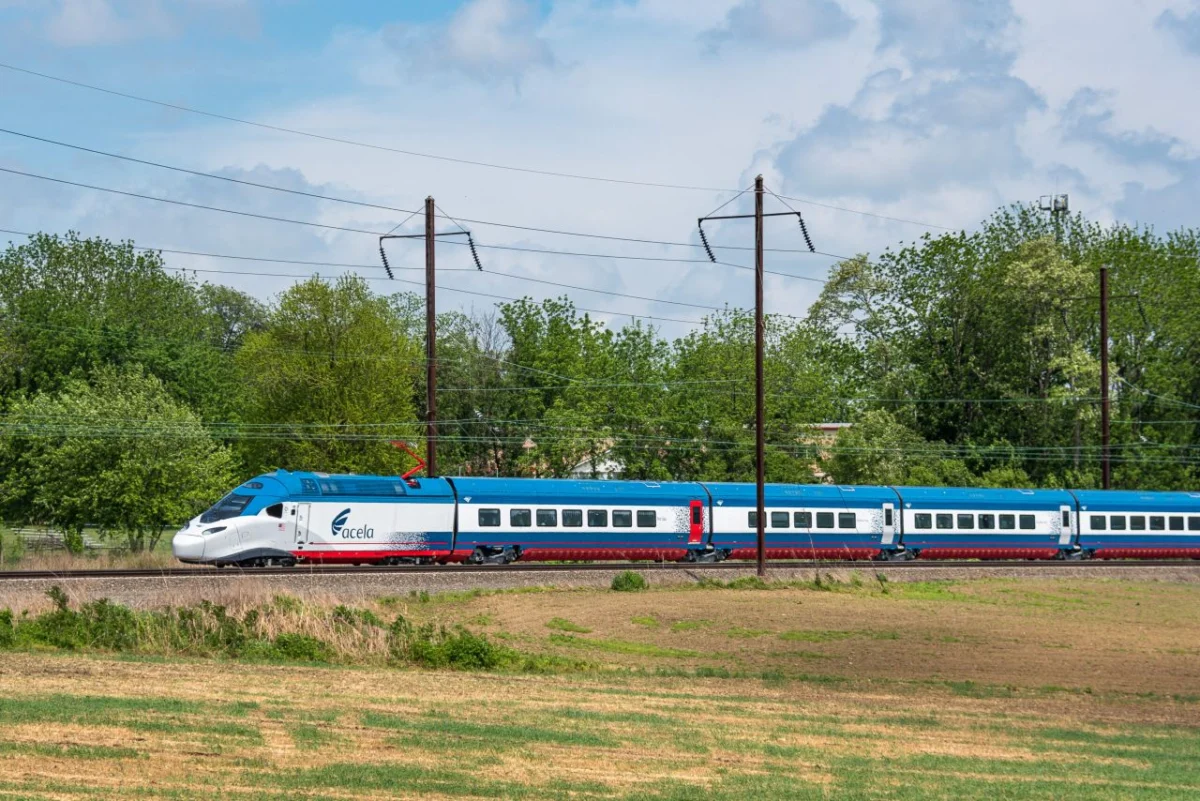
For years, Amtrak’s "Acela" and regional services have been subject to unpredictable delays caused by infrastructure failures. The $4.7 billion investment aims to provide a "cushion" of reliability. By replacing failing bridges and upgrading station equipment, the frequency of these unplanned outages is expected to drop significantly.
Scaling Capacity
As the U.S. population grows and the desire for greener, rail-based transportation increases, the current capacity of the NEC is insufficient. The investments in stations are not just about repairs; they are about capacity expansion. Wider platforms, modernized ticketing concourses, and improved track configurations at major stations will allow for more train movements per hour, effectively increasing the "throughput" of the entire corridor.
Long-Term Sustainability
The modernization of the NEC is also a pivotal step in the broader federal climate strategy. By shifting travelers from short-haul flights and private automobiles to rail, the government anticipates a reduction in the carbon footprint associated with travel along the I-95 corridor. This investment ensures that rail remains a viable, competitive, and sustainable alternative to road and air travel for the next 50 to 100 years.
Conclusion: A Turning Point for American Transit
The announcement of $4.7 billion for the Northeast Corridor is a clear signal that the federal government is prioritizing the "Iron Spine" of the American transit network. While the challenges—ranging from historic preservation constraints in aging stations to the complexities of active-track construction—are immense, the path forward is now defined by clear deadlines, strategic priorities, and substantial financial backing.
As the May 5, 2026, deadline approaches, all eyes will be on the transit agencies and the Department of Transportation to see how these funds are allocated. If the projects are executed with the urgency and precision they demand, the Northeast Corridor could emerge as a model for rail infrastructure globally, proving that even the most complex, legacy transit systems can be successfully modernized to meet the demands of a modern, fast-paced society.
The investment is more than a line item in a federal budget; it is a commitment to a future where the Northeast Corridor remains the heart of American connectivity, ensuring that the next generation of travelers can move across the region with the speed, safety, and reliability they deserve.

