

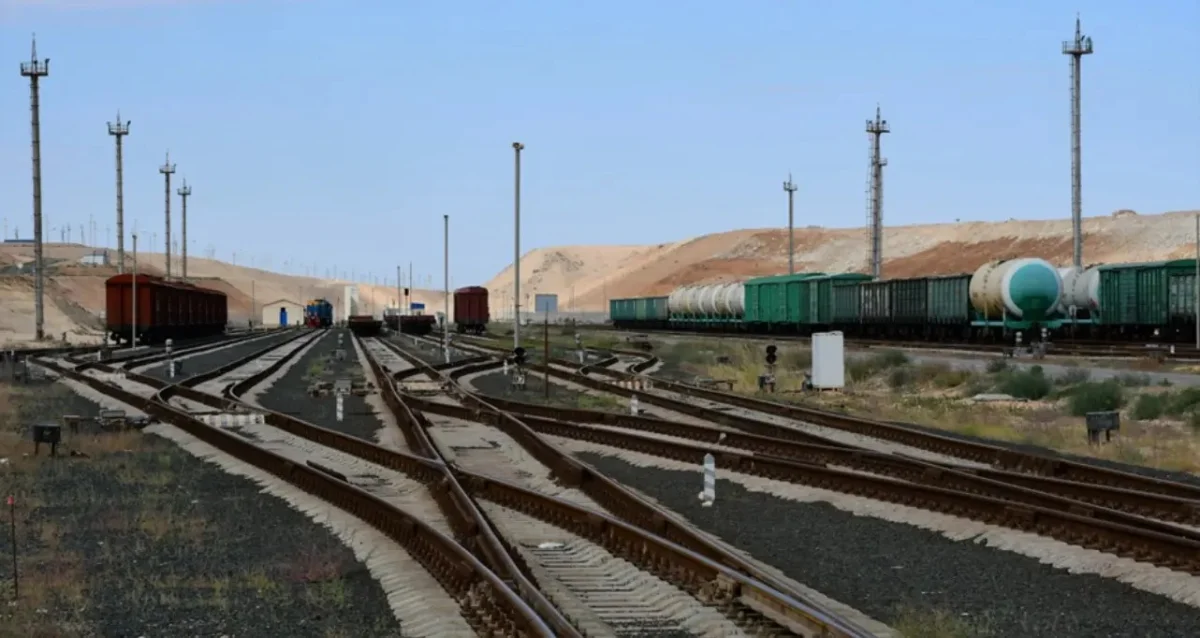
In a significant move to reshape the logistical landscape of Eurasia, the European Bank for Reconstruction and Development (EBRD) has announced a strategic investment of up to USD 125 million in a landmark Eurobond issuance by Kazakhstan Temir Zholy (KTZ), the national railway operator of Kazakhstan. This financial injection is part of a broader USD 1 billion Eurobond program that has successfully secured listings on both the London Stock Exchange and the Kazakhstan Stock Exchange (KASE), signaling strong international investor confidence in the Kazakh infrastructure sector.
The investment serves as a cornerstone for KTZ’s ambitious modernization strategy, targeting both the physical rehabilitation of domestic passenger hubs and the strategic expansion of the Trans-Caspian International Transport Route (TITR), commonly referred to as the "Middle Corridor."
Main Facts: Financing the Future of Eurasian Transit
The USD 125 million commitment from the EBRD is more than a mere capital infusion; it is a catalyst for institutional reform and operational excellence. By participating in the USD 1 billion bond issuance, the EBRD is supporting KTZ in its efforts to pivot toward a more sustainable, digital, and inclusive transport model.
The allocation of funds is segmented into two primary domains:
- Passenger Infrastructure Modernization: A comprehensive overhaul of major passenger stations across Kazakhstan. The objective is to elevate safety standards, expand passenger throughput capacity, and integrate energy-efficient lighting and smart terminal systems.
- Strategic Corridor Enhancement: Financial support for infrastructure improvements along the Trans-Caspian Corridor, a vital multimodal link connecting the markets of China and Central Asia to Europe via the Caspian Sea, the Caucasus, and Türkiye.
For Kazakhstan, a country defined by its vast geography and critical role as a land-bridge between East and West, this funding is essential to maintaining its competitive edge in the global supply chain. KTZ, which operates an expansive 16,400-kilometer rail network, remains the backbone of the national economy. With a fleet comprising over 1,700 locomotives, 46,800 freight cars, and 2,300 passenger cars, KTZ’s operational efficiency is inextricably linked to the economic health of the Central Asian region.
Chronology: The Evolution of a Strategic Partnership
The path to this bond issuance is the result of years of collaborative engagement between the Kazakh government, KTZ leadership, and the EBRD.
- Early 2020s: The COVID-19 pandemic and subsequent geopolitical shifts underscored the fragility of traditional northern Eurasian trade routes. Kazakhstan began prioritizing the "Middle Corridor" as a reliable, secure alternative.
- 2023: KTZ, with support from the World Bank and other international financial institutions, initiated a series of financial restructuring measures to improve its debt profile and operational sustainability.
- Early 2024: Preparations for the USD 1 billion Eurobond issuance gained momentum, with KTZ seeking to diversify its funding sources away from traditional bank loans toward international capital markets.
- May 2026: The official announcement of the EBRD’s cornerstone investment in the Eurobond issue marks a turning point in KTZ’s market credibility. The successful listing on the London and Kazakhstan stock exchanges confirms the appetite of global investors for high-growth, infrastructure-backed securities in Central Asia.
Supporting Data: The Scale of Operations
To understand the necessity of this investment, one must look at the sheer volume of assets under KTZ’s stewardship. The rail operator is not merely a service provider; it is the primary engine of Kazakhstan’s industrial output.
- Network Reach: 16,400 kilometers of operational track.
- Asset Density: 1,700+ locomotives and nearly 50,000 units of rolling stock.
- Historical Investment: The EBRD’s relationship with Kazakhstan is deep-rooted, with approximately EUR 11 billion invested across 352 individual projects to date. This makes Kazakhstan the largest recipient of EBRD funding in the Central Asian region, a testament to the country’s commitment to market-oriented reforms.
Official Perspectives and Strategic Implications
The Social Imperative: Accessibility and Safety
A hallmark of this investment is the explicit focus on social responsibility. The EBRD has mandated that the modernization of passenger stations must include enhanced access for people with disabilities. This shift toward "inclusive infrastructure" aligns with global best practices, ensuring that as KTZ modernizes, it does not leave vulnerable populations behind. Upgraded facilities will feature improved vertical circulation, tactile navigation, and compliant restrooms, transforming the rail experience for all Kazakh citizens.

Cybersecurity and Digital Transformation
Recognizing the risks of a hyper-connected global supply chain, the EBRD is providing more than just capital. Through its technical cooperation funds, the bank is helping KTZ adopt international standards in rail transport. A critical component of this is the strengthening of the operator’s cybersecurity framework. As KTZ moves toward full digitization—integrating AI-driven ticketing systems, automated freight tracking, and digital signaling—the protection of this data against cyber threats becomes a matter of national security.
The Trans-Caspian Corridor: A Geopolitical Lifeline
The Middle Corridor has evolved from a secondary logistics route into a primary strategic priority. The EBRD’s investment signals a long-term commitment to the sustainability and efficiency of this corridor. By reducing bottlenecks at passenger and freight junctions, the project aims to lower the "time-to-market" for goods traveling between Asia and Europe. The bank’s involvement ensures that these infrastructure upgrades are not only rapid but also aligned with green energy standards, promoting rail as the sustainable alternative to road or air freight.
Implications for the Future: A Regional Hub
The broader implications of this investment are twofold:
1. Market Integration: By listing on the London and Kazakhstan stock exchanges, KTZ is fostering transparency and accountability. The rigorous disclosure requirements associated with Eurobonds will push the operator toward higher corporate governance standards, making it more attractive to future foreign direct investment (FDI).
2. Economic Diversification: For Kazakhstan, the reliance on raw material exports is a historical challenge. A modernized, efficient rail network is the precursor to an "export-led growth" model that includes high-value manufactured goods. By positioning itself as a seamless transit hub, Kazakhstan is effectively transforming its geography into a revenue-generating asset.
Conclusion: A Blueprint for Development
The EBRD’s USD 125 million investment in KTZ’s Eurobond issue is a landmark event that exemplifies the "infrastructure-as-a-service" model. By targeting specific pain points—such as station accessibility, cybersecurity, and regional connectivity—the project provides a blueprint for how national operators in emerging markets can successfully tap into international capital markets.
As the Middle Corridor continues to gain traction as a vital link in the global supply chain, the success of KTZ will serve as a bellwether for the broader Central Asian economy. With the right mix of institutional support, technical expertise, and private capital, Kazakhstan is demonstrating that it is ready to assume its role as a central pillar of modern Eurasian trade. The modernization of its stations and the securing of its digital borders are not just upgrades; they are the necessary foundations for a new era of regional prosperity.

