

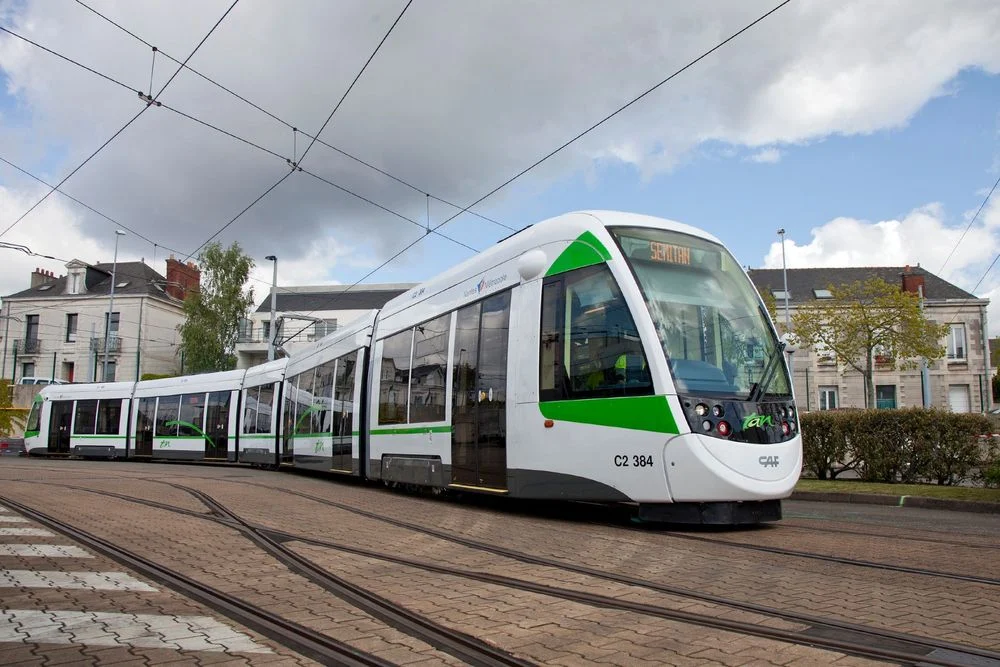
The Syndicat des Mobilités de Touraine has officially finalized a landmark agreement with Spanish rolling stock manufacturer CAF (Construcciones y Auxiliar de Ferrocarriles) to supply 19 state-of-the-art Urbos trams. This strategic procurement is the cornerstone of the ambitious development of Tours’ future Tramway Line 2, a project designed to redefine urban mobility in one of France’s most historic regions. The contract, which also encompasses the provision of essential fleet parts and specialized maintenance tooling, signals a significant expansion of CAF’s footprint within the French transit sector.
The Scope of the Agreement: Enhancing the Urban Fabric
The introduction of the new Urbos fleet represents more than a mere equipment upgrade; it is a fundamental shift in how the city of Tours plans to integrate transit into its UNESCO-listed urban landscape. By selecting the Urbos platform, the Syndicat des Mobilités de Touraine has opted for a proven, high-capacity solution that harmonizes modern efficiency with the aesthetic sensitivity required for a city known as the "Gateway to the Loire Valley."
Each of the 19 units will measure 42 meters in length and feature a fully low-floor architecture, ensuring universal accessibility for all citizens, including those with reduced mobility. Designed to accommodate up to 280 passengers per vehicle, these trams are equipped with dedicated, spacious multipurpose zones specifically engineered to house strollers, bicycles, and wheelchairs. This focus on "intermodal friendliness" reflects a growing trend in European urban planning, where public transit is increasingly designed as a seamless extension of walking and cycling infrastructure.
Chronology: From Concept to 2028 Launch
The road to this procurement has been defined by rigorous planning and a commitment to sustainable growth.
- The Planning Phase (2020–2023): Initial feasibility studies for Line 2 identified the need for a connection between La Riche and Chambray-lès-Tours. Planners emphasized the importance of minimizing visual disruption in the historic center, leading to the decision to utilize catenary-free technology.
- The Tender Process (2024): The Syndicat des Mobilités de Touraine launched a competitive procurement process, seeking a partner capable of delivering high-capacity vehicles that could operate across both the existing Line 1 and the future Line 2.
- The Contract Award (March 2025): CAF was officially confirmed as the successful bidder, marking a significant victory for the manufacturer in a highly competitive French market.
- Construction Milestone (2025–2027): Construction of the 12.5 km Line 2 is currently underway. The project includes the development of 22 new stations, connecting major hospitals, academic institutions serving nearly 30,000 students, and vital cultural hubs.
- Projected Inauguration (2028): The line is scheduled to open to the public in 2028, marking the completion of the city’s most significant transit expansion in a decade.
Supporting Data and Technical Innovation: The Catenary-Free Solution
A standout feature of the new CAF Urbos fleet is the integration of advanced onboard energy storage modules. This technology is not merely a technical luxury; it is a functional requirement for the specific geography of Tours.
In the historic city center—specifically along the 2 km corridor between the Tours train station and Place Choiseul—the trams will operate without the need for overhead power lines. This "catenary-free" operation is vital for preserving the integrity of the city’s Gothic architecture and historic skyline. By utilizing energy storage modules that charge during operation under traditional overhead lines, the trams can traverse the sensitive historic district autonomously.
This decision also provides significant financial and logistical benefits. By eliminating the need for complex overhead infrastructure in the historic core, the city reduces the long-term maintenance costs associated with power systems and minimizes the visual "clutter" that often accompanies urban electrification.
Strategic Implications: Connectivity and Regional Growth
The expansion of the tram network is poised to act as a catalyst for regional development. By linking the suburbs of La Riche and Chambray-lès-Tours with the urban core, the project effectively closes gaps in the current transit network.
Improving Intermodality
The project is not operating in a vacuum. It is being developed in tandem with extensive investments in cycling paths and pedestrianized zones. The goal is to create a "hub-and-spoke" model where the tram serves as the backbone, while feeder bus services and active travel infrastructure handle the "last mile" of the journey. This holistic approach is expected to significantly reduce private car reliance, thereby lowering the carbon footprint of the metropolitan area.
Serving a Growing Demographic
The alignment of Line 2 is specifically designed to maximize ridership by connecting high-traffic nodes. With 30,000 students frequently traveling between university campuses and the city center, the capacity of the 42-meter Urbos trams will be instrumental in alleviating peak-hour congestion. Furthermore, connecting major hospitals ensures that the most vulnerable members of the population have reliable access to essential services.
Official Perspectives and Market Significance
For CAF, this contract is a strategic win that further cements its dominance in the French market. Having already secured major projects in cities such as Montpellier and Marseille, the company has proven its ability to adapt its Urbos platform to the specific regulatory and cultural requirements of French urban centers.
Local officials in Tours have highlighted that the selection of CAF was driven by the manufacturer’s technical proposal, which offered the best balance of innovation—specifically the energy storage capabilities—and cost-efficiency. "The goal is to provide a service that is as reliable as it is invisible," noted a representative from the Syndicat des Mobilités de Touraine during the contract signing. By choosing a design that mimics the existing Line 1 fleet, the city ensures operational continuity, allowing for shared maintenance facilities and simplified training protocols for drivers.
Conclusion: A Blueprint for Historic Cities
The Tours Tramway expansion is a quintessential example of how heritage-rich cities can embrace modern technology without compromising their architectural identity. By integrating advanced energy storage, increasing passenger capacity, and fostering intermodal connectivity, the project serves as a blueprint for other European cities facing the dual challenge of rapid urbanization and historical preservation.
As the 2028 deadline approaches, the residents of Tours can look forward to a transformed metropolitan landscape. The combination of CAF’s robust engineering and the city’s visionary transit strategy ensures that the future of mobility in the Loire Valley will be sustainable, inclusive, and deeply connected to the community it serves. The successful implementation of Line 2 will not only facilitate easier commutes but will also play a pivotal role in the long-term economic and environmental health of the region.

