

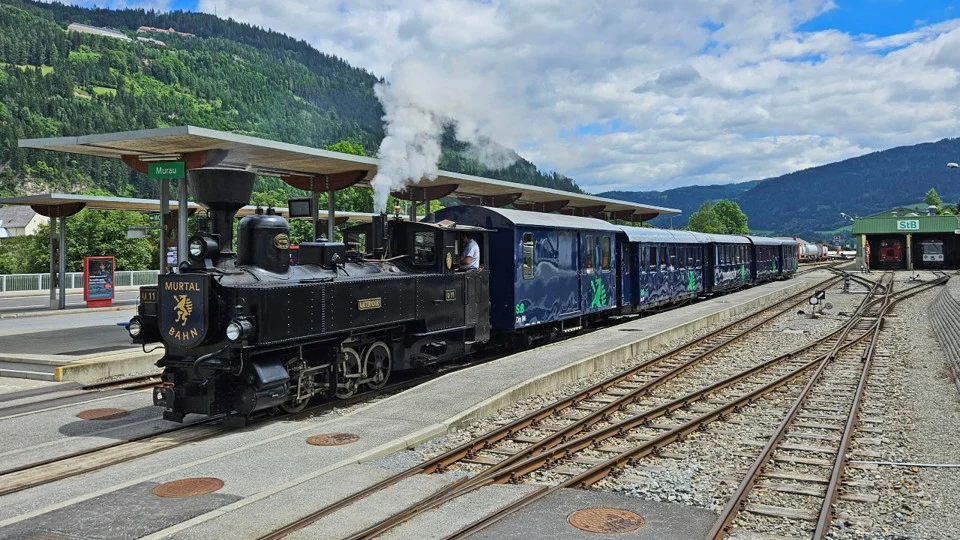
Executive Summary: A New Era for Styrian Rail
The Austrian state of Styria has reached a pivotal decision regarding the future of its transportation infrastructure: the comprehensive electrification and modernization of the historic Murtalbahn. This narrow-gauge railway, a vital artery connecting Unzmarkt and Tamsweg, is set to undergo a radical technological transformation. By transitioning from traditional diesel operations to a state-of-the-art electric fleet, Styria aims to align this scenic route with modern sustainability standards, improve travel efficiency, and preserve the long-term viability of the regional rail network.
The project represents a significant financial commitment, with an estimated investment of EUR 169 million. Beyond mere infrastructure upgrades, the initiative centers on a landmark cross-regional collaboration: the joint procurement of 17 Electric Multiple Units (EMUs) in partnership with the Zillertalbahn and Pinzgauer Lokalbahn. This unified approach is designed to overcome the unique challenges posed by the 760-mm "Bosnian gauge," ensuring that narrow-gauge operators can benefit from economies of scale previously unavailable to them.
The Murtalbahn: A Brief Chronology
The Murtalbahn has long been more than just a transit line; it is a cultural and logistical cornerstone of the Mur Valley.
- Historical Context: Established in the late 19th century, the 760-mm narrow-gauge track was designed to navigate the challenging topography of the Austrian Alps. For decades, it has served both local commuters and the thriving tourism sector.
- Recent Renovations: In recent years, the rolling stock underwent a comprehensive refurbishment program to extend its service life. Despite these efforts, technical obsolescence is looming. Engineering assessments suggest that the current fleet will reach the end of its mechanical lifespan by the mid-2030s.
- Strategic Planning (2023–2025): Recognizing the impending cliff, the Styrian state government, in coordination with transport operator Steiermarkbahn und Bus GmbH (StB), began evaluating alternatives to diesel traction.
- The Joint Tender Formation (2026): By mid-2026, the necessity of a regional alliance became clear. Styria, alongside the operators of the Zillertal and Pinzgauer lines, initiated formal discussions to pool their procurement power.
- The Future Horizon: With the current public service contract with StB valid until 2030, the project timeline is meticulously mapped to ensure that the infrastructure electrification and the delivery of the new EMUs coincide with the next phase of the service agreement.
The Economic and Technical Rationale
Overcoming the "Narrow-Gauge" Market Barrier
The primary hurdle for the Murtalbahn has always been its specific track gauge of 760 mm. In the global rail manufacturing market, standard-gauge trains are mass-produced, making them cost-effective. Conversely, 760-mm rolling stock is considered a niche product. Small, individual orders for these vehicles often result in prohibitive costs per unit due to the lack of competitive tender interest.
By forming a consortium to purchase 17 EMUs, the operators of the Murtalbahn, Zillertalbahn, and Pinzgauer Lokalbahn are essentially creating a synthetic market. This collective purchasing power reduces the price per unit through volume and incentivizes manufacturers to provide long-term service and support agreements. Furthermore, it creates a pool of common spare parts and technical expertise across the three lines, generating significant future synergies in maintenance and operational management.
Infrastructure Modernization
Electrification is not merely about changing the engine type; it requires a total overhaul of the line’s supporting infrastructure. The project includes:
- Catenary Installation: Extending overhead lines across the route between Unzmarkt and Tamsweg.
- Depot and Workshop Adaptation: Current maintenance facilities designed for diesel engines must be retrofitted to handle high-voltage electric components and modern electronic diagnostic systems.
- Route Optimization: A key goal of the modernization is to improve the travel experience. By upgrading the signaling systems and track geometry, the project aims to reduce the travel time between Unzmarkt and Murau from 36 minutes to just 24 minutes—a 33% increase in efficiency.
Supporting Data and Financial Framework
The financial scope of the project is ambitious, totaling EUR 169 million. This investment covers the entire lifecycle of the upgrade, from initial design and environmental impact assessments to the final commissioning of the EMUs.
| Category | Estimated Cost/Impact |
|---|---|
| Total Investment | EUR 169 Million |
| Fleet Procurement | 17 EMUs (Jointly with partners) |
| Travel Time Reduction | 12 minutes (Unzmarkt–Murau) |
| Gauge Standard | 760 mm (Narrow-gauge) |
| Contract Status | StB service contract active until 2030 |
The funding model is contingent upon a tripartite agreement. The state of Styria has signaled its willingness to provide its share, provided that the federal government of Austria and the state of Salzburg—which shares an interest in the regional rail connectivity—uphold their respective funding obligations.
Official Perspectives: Navigating the Politics of Infrastructure
Claudia Holzer, the Regional Councilor for Transportation and Infrastructure in Styria, has been the public face of this project. In her recent briefings, she emphasized that the electrification of the Murtalbahn is not an isolated local desire but a necessary component of Austria’s national climate goals.

"The working group is currently finalizing the tender documentation," Holzer announced. She noted that the state’s commitment is firm but conditional. "Styria’s approval of the project’s funding is contingent solely on the federal government and the state of Salzburg providing co-financing in accordance with existing funding rules."
This stance underscores the complexity of infrastructure financing in Austria. Because the Murtalbahn spans borders and serves regional development goals, it requires a unified financial commitment. The federal government, under the banner of the national "Climate and Energy Fund," is expected to view the project favorably, given the move away from fossil-fuel-dependent transport. However, negotiations remain delicate as all parties work to balance budget constraints with the urgency of the mid-2030s deadline.
Implications: A Model for European Regional Rail
The implications of the Murtalbahn project extend far beyond the borders of Styria. If successful, this project will serve as a blueprint for how European regions can sustain historic, narrow-gauge railways in an era that demands both rapid modernization and carbon neutrality.
Environmental Impact
Transitioning from diesel to electric traction will significantly reduce the carbon footprint of regional tourism and daily commuting in the Mur Valley. This aligns with the European Union’s "Green Deal," which encourages the shift of passenger traffic to electrified rail networks. By preserving the railway as a functional, modern entity, the region avoids the ecological and social cost of replacing the rail link with increased bus or private vehicle traffic.
Economic Vitality
The Murtalbahn is a lifeline for the local economy. It facilitates tourism in the Murau district and provides essential mobility for residents who rely on public transport for work and education. By reducing travel times and increasing service reliability through modern EMUs, the state is effectively investing in the economic competitiveness of the valley. A faster, more comfortable, and greener train line is likely to see an uptick in ridership, potentially reversing trends of rural depopulation by making the region more accessible to commuters and remote workers.
Technical Resilience
The collaborative procurement strategy is perhaps the most innovative aspect of this news. By banding together with the Zillertalbahn and Pinzgauer Lokalbahn, the operators are proving that niche rail infrastructure can survive if the stakeholders are willing to innovate their procurement models. This sets a precedent for other European heritage lines that are currently struggling with aging fleets and a lack of manufacturing interest.
Conclusion: The Path Forward
The decision to electrify the Murtalbahn is a bold step toward the future of Austrian regional transport. As the state government enters the next phase of negotiations with the federal government and the state of Salzburg, the stakes remain high. The project is a delicate balance of history and innovation—preserving the unique 760-mm character of the line while integrating the high-performance technology of the 21st century.
With the current contract with Steiermarkbahn und Bus GmbH running until 2030, the next four years will be critical. The successful finalization of the tender documentation and the securement of the EUR 169 million investment will dictate whether the Murtalbahn remains a relic of the past or becomes a thriving, electric-powered backbone of the Styrian transport system.
For the people of the Mur Valley, the promise of a 24-minute transit between Unzmarkt and Murau is more than just a reduction in time; it is a promise of connectivity, environmental stewardship, and a vibrant, modern future for one of Austria’s most cherished rail lines. The coming months of political negotiation will ultimately determine if this vision becomes a reality on the tracks.

