

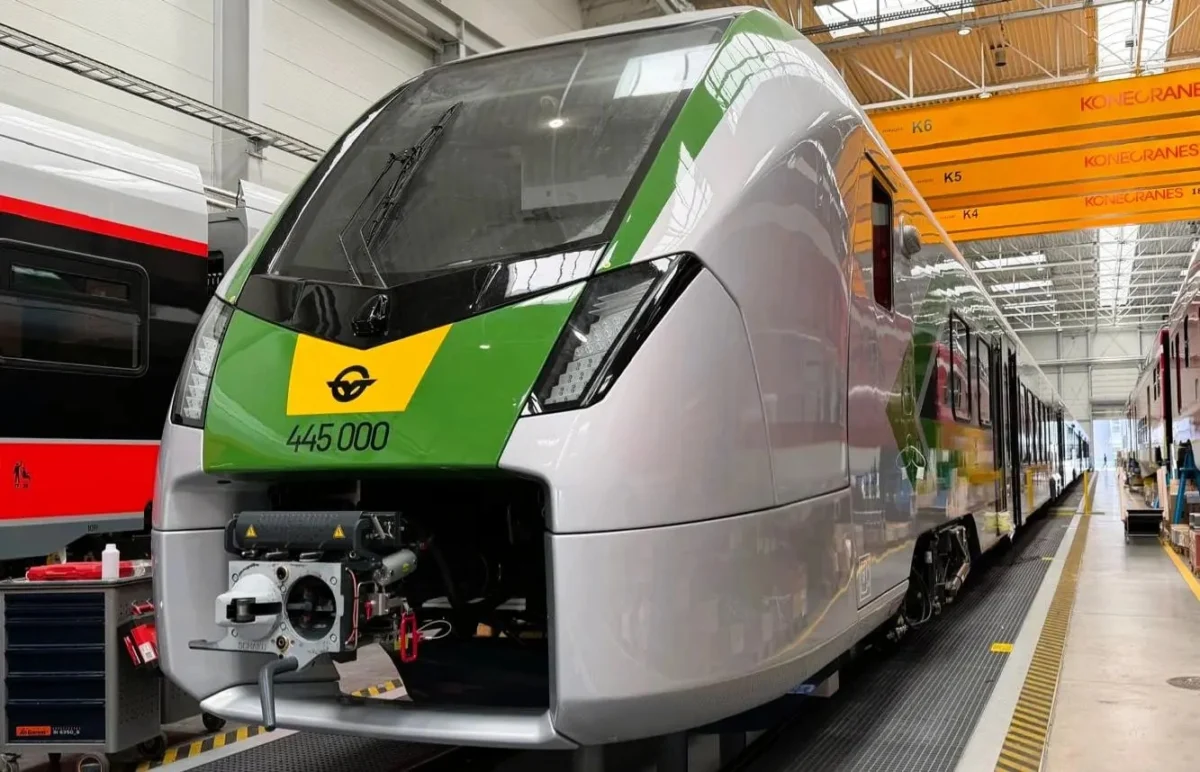
Siedlce, Poland / Szolnok, Hungary – [Current Date, e.g., November 15, 2026] – A significant milestone has been reached in the modernization of Hungarian rail transport, as the production of GYSEV’s highly anticipated new InterCity trains moves into its final stages. The first four of 11 state-of-the-art FLIRT InterCity electric trains, ordered by the Hungarian-Austrian rail operator GYSEV, are now undergoing final assembly at Stadler’s facility in Siedlce, Poland. This critical phase precedes an extensive international testing program set to commence in August 2026 across three European nations, heralding a new chapter for passenger comfort and connectivity on Hungary’s long-distance routes.
This ambitious project, marking Hungary’s first acquisition of new InterCity trains in three decades, promises to elevate the passenger experience to contemporary European standards. With the first units slated for commercial service in the second half of 2027 and the entire fleet expected to be operational by summer 2028, the initiative underscores a concerted effort to revitalize the nation’s railway infrastructure and services.
A New Era for Hungarian InterCity Travel
The procurement of these 11 FLIRT InterCity electric trains represents a pivotal investment by GYSEV, the joint Hungarian-Austrian railway company renowned for its cross-border operations. These modern trainsets are poised to redefine long-distance travel on key routes, offering passengers an unparalleled level of comfort, accessibility, and technological integration. The introduction of these trains is not merely an upgrade but a transformative leap, addressing a long-standing need for contemporary rolling stock in the Hungarian railway system.
Dávid Vitézy, Hungary’s Minister of Transportation, highlighted the strategic importance of this development. He confirmed that the initial quartet of trains is actively undergoing final assembly in Siedlce, Poland. Crucially, the car bodies for these advanced trains were fabricated at Stadler’s factory in Szolnok, Hungary, before being transported to Poland, underscoring a significant Hungarian contribution to the manufacturing process and strengthening the domestic industrial base. The first complete train is anticipated to arrive in Hungary by the close of the current year, setting the stage for rigorous internal testing and the intricate authorization procedures essential for their eventual deployment.
Chronology of Modernization: From Concept to Rails
The journey of these InterCity trains from concept to reality is a testament to meticulous planning, international collaboration, and advanced manufacturing capabilities.
Order and Design Phase: The initial agreement between GYSEV and Stadler for the 11 FLIRT InterCity electric trains marked the beginning of this transformative project. The FLIRT (Fast Light Intercity and Regional Train) platform, a highly successful modular train concept by Stadler, was chosen for its proven reliability, efficiency, and adaptability to various operational requirements. The design phase focused on tailoring the standard FLIRT features to the specific demands of Hungarian InterCity service, including higher speeds, enhanced passenger amenities for longer journeys, and dual-voltage capabilities for cross-border operations into Austria.
Hungarian Industrial Heartbeat: Car Body Production in Szolnok: A critical and commendable aspect of this project is the role of Stadler’s Hungarian manufacturing facility. The car bodies, the foundational structures of these sophisticated trains, were produced at the Stadler plant in Szolnok. This operation not only showcases Hungary’s industrial prowess in high-tech manufacturing but also provides substantial economic benefits, including job creation and skill development within the local workforce. The precision engineering and robust construction at Szolnok ensure the structural integrity and longevity of the trains.
Final Assembly in Siedlce, Poland: Following the manufacturing of the car bodies, these components were transported to Stadler’s state-of-the-art facility in Siedlce, Poland, for the intricate process of final assembly. This stage involves integrating all the complex subsystems – including propulsion, braking, electrical, interior fittings, and passenger amenities – into the car bodies. The final assembly phase is a meticulous process, requiring high levels of technical expertise and quality control to ensure every component functions seamlessly.
Anticipated Arrival and Pre-Service Preparations: The expectation of the first complete train arriving in Hungary by the end of the current year is a significant marker. Upon arrival, the train will undergo comprehensive internal testing by GYSEV and Stadler engineers. This includes static and dynamic tests within a controlled environment, ensuring all systems are functioning as designed before wider operational trials. Concurrently, the lengthy and complex authorization procedures mandated by national and international railway safety authorities will commence, paving the way for eventual commercial operation.
The Multi-faceted Testing Regimen: A Pan-European Effort: A crucial phase in the commissioning of these trains is the extensive testing program, slated to begin in August 2026. This multi-national testing approach, spanning Romania, the Czech Republic, and Hungary, is a standard yet complex requirement for modern rolling stock designed for cross-border operations.
Stadler emphasized that testing in multiple countries is indispensable for the comprehensive certification and verification of the trains. This multi-jurisdictional approach allows for the rigorous assessment of the trains’ performance under diverse operational conditions, including varying signaling systems, track geometries, voltage requirements, and regulatory frameworks specific to each country. The trains, engineered for InterCity service, are designed to achieve speeds of up to 160 km/h, and these tests will confirm their capabilities and safety at these speeds.
For Romania, the inclusion in this testing schedule further solidifies its position as a vital hub for European train certification. Following the testing of Alstom IC5 trains destined for Denmark, the new GYSEV InterCity trains will also utilize Romania’s specialized testing infrastructure before entering commercial service, highlighting the country’s critical role in ensuring the safety and interoperability of modern European rail fleets.
Phased Introduction to Commercial Service: If the ambitious schedule holds, the first of these advanced trains will commence commercial service in the second half of 2027. This phased introduction will allow for real-world operational data collection and fine-tuning. The full fleet of 11 units is projected to be available for passenger service by the summer of 2028, by which point the entire network designated for these trains will benefit from the enhanced capacity and modern amenities.
Supporting Data: Technical Excellence and Operational Impact
The new FLIRT InterCity trains are not merely an aesthetic upgrade; they embody a significant leap in technical sophistication and passenger-centric design, poised to deliver tangible benefits across Hungary’s railway network.
Cutting-Edge Specifications: Each new trainset will comprise five cars, engineered for optimal passenger flow and operational efficiency. A defining characteristic is their low-floor design, ensuring universal accessibility for passengers with reduced mobility, prams, or heavy luggage – a crucial feature for modern public transport. The trains will be fully air-conditioned, providing a comfortable environment regardless of external weather conditions. They will offer both first- and second-class compartments, catering to diverse passenger needs, complemented by a modern passenger information system that provides real-time updates and essential travel information. Connectivity is prioritized with ubiquitous Wi-Fi access and USB-C charging ports available at seats, addressing the demands of today’s connected traveler.
Enhanced Onboard Amenities: Recognizing the longer duration of InterCity journeys, the trains will feature a dedicated catering area equipped with vending machines, offering a convenient selection of food and beverages. A notable and flexible design element is the adaptability of the interior, allowing for seasonal configurations. In the summer months, for instance, the trains will be capable of accommodating up to 18 bicycles, a feature that significantly enhances their appeal for leisure travelers and commuters seeking sustainable multimodal transport options.
Strategic Route Deployment and Cross-Border Capability: The new fleet will primarily serve the crucial corridors connecting Budapest with Győr, Sopron, and Szombathely. These routes are vital arteries for both domestic travel and international connectivity, particularly towards Western Hungary and Austria. The trains’ dual-voltage configuration is a key enabler, allowing them to seamlessly operate in Austria, thereby extending GYSEV’s service reach and reinforcing cross-border rail links. This capability is essential for facilitating economic ties, tourism, and commuter traffic between Hungary and its western neighbor.
Stadler’s FLIRT Platform: A Global Success Story: The choice of the FLIRT platform is indicative of its proven track record. Stadler proudly notes that the FLIRT is its most successful product line, with over 3,000 units sold worldwide since its introduction in 2002. This modular electric multiple unit (EMU) is celebrated for its flexibility, reliability, and cost-effectiveness, making it a preferred choice for operators across diverse geographical and operational contexts.
Hungarian Industrial Prowess in Focus: Hungary plays an exceptionally significant role within the FLIRT success story. Out of approximately 6,000 car bodies produced by Stadler globally to date, nearly 4,000 were manufactured specifically for FLIRT trains at the Szolnok plant. This remarkable figure equates to roughly 1,000 four-car trainsets, underscoring the Szolnok facility’s pivotal contribution to Stadler’s global production network. Stadler currently employs approximately 1,000 individuals in Hungary, a number projected to increase in the coming years, further solidifying the country’s position as a critical manufacturing hub for modern rolling stock.
Financial Backbone: The European Investment Bank: The substantial investment required for this fleet acquisition is being financed by GYSEV through a loan from the European Investment Bank (EIB). The EIB, as the lending arm of the European Union, plays a crucial role in supporting projects that align with EU policy objectives, particularly in sustainable transport, environmental protection, and economic development. The EIB’s involvement highlights the project’s strategic importance and its contribution to enhancing sustainable mobility within the region. This financing mechanism underscores a broader European commitment to modernizing railway infrastructure as a cornerstone of greener and more efficient transportation networks.
Official Responses and Strategic Implications
The introduction of these new InterCity trains has elicited strong official responses, reflecting both pride in the modernization efforts and a candid assessment of the challenges facing Hungary’s broader rail sector.
Minister Vitézy’s Vision and Critique: Dávid Vitézy, Hungary’s Minister of Transportation, articulated the profound impact these trains will have on the passenger experience. He stated that these new units will introduce a level of comfort and service quality into Hungary that is already standard in many other European countries. This includes climate-controlled environments, universal accessibility, seamless connectivity through Wi-Fi and charging ports, and services specifically tailored to the demands of InterCity passengers.
However, Vitézy also used the occasion to highlight a critical issue: the protracted nature of train fleet acquisition. He noted that the entire process—from securing financing and initiating production to conducting extensive testing, achieving certification, and finally entering service—is inherently lengthy. In this context, the Minister openly criticized MÁV, Hungary’s state-owned rail operator, for its perceived inertia regarding similar acquisitions in recent years. Vitézy warned that delayed decisions concerning rolling stock are now manifesting as shortcomings in passenger services and that rectifying these delays will require several years of concerted effort and investment. His remarks underscore a strategic imperative for continuous modernization across the entire national rail network to avoid falling further behind international standards.
GYSEV’s Operational Enhancement: For GYSEV, the new fleet signifies a robust enhancement of its operational capabilities. The company already operates 20 FLIRT trains, while MÁV operates a much larger fleet of 123 units of the same type. However, the new FLIRT InterCity trains are specifically designed for long-distance travel, differentiating them from the regional and suburban services typically handled by existing FLIRT fleets. This specialized design ensures that GYSEV can provide superior service quality on its main routes connecting Budapest, Győr, Sopron, and Szombathely, particularly in an area characterized by heavy traffic towards Western Hungary and Austria. The added capacity, speed, and comfort will undoubtedly attract more passengers, supporting the shift from road to rail.
Stadler’s Commitment to Hungarian Rail: Stadler’s ongoing investment in Hungary, particularly through its Szolnok plant, reinforces its commitment to the Hungarian market and the broader Central European region. The company’s significant employee base and the increasing numbers projected for the coming years highlight a long-term partnership that extends beyond mere train supply to include industrial collaboration and local economic development. The success of the FLIRT platform, heavily reliant on Hungarian manufacturing expertise, is a testament to this symbiotic relationship.
Broader Implications: A Catalyst for Rail Renaissance
The arrival of GYSEV’s new FLIRT InterCity fleet holds multifaceted implications for Hungary, the regional rail network, and the wider European transport landscape.
Modernization and Passenger Experience: For Hungarian passengers, these trains symbolize a tangible improvement in the quality of long-distance rail travel. The array of modern amenities – from air conditioning and Wi-Fi to accessibility features and bike capacity – addresses contemporary traveler expectations, making rail a more attractive and competitive mode of transport compared to road or air for domestic and short-haul international journeys. This modernization is crucial for fostering a culture of rail usage and aligning Hungarian services with those found in leading European countries.
Strengthening Regional and Cross-Border Connectivity: The strategic deployment on routes to Sopron and Szombathely, coupled with dual-voltage capability for operation in Austria, significantly enhances regional connectivity. This not only facilitates easier travel for commuters and tourists but also strengthens economic ties between Hungary and Austria. Improved rail links are vital for the efficient movement of people and goods, contributing to regional economic integration and cohesion.
Environmental Sustainability: As electric trains, the new FLIRT fleet aligns perfectly with the European Union’s ambitious climate targets and the broader global push for sustainable transport. By offering an attractive alternative to carbon-intensive modes of transport, these trains contribute to reducing greenhouse gas emissions and improving air quality. The investment in electric rolling stock is a proactive step towards decarbonizing Hungary’s transport sector and promoting environmentally responsible travel.
Industrial Growth and Expertise: The project’s emphasis on local manufacturing at the Stadler Szolnok plant underscores the significant role of the rail industry in fostering high-skilled employment and technological expertise within Hungary. This collaboration not only supports domestic industrial growth but also positions Hungary as a key player in the European rail manufacturing ecosystem, attracting further investment and innovation.
A Call for Broader Investment: Minister Vitézy’s critical remarks regarding MÁV’s acquisition strategy serve as a stark reminder of the broader challenges facing Hungary’s rail infrastructure. While GYSEV’s investment is commendable, a comprehensive modernization effort across the entire national network is essential. This project could serve as a catalyst, demonstrating the benefits of timely investment in rolling stock and encouraging other operators to follow suit, ensuring that the entire Hungarian population can benefit from modern, efficient, and comfortable rail services.
In conclusion, the final assembly and imminent testing of GYSEV’s new FLIRT InterCity trains represent more than just the delivery of new vehicles; they symbolize Hungary’s renewed commitment to a modern, passenger-focused, and sustainable railway future. With these trains, Hungary is not just catching up but is actively laying down tracks for a more connected and comfortable travel experience for generations to come.

