

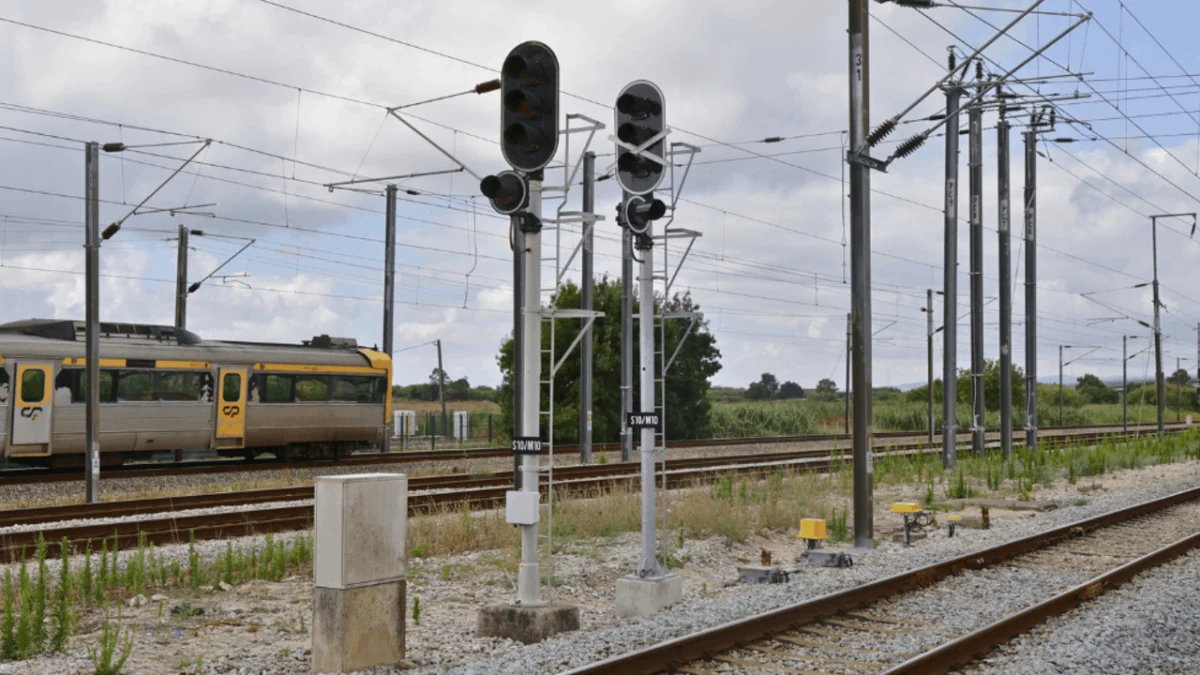
Executive Summary: A Milestone in Digital Transformation
In a significant stride toward the modernization of the Iberian Peninsula’s transport infrastructure, Infraestruturas de Portugal (IP) has officially announced the early completion of a critical milestone in its rail digitalization roadmap. The project, which involved the installation of advanced electronic signaling systems across 20 kilometers of high-traffic track within the Lisbon metropolitan area, marks a pivotal shift in how Portugal manages its rail network capacity, safety, and efficiency.
By integrating state-of-the-art electronic signaling, IP is not merely upgrading legacy hardware; it is laying the foundational infrastructure required for the future of automated, interoperable European rail travel. This achievement, part of the broader Recovery and Resilience Plan (NRRP), underscores Portugal’s commitment to aligning its national rail network with the European Union’s rigorous technical standards.
Chronology of Progress: From Planning to Implementation
The journey toward this achievement did not happen in a vacuum. It is the result of years of strategic planning, tender processes, and complex engineering works conducted under the pressure of tight European deadlines.
The Planning Phase (2021–2022)
Following the approval of Portugal’s Recovery and Resilience Plan, the government identified rail digitalization as a cornerstone for economic recovery and climate goals. IP set an ambitious timeline to upgrade the signaling architecture on two of the country’s most vital arteries: the Linha de Cintura (Ring Line) and the Linha do Norte (Northern Line).
The Engineering Phase (2023–2025)
The installation phase involved retrofitting key junctions and stations, specifically targeting the Campolide, Oriente, Alverca, and Azambuja hubs. These stations serve as the nerve centers for commuter and long-distance traffic. Engineers had to balance the integration of new electronic systems with the maintenance of existing traffic flows—a feat that required precise, phased implementation during night shifts and off-peak hours to minimize public disruption.
The Verification Milestone (July 2026)
In July 2026, the completion was finalized with the formal signing of the installation report. This document, signed in the presence of representatives from Recuperar Portugal and IP’s technical leadership, served as the final audit confirmation that the systems met all safety and interoperability requirements mandated by the European Union.
Technical Scope and Supporting Data
The core of this achievement lies in the shift from legacy mechanical or relay-based signaling to advanced electronic interlocking and control systems.
Infrastructure Highlights
- The Linha de Cintura: As the primary bypass for the Lisbon metropolitan area, the digitalization of this line significantly reduces bottlenecking, allowing for higher train frequency and improved reliability for both suburban and freight traffic.
- The Northern Line (Linha do Norte): As the primary corridor connecting Lisbon to Porto, any efficiency gain here has a multiplicative effect on the entire national economy. The 20-kilometer upgrade serves as a pilot and expansion of high-density signaling, which will eventually be scaled further north.
- Station Upgrades: The stations of Campolide, Oriente, Alverca, and Azambuja now feature real-time data monitoring, automated routing, and enhanced communication protocols between the signaling system and the train drivers’ consoles.
Financial Context
Infraestruturas de Portugal has successfully secured 478 million euros in NRRP funding. This capital is specifically earmarked for:
- ETCS (European Train Control System) Integration: Ensuring that trains can communicate seamlessly across borders and utilize automatic train protection.
- Digital Interlocking: Reducing the risk of human error and increasing the speed of route setting.
- Communication Networks: Upgrading the underlying fiber-optic and wireless infrastructure to support high-speed data transmission between field equipment and central control centers.
Official Responses and Strategic Significance
The site visit to the newly upgraded stations served as a moment of validation for both the government and the engineering teams.
The Government Perspective
Representatives from Recuperar Portugal emphasized that this achievement is a testament to the efficacy of the NRRP framework. "Portugal is not just spending funds; we are investing in a paradigm shift," noted a project monitor during the tour. "Meeting these milestones ahead of schedule proves that our technical teams are capable of executing large-scale, complex infrastructure projects that meet the highest EU benchmarks."
The Infraestruturas de Portugal Perspective
The leadership of IP highlighted that digitalization is the "silent engine" of rail capacity. By moving to electronic signaling, IP is effectively increasing the "virtual capacity" of the existing tracks. Without adding new physical rails, the network can now support more frequent services because the safety buffers between trains can be managed with higher precision and less reliance on antiquated manual procedures.
Implications: A New Era for European Interoperability
The implications of this upgrade extend far beyond the borders of Lisbon. By aligning with the European Rail Traffic Management System (ERTMS) standards, Portugal is actively dismantling the "technological islands" that have historically hampered European rail integration.
Increased Safety and Reliability
Electronic signaling systems provide redundant layers of safety. If a fault is detected, the system defaults to a "fail-safe" state, immediately alerting control centers. This reduces the likelihood of accidents and provides a higher degree of granularity in troubleshooting, ensuring that the network is back online faster following technical issues.
Economic and Sustainability Impacts
The modernization is a critical lever for the EU’s Green Deal. By shifting passengers and freight from road to rail, Portugal is targeting significant reductions in CO2 emissions. However, for the shift to be successful, rail must be as reliable as personal vehicles. This digitalization project is the direct answer to the demand for a more predictable and competitive rail service.
Future-Proofing for High-Speed Rail
The infrastructure installed in the Lisbon metropolitan area is designed to be backward and forward-compatible. As Portugal looks toward the future of high-speed rail, these electronic signaling frameworks will serve as the backbone for future high-speed corridors. The systems are designed to support higher speeds and the complex signaling requirements of modern rolling stock, ensuring that today’s investment does not become obsolete in the next decade.
Conclusion: The Road Ahead
As Infraestruturas de Portugal looks toward the next phases of its digital roadmap, the success of this 20-kilometer milestone serves as a blueprint. The focus will now shift to scaling these improvements across the remaining network, ensuring that the efficiency gains realized in the capital are replicated in rural and inter-regional corridors.
The early completion of this project is more than just a bureaucratic win; it is a signal to the European rail industry that Portugal is a serious partner in the creation of a unified, digital, and sustainable European transport space. With 478 million euros in funding effectively deployed, the national rail operator is successfully navigating the transition from a traditional network to a high-tech, digital-first system that is ready to meet the challenges of the 21st century.
As the industry moves toward a future defined by autonomous operations and integrated data, the work completed in the Lisbon area stands as a hallmark of progress. Portugal has successfully proven that through strategic investment and rigorous technical execution, the future of rail is not just on the horizon—it is already running on the tracks.

