

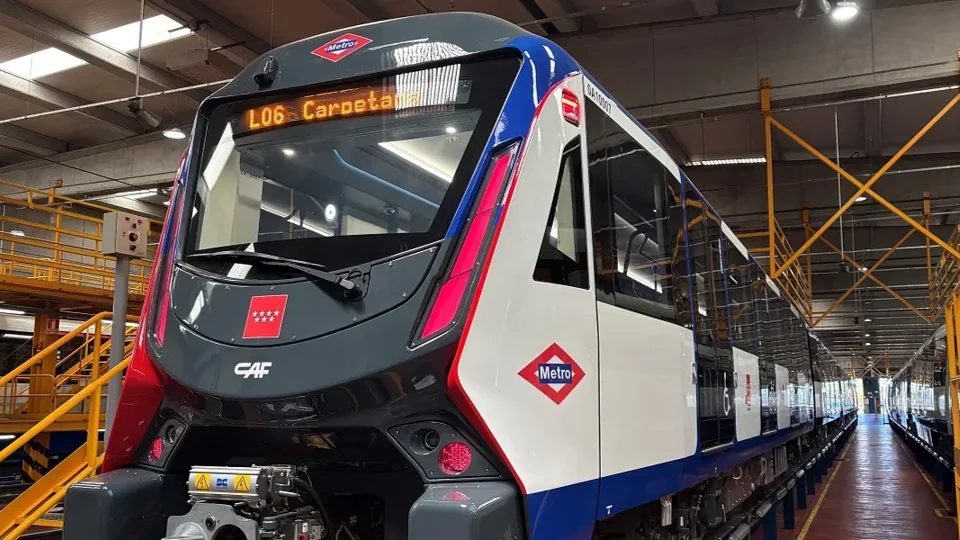
The landscape of urban transit in the Spanish capital is undergoing a profound metamorphosis. In a landmark announcement, authorities in the Community of Madrid have unveiled the first of a new generation of automated trains destined for the city’s Metro network. This development is not an isolated acquisition; it serves as the cornerstone of a broader, multi-million-euro strategy to modernize one of Europe’s most vital underground systems. As ridership numbers shatter historical records, the regional government is doubling down on a vision of "intelligent mobility"—integrating cutting-edge rolling stock, comprehensive infrastructure rehabilitation, and full-scale automation to ensure the network remains the lifeblood of Madrid.
Main Facts: The Blueprint for a Modernized Metro
On July 13, the President of the Community of Madrid, Isabel Díaz Ayuso, provided a detailed look at the future of the Madrid Metro. The centerpiece of this initiative is the deployment of 48 new driverless trains, currently being manufactured by the Spanish rolling stock giant, CAF. These trains are engineered specifically to revolutionize service on Line 6, the network’s busiest artery.
The transition to automated, driverless operation represents a shift toward a more efficient, high-frequency service model. The new fleet is not merely a replacement for aging hardware; it is a technological leap. Each train consists of six railcars spanning 109 meters in length, boasting a capacity of 1,385 passengers—a 17% increase over existing rolling stock. Furthermore, the trains are designed for superior performance, with top speeds reaching 110 km/h, a 33% increase over current models, while simultaneously reducing energy consumption by 20%.
This investment, totaling over EUR 531 million, is complemented by a wider budgetary commitment to the network’s foundational elements. From track rehabilitation to signaling upgrades, the strategy is holistic, aiming to reduce intervals between trains to just two minutes, thereby significantly increasing total network capacity by up to 70%.

Chronology: A Path to Automation
The trajectory of this project reflects a methodical approach to infrastructure lifecycle management. The timeline of this modernization program highlights the government’s commitment to sustained improvement:
- 2024: The Madrid Metro formalizes a framework agreement with CAF for the procurement of 48 six-car, high-capacity, automated trains. The initial contract encompasses 40 units, with an option for an additional eight, valued at EUR 400 million.
- Early 2026: The manufacturing phase concludes, and the initial dynamic and industrial validation tests are performed by the manufacturer to ensure the new units meet the stringent safety and performance standards of the Metro system.
- July 2026: The official unveiling of the first automated train takes place, marking the commencement of the next phase: on-site testing.
- Summer 2026: Regional authorities initiate track-testing of the new units within the Madrid Metro environment.
- Late 2026 – 2027: The program enters a rigorous phase of testing under real-world operating conditions. This includes evaluating the integration of new signaling, communications, and control systems.
- 2027: The anticipated entry into service for the new automated fleet on Line 6.
Parallel to the train delivery, a ten-month program of nocturnal station improvements is underway to prepare the 28 stations of Line 6 for the transition to automated service.
Supporting Data: Record-Breaking Demand and Infrastructure Investment
The necessity for such an ambitious upgrade is grounded in undeniable data. In the first half of 2026, the Madrid Metro recorded 389.6 million passengers—an increase of 3.6% compared to the same period in 2025. This surge is not a temporary fluctuation but a reflection of the Metro’s status as an essential, non-negotiable utility for the city’s inhabitants.
Line 6, or the "Circular Line," acts as the heartbeat of this system. Serving 430,000 passengers daily, it connects the capital’s peripheral neighborhoods without forcing commuters to pass through the congested city center. To maintain this volume while increasing frequency, the government has launched:

- EUR 8 million investment: Specifically allocated for the renovation of platforms across all 28 stations on Line 6, which will feature the installation of automatic platform screen doors to ensure safety during the high-frequency, driverless transition.
- EUR 13 million for track maintenance: A comprehensive program to renew 163 km of track. This involves the procurement of 9,050 new 18-meter-long rail sections, designed to mitigate the wear and tear caused by the high volume of daily traffic.
- System Integrity: The Metro network currently spans 294 km of double track across 12 lines, supplemented by nearly 19 km of single-track connecting tunnels and 119 km of maintenance/depot infrastructure. These investments ensure that the entire system can handle the increased load without the degradation of reliability.
Official Responses: A Vision for World-Class Transit
The government’s stance is clear: the Madrid Metro must evolve to remain competitive with the most advanced underground systems globally. President Isabel Díaz Ayuso emphasized the strategic importance of this development during the unveiling, noting that the combination of new rolling stock and modernized infrastructure is a necessary response to urban growth.
"This will once again place our metro among the most advanced underground transit systems in the world," President Ayuso stated. "This major investment will allow us to phase out older trains while we continue to uphold the highest standards of service quality."
Transportation officials have framed the project as a critical "future-proofing" exercise. By removing the traditional driver’s cab and optimizing the internal layout, the Metro is not only creating more space but is also facilitating a more responsive system. The ability to adjust service frequencies in real-time, based on live demand data, is the hallmark of the automated system being implemented.
Implications: The Long-Term Impact on Urban Life
The ripple effects of this modernization are expected to be profound. Firstly, the reduction of wait times to two minutes will alleviate the chronic "crush-loading" often experienced during peak hours, significantly enhancing the daily experience of hundreds of thousands of commuters.

Secondly, the emphasis on energy efficiency and track maintenance addresses the sustainability and lifecycle costs of the network. By reducing energy consumption by 20% across the new fleet, the Metro is aligning itself with European environmental goals, lowering the city’s overall carbon footprint.
Thirdly, the decision to carry out major station and track work exclusively at night demonstrates a sophisticated approach to service continuity. By minimizing daytime disruptions, the administration maintains public trust, ensuring that the transition to an automated future does not alienate the very people it is designed to serve.
Finally, the project signals a shift in urban planning philosophy. Madrid is increasingly viewing its transit network not just as a means to move people from point A to point B, but as an integrated, digitalized backbone of the metropolitan economy. As the city continues to grow, the ability of Line 6 to function as a high-capacity, automated loop will become the benchmark against which the rest of the network—and indeed, other European transport systems—will be measured.
In conclusion, the combination of new, high-capacity driverless trains, the automation of the Circular Line, and a sustained, heavy investment in track and platform infrastructure creates a robust framework for Madrid’s future. By anticipating demand and investing in resilience, the Community of Madrid is securing its position at the forefront of urban mobility, ensuring that its citizens enjoy a reliable, efficient, and future-ready transit experience for decades to come.

