

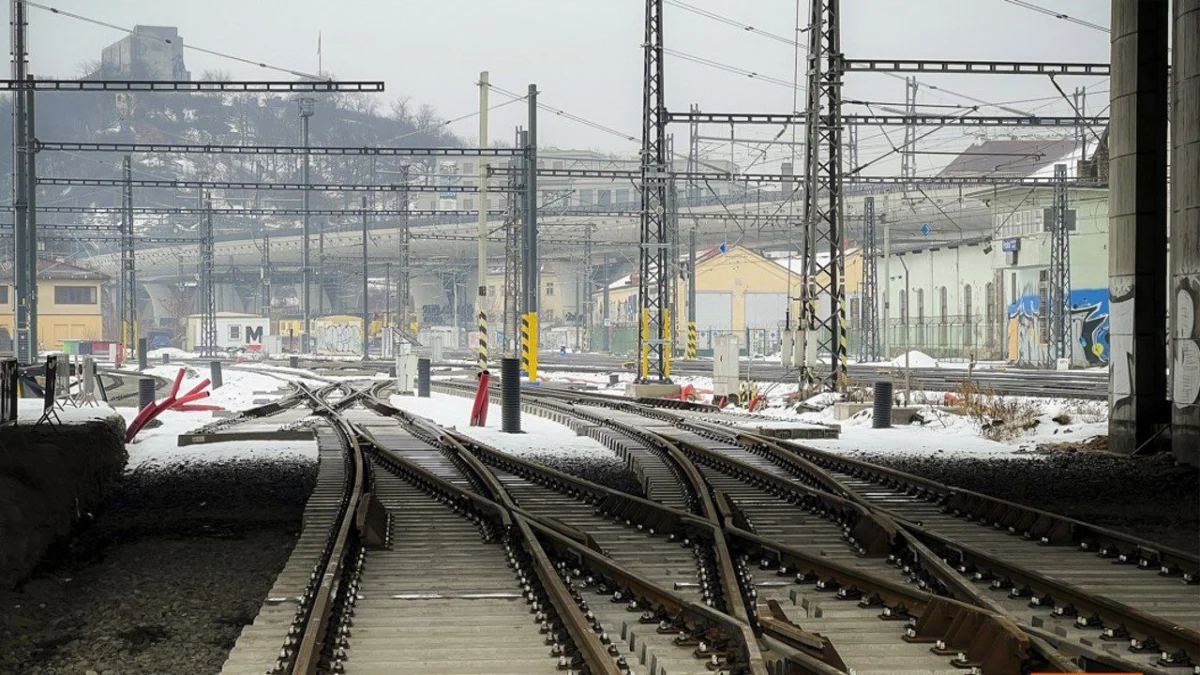
In a move set to redefine the operational landscape of the Czech Republic’s railway network, the national infrastructure manager, Správa železnic, has announced a sweeping structural transformation. Commencing this April, the organization will embark on a comprehensive modernization of its internal management hierarchy and procurement protocols. Spearheaded by the newly appointed CEO, Tomáš Tóth, the initiative aims to slash administrative bloat, foster a more competitive tender environment, and optimize the expenditure of public funds.
The reform is not merely an internal reshuffling; it represents a strategic pivot toward a more agile, cost-effective, and transparent model of infrastructure management. By decentralizing operational regions while simultaneously centralizing procurement and commercial oversight, the administration intends to build a railway network that is, as Transport Minister Ivan Bednárik put it, "better, faster, and cheaper."
Main Facts: The Scope of the Transformation
The structural reform package introduced by Správa železnic is built upon two primary pillars: Organizational Simplification and Market Liberalization.
Organizational Restructuring
The company is moving to eliminate redundant layers of middle management. The most significant operational change involves the integration of 21 regional operational units into two primary central dispatch centers located in Prague and Přerov. This move is designed to streamline communication, unify decision-making processes, and eliminate the silos that have historically hampered the efficiency of rail maintenance and development.
Procurement Reform
Central to the CEO’s mandate is the overhaul of how Správa železnic awards contracts. By lowering barriers to entry, the organization intends to dismantle the reliance on a small circle of dominant contractors. The new strategy involves:
- Revised Qualification Standards: Making it easier for small and medium-sized enterprises (SMEs) and international firms to qualify for tenders.
- Market Consultations: Engaging in preliminary market dialogues to better understand industry capacity before finalizing tender requirements.
- Unbundling Projects: Breaking down massive, monolithic contracts into specialized components, allowing specialized firms to bid on specific technological or construction segments rather than relying on one general contractor.
Chronology: The Road to Reform
The decision to restructure did not happen in a vacuum. It follows years of pressure from the European Union and domestic stakeholders to improve the efficiency of state-owned enterprises.
- Q4 2025: Initial audits of Správa železnic’s management structure were completed, identifying significant redundancies and high administrative costs in non-operational departments.
- January 2026: Tomáš Tóth was appointed as CEO with a clear mandate to reform the organization’s financial and operational footprint.
- February 2026: The Board of Directors reached a consensus on the reorganization plan, marking a rare moment of unity within the senior management team.
- April 2026 (Upcoming): The official implementation phase begins, with the merging of regional offices and the initiation of the first wave of revised procurement tenders.
- H2 2026 and beyond: Full integration of the central dispatch centers and the gradual rollout of the new, transparent procurement model for large-scale capital investments.
Supporting Data: Economic Impact and Fiscal Savings
The reform is projected to generate substantial financial benefits for the Czech taxpayer. Správa železnic has projected annual savings of approximately CZK 335.6 million (EUR 14 million).
Where the Savings Originate:
- Administrative Overhead: A targeted 20% reduction in marketing, legal, and IT expenditures.
- Workforce Optimization: The elimination of 121 administrative positions. It is important to note that the organization has explicitly stated these cuts will not touch operational staff, such as track workers, signaling professionals, or train dispatchers.
- Procurement Efficiency: By increasing the number of bidders per project, the company expects to drive down contract prices through heightened market competition.
These savings will not be lost to the general budget but are earmarked for reinvestment. The freed-up capital will be funneled directly into the preparation of critical infrastructure projects, ensuring that the long-term sustainability of the rail network is not compromised by the current belt-tightening.
Official Responses and Strategic Vision
The reform has received strong backing from the Ministry of Transport. Minister Ivan Bednárik has been a vocal proponent of the changes, framing them as a necessary step for the country’s modernization.

"Railways are the backbone of transport and have a significant impact on the economy and quality of life in the Czech Republic," Minister Bednárik noted. "State funds must be used as efficiently as possible. The new director is tasked with reducing unnecessary bureaucracy and reorganizing operations so that the railway infrastructure is built better, faster, and cheaper."
CEO Tomáš Tóth expressed relief and optimism regarding the internal reception of the plan. "The management structure has been very robust for a long time, so I expected to encounter much greater resistance to change," Tóth admitted. "However, from the very first round, we managed to find consensus across the entire management team. This is a significant success, and I thank my colleagues for their professional approach."
Implications: A New Era for the Czech Rail Market
The implications of this structural shift are far-reaching, affecting both the domestic rail industry and the broader European infrastructure market.
Enhancing Competition and Transparency
By revising technical requirements and gradually recognizing foreign certifications, Správa železnic is actively courting international players. This is expected to mitigate the risks associated with "bid-rigging" or the monopolization of state contracts. Furthermore, the push for increased transparency—through the detailed publication of price components and the wider adoption of the "Design & Build" model—aligns the Czech Republic with modern international standards of public procurement.
The "Design & Build" Philosophy
The expanded use of the "Design & Build" principle is a technical shift with significant legal and financial consequences. By integrating the design and construction phases into a single contract, the organization aims to reduce the time spent on coordination and minimize disputes that arise when separate design and construction firms blame one another for project delays. This shift should, in theory, accelerate project timelines and provide clearer accountability for the final cost.
Impact on SMEs and International Firms
Small and medium-sized enterprises (SMEs) have often been sidelined by the massive scale of railway infrastructure tenders. By breaking down projects into distinct specializations—such as separating track-laying from advanced signaling or technological equipment—the door is finally opening for highly specialized SMEs. This creates a more resilient ecosystem, as the reliance on a single, massive "prime contractor" is replaced by a diversified network of service providers.
Long-term Operational Sustainability
The consolidation of regional directorates into central hubs in Prague and Přerov is designed to harmonize operations. Historically, regional disparities in maintenance standards and procurement practices led to uneven development across the national network. Centralization will ensure that quality standards are uniform, reporting is streamlined, and that data-driven decision-making becomes the standard rather than the exception.
Conclusion: A Model for State-Owned Enterprises
The transformation of Správa železnic serves as a blueprint for how state-owned infrastructure managers can modernize without sacrificing service quality. By focusing on the "backbone" of the organization—its procurement and management structures—the leadership team has identified a path to fiscal responsibility that avoids the common pitfall of slashing operational staff.
As the implementation begins this April, the eyes of the European rail community will be on Prague. If Tomáš Tóth and his team can successfully navigate the complexities of this reorganization, they will provide a compelling case study for other nations struggling to balance the competing demands of massive infrastructure investment and limited public funding. The goal is clear: a more open, transparent, and efficient railway system that serves the needs of the Czech people while setting a new standard for infrastructure management in Central Europe.

