

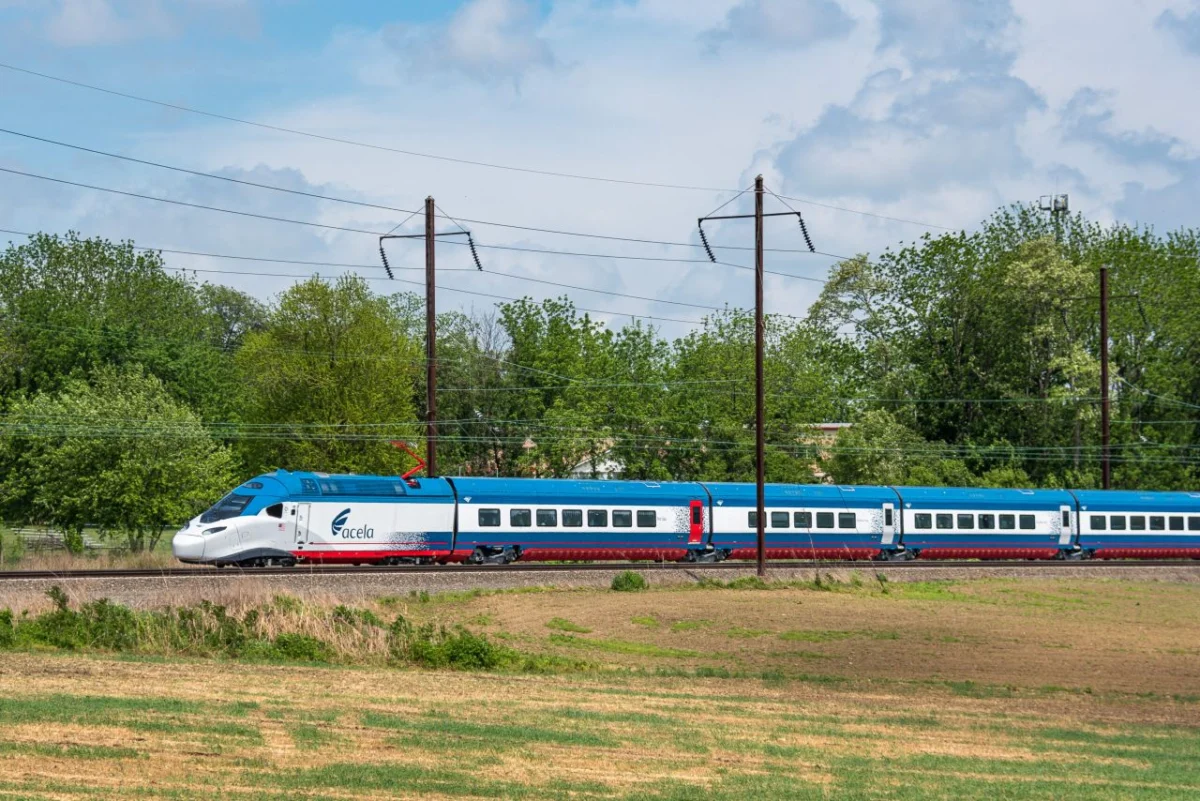
In a landmark move to reshape the backbone of American passenger rail, the U.S. Department of Transportation has officially announced a massive $4.7 billion investment package aimed at revitalizing the Northeast Corridor (NEC). As the most densely populated, busiest, and arguably most complex rail artery in the United States, the NEC serves as the vital link between major economic hubs from Boston to Washington, D.C. This infusion of capital represents a definitive commitment by the federal government to modernize aging infrastructure, enhance operational efficiency, and prepare the rail network for the demands of the 21st century.
U.S. Secretary of Transportation Sean P. Duffy announced the funding initiative, positioning it as a cornerstone of the Biden-Harris administration’s broader strategy to modernize intercity rail. The program, which utilizes federal grant mechanisms dedicated to intercity passenger rail, is specifically designed to tackle the systemic "investment backlog" that has hampered the corridor for decades.
Main Facts: The Scope of the Investment
The $4.7 billion allocation is not merely a blanket grant; it is a surgical intervention intended to address the most critical chokepoints along the NEC. The funds are earmarked for three primary categories: the modernization of station infrastructure, the optimization of rail service operations, and the long-overdue reconstruction of aging bridges and tunnels.
Central to this effort are the two most iconic, yet physically challenged, transit hubs in the nation: New York’s Penn Station and Washington’s Union Station. These stations, which handle hundreds of thousands of commuters and intercity travelers daily, have long suffered from overcrowding, outdated facilities, and capacity constraints that limit the growth of high-speed rail services.
The grant program operates under a rigorous framework. To be considered for this round of funding, projects must be explicitly listed in the 2026 version of the NEC project inventory. The deadline for project submissions is set for May 5, 2026. This timeline is aggressive, reflecting an urgent desire by federal regulators to move from planning to construction as rapidly as possible.
Chronology: A History of Need and the Path to Modernization
The Northeast Corridor is a relic of the industrial age, yet it serves the digital-age economy. Its history is a testament to both American ingenuity and long-term deferred maintenance.
- 19th and Early 20th Centuries: The core infrastructure, including many of the tunnels and bridges currently in use, was constructed. These structures were built for a different era of locomotive technology and passenger volume.
- The Late 20th Century: As rail travel in the U.S. declined in favor of aviation and the interstate highway system, the NEC faced decades of underinvestment. By the time Amtrak was established in 1971, the infrastructure was already showing signs of significant decay.
- 2010s–2023: Recognition of the NEC’s strategic importance grew. Major initiatives, such as the Gateway Program (aimed at expanding tunnel capacity into New York), began to take shape as the necessity of preventing a catastrophic infrastructure failure became clear.
- 2026 (The Current Moment): The announcement of the $4.7 billion investment marks a transition from reactive repairs to proactive modernization. This funding serves as the latest and most significant installment of federal support, building upon the foundations laid by recent infrastructure legislation.
Supporting Data: Why the Northeast Corridor Matters
The statistics surrounding the Northeast Corridor underscore why the U.S. government views it as an existential priority for the national transportation network.
- Passenger Volume: The NEC facilitates over 800,000 daily passenger trips when accounting for Amtrak, commuter rail services (such as NJ Transit, SEPTA, and Metro-North), and local transit providers.
- Economic Impact: The corridor runs through states that account for approximately 20% of the U.S. Gross Domestic Product (GDP). Efficient movement of the workforce along this corridor is essential to the economic health of the Northeast and the nation at large.
- Infrastructure Age: A significant portion of the rail infrastructure along the NEC is over 100 years old. This includes bridges that are functionally obsolete and tunnels that require massive, disruptive maintenance projects to remain operational.
- Operational Reliability: According to recent Department of Transportation audits, the current state of repair along the NEC contributes to thousands of minutes of delay annually. By investing in modern signaling, track geometry, and station throughput, the government aims to recover millions of hours in lost productivity for travelers.
Official Responses and Strategic Intent
U.S. Secretary of Transportation Sean P. Duffy, in his address regarding the announcement, emphasized that this is not just about bricks and mortar; it is about "redefining the passenger experience."
"For too long, we have treated the Northeast Corridor as a series of disparate parts rather than a cohesive, high-performance system," Duffy stated. "By focusing on our primary hubs, we are creating a ripple effect of efficiency. When Penn Station flows better, the entire system—from D.C. to Boston—feels the impact in reduced delays and increased reliability."
Amtrak leadership has echoed these sentiments, noting that the investment allows the national rail carrier to finally address the "bottlenecks that have held us hostage for decades." From the perspective of Amtrak, the funding is the missing piece of the puzzle that allows them to move forward with the acquisition of the next-generation Acela fleet and other long-distance fleet expansions.

Industry analysts have praised the focus on "priority projects." By requiring projects to be part of the official NEC inventory, the Department of Transportation is ensuring that funds are not diluted by "pet projects" but are instead concentrated on systemic, high-impact improvements that provide the greatest return on investment for the public.
Implications: A New Era for American Rail
The implications of this $4.7 billion investment are far-reaching, affecting everything from local commuting patterns to the national strategy for climate change and energy independence.
1. Enhancing Capacity and Reliability
The primary goal is to increase the frequency of trains. With modernized signaling and optimized terminal operations, the NEC could potentially move 20% to 30% more passengers during peak hours. This is essential for addressing the overcrowding that has become a hallmark of the commute between Washington and New York.
2. The Multi-Modal Hub Model
The transformation of Penn Station and Union Station is intended to turn these facilities into true multi-modal hubs. By integrating high-speed rail with local transit, ride-sharing, and bicycle infrastructure, the DOT hopes to make rail the default choice for regional travel, thereby reducing congestion on the I-95 corridor—the most congested highway in the nation.
3. Sustainability and the "Green" Shift
Rail is significantly more energy-efficient per passenger mile than aviation or private vehicular travel. As the U.S. seeks to lower its carbon footprint, shifting commuters from short-haul flights and single-occupancy vehicles to an electrified, high-speed rail network is a strategic imperative. This investment is effectively a down payment on a lower-carbon future.
4. Setting a Precedent for Future Corridors
The success of this funding model—combining federal grants with strict project inventory requirements—is likely to serve as a blueprint for other regions. The Midwest (the Chicago Hub) and the California High-Speed Rail project are watching closely. If the NEC project demonstrates that large-scale infrastructure can be modernized without crippling daily operations, it will likely unlock further political and financial capital for rail projects nationwide.
Conclusion: The Road Ahead
As the May 5, 2026, deadline for project submissions approaches, the pressure is on state transportation agencies, transit authorities, and Amtrak to finalize their proposals. The $4.7 billion is a substantial amount, yet the scale of the NEC’s needs remains immense.
This investment is not the final chapter in the story of the Northeast Corridor; rather, it is the beginning of a multi-year, multi-billion-dollar effort to rebuild a piece of American history into a future-ready asset. For the millions of travelers who rely on this corridor, the promise is one of greater reliability, improved comfort, and a more sustainable way to navigate the most vital stretch of the American economy.
The federal government has signaled that the era of "deferred maintenance" is over. In its place, the administration is betting on a future where the train is not just a legacy mode of transport, but the heartbeat of American mobility. As the machinery of construction begins to turn in the coming months, the results will be measured not just in dollars spent, but in the efficiency, connectivity, and vitality of the cities that define the Northeast.

