

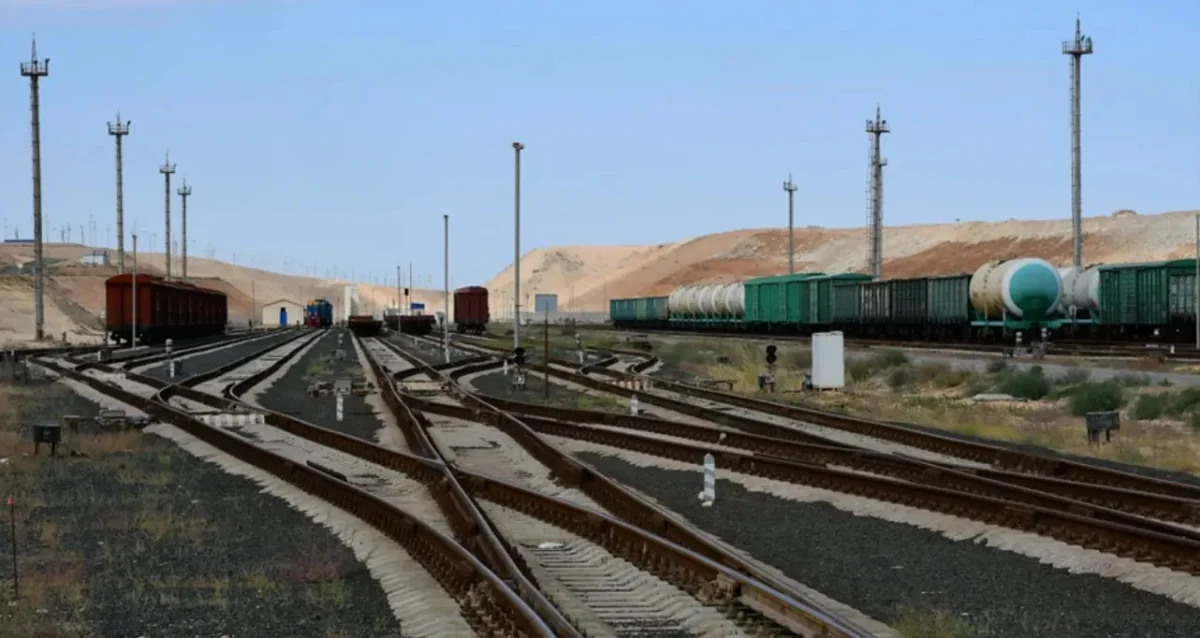
In a landmark move to fortify the logistical backbone of Central Asia, the European Bank for Reconstruction and Development (EBRD) has announced a strategic investment of up to USD 125 million in a Eurobond issuance by Kazakhstan Temir Zholy (KTZ), the national railway operator of Kazakhstan. This financial injection is part of a larger USD 1 billion bond issuance listed on both the London Stock Exchange and the Astana International Exchange, marking a significant milestone in the modernization of one of the world’s most critical transit corridors.
The initiative is not merely a financial transaction but a long-term commitment to enhancing the efficiency, safety, and sustainability of the Trans-Caspian International Transport Route (TITR)—frequently referred to as the "Middle Corridor." As global supply chains face increasing pressure to diversify, the modernization of KTZ’s infrastructure has become a focal point for international trade stakeholders.
Main Facts: A Strategic Capital Injection
The EBRD’s participation in the KTZ Eurobond issuance is designed to serve as a catalyst for institutional reform and physical infrastructure renewal. By providing USD 125 million, the EBRD is anchoring a broader effort to revitalize Kazakhstan’s rail network, which serves as a vital bridge between the manufacturing hubs of East Asia and the consumer markets of Europe.
The Scope of the Investment
- Total Bond Issuance: USD 1 billion.
- EBRD Commitment: Up to USD 125 million.
- Primary Focus Areas: Modernization of passenger stations, digital transformation, and infrastructure capacity upgrades along the Middle Corridor.
- Corporate Governance: The project includes a robust technical cooperation component aimed at aligning KTZ with international best practices in rail operations and corporate cybersecurity.
The capital will specifically target the renovation of passenger terminals, focusing on safety upgrades, modernized lighting, and significantly improved accessibility for persons with disabilities. Furthermore, the investment is expected to optimize throughput capacity, allowing for higher frequency and faster processing of both freight and passenger traffic.
Chronology: The Path to the Middle Corridor’s Expansion
The trajectory leading to this investment reflects years of geopolitical and economic maneuvering to establish the Middle Corridor as a viable alternative to northern maritime and land routes.
- Pre-2022: The Trans-Caspian route existed as a secondary logistical option, largely underutilized compared to the traditional northern rail corridors passing through Russia.
- 2022–2023: Geopolitical shifts underscored the urgent need for a reliable, non-traditional route connecting China and Europe. KTZ began accelerating investments to remove bottlenecks at port terminals and border crossings.
- Late 2024: KTZ initiated preliminary roadshows for its multi-billion dollar Eurobond issuance, seeking international institutional backing to deleverage its balance sheet and fund capital-intensive infrastructure projects.
- May 2026: The EBRD formally announced its anchor investment, coinciding with the official listing of the bonds on the London and Kazakhstan stock exchanges, signaling a vote of confidence in Kazakhstan’s economic stability.
Supporting Data: The Scale of KTZ Operations
To understand the magnitude of this investment, one must consider the sheer scale of the network that KTZ manages. As the steward of Kazakhstan’s rail infrastructure, KTZ is the engine room of the Central Asian economy.
Network and Fleet Statistics
- Total Rail Network: 16,400 kilometers of operational track.
- Locomotive Fleet: Over 1,700 locomotives.
- Freight Capacity: 46,800 freight cars.
- Passenger Capacity: 2,300 passenger cars.
These figures represent a massive operational footprint. The modernization efforts supported by the EBRD will touch virtually every aspect of these assets. By enhancing the efficiency of station operations and digitizing ticketing and information systems, KTZ aims to reduce transit times and operational costs, ultimately improving the competitiveness of Central Asian logistics on the global stage.
Official Responses and Strategic Implications
The partnership between the EBRD and KTZ is underscored by a shared vision for regional connectivity. EBRD officials have emphasized that the investment is about more than just steel and concrete; it is about "operational excellence."
The EBRD’s Strategic Rationale
EBRD representatives noted that this investment directly supports the bank’s mandate to improve regional connectivity in Central Asia. By stabilizing KTZ’s financial position and funding critical infrastructure, the bank is mitigating the risks associated with long-term capital projects.
Furthermore, the EBRD is providing technical cooperation funds to facilitate a "corporate upgrade." This includes:

- Adopting International Standards: Shifting toward EU-aligned standards in rail transport management.
- Cybersecurity Resilience: As rail systems become increasingly digitized, the risk of cyberattacks on ticketing systems and freight tracking becomes a systemic threat. The EBRD is providing specialized advisory services to ensure KTZ’s digital infrastructure is hardened against modern threats.
Implications for Kazakhstan
For Kazakhstan, the EBRD’s participation provides a crucial stamp of approval. Attracting such a significant institutional investor lowers the cost of future borrowing and signals to global markets that Kazakhstan remains a safe and attractive destination for foreign direct investment (FDI).
Moreover, by focusing on passenger accessibility, the project ensures that the modernization process is inclusive. Upgrading stations to accommodate passengers with disabilities is a key social development milestone, ensuring that the fruits of economic progress are shared by all citizens.
The Trans-Caspian Corridor: A New Eurasian Gateway
The "Middle Corridor" connects China and Central Asia to Europe via the Caspian Sea, the Caucasus, and Türkiye. Unlike traditional routes, this corridor involves a multi-modal approach, integrating rail, maritime, and road logistics.
Why the Middle Corridor Matters
- Geopolitical De-risking: For European and Asian firms, the Middle Corridor offers a vital hedge against volatility in other transit zones.
- Sustainability: Rail transport is significantly more carbon-efficient than air freight and more reliable than long-haul road transport. The EBRD’s support is part of its commitment to "green" transport transitions.
- Economic Integration: By streamlining transit through Kazakhstan, the corridor facilitates deeper economic ties between the landlocked nations of Central Asia and the global economy.
KTZ’s role as the transit operator is central to this. By improving station efficiency, the company is effectively increasing the "throughput velocity" of the entire corridor. Every hour saved at a transit station or terminal translates into millions of dollars in increased efficiency for global trade flows.
Long-term Commitment: The EBRD in Kazakhstan
The investment in KTZ is a continuation of a long-standing relationship. To date, the EBRD has invested nearly EUR 11 billion in Kazakhstan across 352 projects. This makes Kazakhstan not only the largest recipient of EBRD funding in Central Asia but also one of the bank’s most significant long-term partners globally.
The bank’s continued presence in Kazakhstan serves as an anchor for private sector development. By participating in bond issuances, the EBRD sets a benchmark for transparency and governance that encourages other private investors to follow suit.
Looking Ahead
As KTZ implements the modernization projects funded by these bonds, the focus will shift toward the execution of the technical cooperation agreements. The successful integration of advanced cybersecurity measures and international rail standards will likely serve as a blueprint for other rail operators in the region.
The modernization of passenger stations—from lighting and safety to accessibility—will also serve as a visible manifestation of the "New Kazakhstan" agenda, which prioritizes infrastructure development and improved quality of life for the population.
In conclusion, the USD 125 million investment is a foundational element in a much larger, multi-year strategy to reposition Kazakhstan as the primary logistical hub of the 21st-century Silk Road. By combining capital investment with technical guidance, the EBRD is helping to ensure that the Trans-Caspian Corridor is not just a temporary alternative, but a permanent, efficient, and secure pillar of global commerce. As KTZ moves forward, the eyes of the global transport industry will be fixed on the progress of these infrastructure upgrades, which promise to redefine the movement of goods and people across the Eurasian landmass.

