

At MWC Barcelona 2026, the telecommunications landscape witnessed a paradigm shift. Huawei, the global leader in optical transmission, unveiled a vision that moves beyond the traditional binary of "data movement." By evolving its Optical Transport Networks (OTNs) from passive, high-capacity pipelines into intelligent, self-healing, and sensing platforms, the company is redefining the bedrock of modern digital infrastructure.
This evolution is not merely an incremental update; it is a fundamental architectural reimagining. As AI-driven applications demand unprecedented levels of reliability and bandwidth, Huawei is embedding cognitive capabilities directly into the physical layer of the global network.
The Core Transformation: From Pipeline to Platform
Historically, the role of the OTN has been singular: move data from point A to point B with maximum reliability and minimal latency. While this "dumb pipe" model has served the industry well, the advent of the AI era has rendered it insufficient.
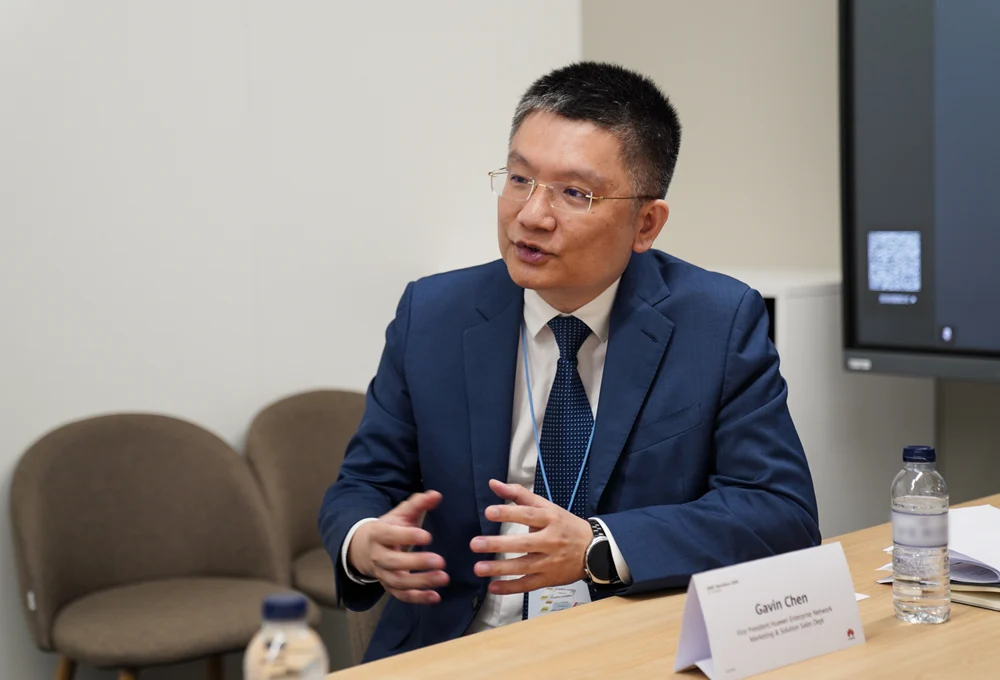
Gavin Chen, Vice President of Huawei’s Enterprise Network Marketing & Solution Sales Department, characterizes this transition as the most significant shift in optical history. "Huawei has led the optical transmission field for 17 consecutive years, not just in market share, but in setting the industry agenda," Chen noted during an exclusive briefing. "We have built a massive innovation engine, supported by 8,000 R&D experts, which has allowed us to secure 30% of the core patents in this space."
The current shift involves infusing AI directly into the hardware—at the board and system levels—to create a network that is not only faster but "aware" of its environment. This transition addresses three critical challenges: the explosion of terminal connections, the massive bandwidth requirements of AI-driven computing, and the urgent need for edge-computing support.
Chronology: The Roadmap to Autonomous Optical Networks
The journey toward this intelligent architecture did not happen overnight. It is the result of a deliberate, multi-year strategy:
- 2024: Huawei launches the fgOTN (fine-grained Optical Transport Network) solution at MWC, providing the granular bandwidth allocation necessary to support diverse industry services on a single, unified architecture.
- 2025: The integration of NCE-T (Network Cloud Engine-Transport) matures, enabling early forms of automated provisioning and network visualization.
- 2026 (MWC Barcelona): The unveiling of the AI-native OTN architecture. This marks the transition where AI moves from being a management overlay to a core component of the transmission board itself.
- Future Trajectory: Huawei’s roadmap focuses on the "Fully Autonomous Optical Network," where networks will eventually predict and mitigate failures before they occur, effectively requiring zero human intervention for standard maintenance.
Three Pillars of AI-Powered Optical Innovation
Huawei’s new approach centers on three technological breakthroughs that turn a strand of glass fiber into a multifunctional asset.
1. Optical Sensing: The Fiber as a Sensor
Perhaps the most striking innovation is the use of existing optical fiber as a distributed sensor. By leveraging AI to analyze OTDR (Optical Time-Domain Reflectometry) signals, the fiber can detect physical changes in its environment—temperature fluctuations, vibration, and mechanical stress—without the need for additional sensing hardware.
This transformation turns the network into a real-time monitoring platform. For industries like rail and power, this means the ability to detect unauthorized cable interference or structural risks along the fiber route in real time. It effectively converts the passive infrastructure into a perimeter security and environmental monitoring system.
2. Native Quantum Security
Security remains the paramount concern for critical infrastructure operators. Historically, Quantum Key Distribution (QKD) was an expensive, clunky, and separate system. Huawei has fundamentally changed this by embedding QKD directly into the OTN chassis.
Through the use of wavelength isolation, Huawei allows quantum keys and standard data services to coexist on the same fiber and within the same equipment. This removes the need for dedicated dark fiber for security, drastically lowering the barrier to entry for highly sensitive industries.
3. Cognitive Operations and Maintenance (O&M)
The most immediate impact for operators is the introduction of the NOEMate assistant. By utilizing large language models and chain-of-thought reasoning, NOEMate allows engineers to interact with the network using natural language. It can diagnose complex faults, propose mitigation strategies, and perform root-cause analysis in seconds rather than hours.
Supporting Data: The Case for Efficiency
The economic and operational arguments for this transition are bolstered by substantial performance data:
- Proactive Fault Prevention: By utilizing AI-powered boards to analyze quality degradation patterns, Huawei’s system can proactively identify potential fiber issues. Internal testing indicates a 40% reduction in preventable faults.
- Troubleshooting Velocity: When faults do occur, AI-driven fault feature mapping allows for instant identification. This has resulted in a 70% reduction in required manual labor for maintenance teams.
- Deployment Speed: In real-world trials, such as the deployment for the Shenzhen Power Supply Bureau, the integration of quantum-enhanced systems saw deployment timelines collapse from several months to less than two weeks.
Official Perspective: The Human-Machine Partnership
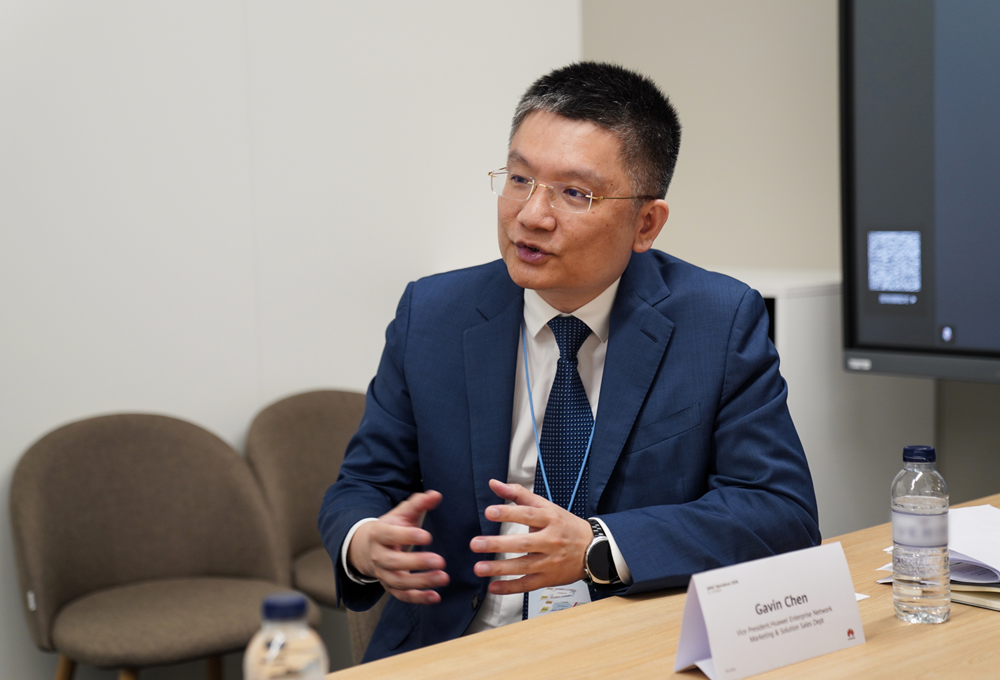
"We are not removing the human from the loop; we are removing the burden," Gavin Chen explained. "The skill threshold for O&M engineers is rising as networks grow more complex. By providing a ‘talking assistant’ and automated diagnostic tools, we allow human experts to focus on strategic network architecture rather than hunting for intermittent physical layer faults."
This philosophy extends to the NCE-T management platform. By centralizing control, Huawei provides a "single pane of glass" for visualization, automated provisioning, and policy enforcement. This integration is vital for private networks in the power, rail, and government sectors, where the cost of a network outage can be measured in public safety and economic instability.
Implications: The Backbone of the Next Digital Wave
The implications of an AI-native optical layer are far-reaching. As the global economy pivots toward massive AI deployments, the network must evolve to handle the resulting "data gravity."
Impact on Critical Infrastructure
For the energy sector, the ability to support relay protection services over a secure, quantum-hardened, and self-monitoring fiber network is a game-changer. For railways, it provides the low-latency communication required for autonomous signaling and real-time train positioning. In both cases, the fiber network is no longer a peripheral utility; it is a core business asset.
Global Adoption
The strategy is already gaining traction. From the backbone deployments of fgOTN at EDM in Mozambique to the sophisticated power grid networks in China, the evidence suggests a clear shift in how major infrastructure operators are procuring their transport layers. They are no longer looking for "lowest-cost connectivity"; they are looking for "intelligent, resilient, and future-proof platforms."
Conclusion: The Future is Transparent and Intelligent
As the MWC 2026 proceedings conclude, the message from Huawei is clear: the era of the passive optical pipe is coming to an end. The integration of AI, sensing, and quantum-grade security represents the next frontier of telecommunications.
By making the network itself intelligent, Huawei is not just facilitating data flow; it is providing the foundation for a more resilient and secure digital civilization. As these technologies continue to permeate the global market, the "Optical Revolution" will likely be remembered as the moment the physical infrastructure finally caught up with the cognitive power of the AI it carries.
For industry leaders, government regulators, and infrastructure operators, the takeaway is simple: the future of your organization’s digital resilience is written in light—and that light is now becoming smarter every day.

