

The landscape of Central European infrastructure is undergoing a seismic shift. In a clear signal of global confidence in Poland’s ambitious Solidarity Transport Hub (CPK—Centralny Port Komunikacyjny), 26 international construction firms have formally submitted tenders for the preparatory phases of the project. With an estimated contract value exceeding PLN 1.7 billion (EUR 377 million), the project represents one of the most significant civil engineering undertakings in the modern history of the European Union.
This massive interest from entities spanning Poland, Spain, Turkey, and beyond underscores the strategic importance of the CPK, which aims to redefine the logistics and transit map of Europe.
Main Facts: The Scope of the Framework Agreement
The tendering process, managed by the state-owned STH company, is designed to establish a robust framework agreement. Rather than awarding a single monolithic contract, the STH is utilizing an open procurement procedure to select a panel of eight companies or consortia. These selected partners will be responsible for executing specific tasks through simplified, streamlined procedures as the project progresses.
The interest in this tender has been substantial, with 19 distinct bids submitted. These include 6 consortia—comprising a total of 13 entities—and 13 companies acting independently. The list of applicants reads like a "who’s who" of the global construction sector, featuring Tier-1 infrastructure firms from Europe and Asia that possess extensive experience in high-complexity airport and rail projects.
The Scope of Preparatory Works
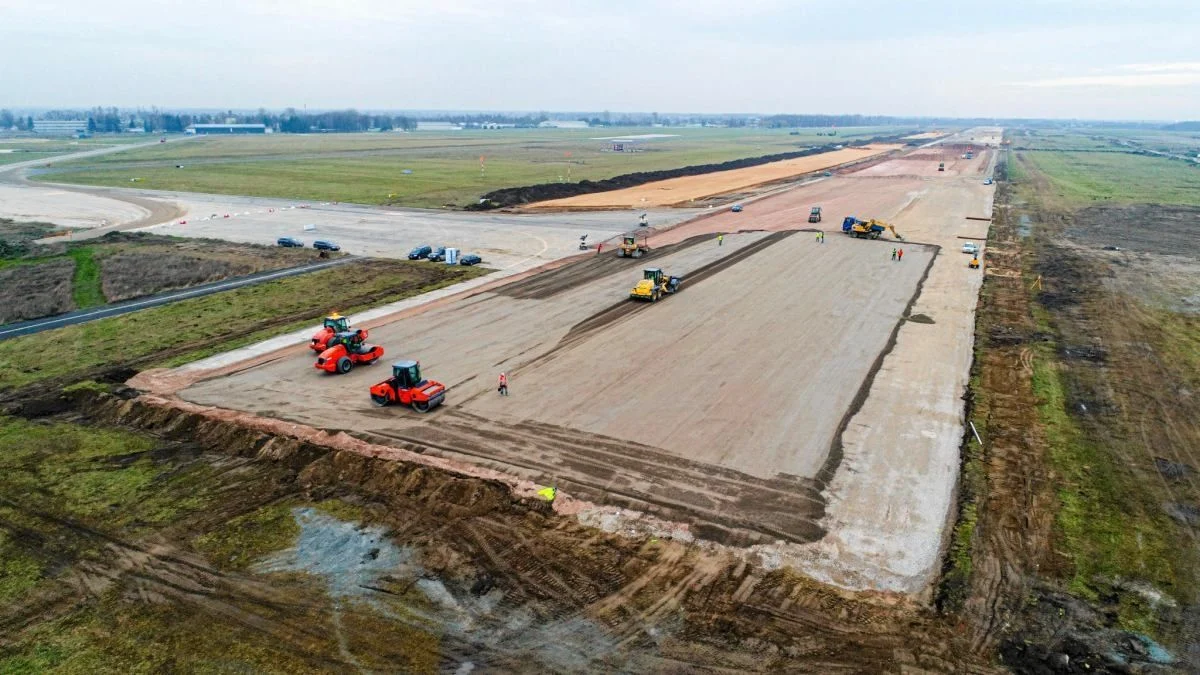
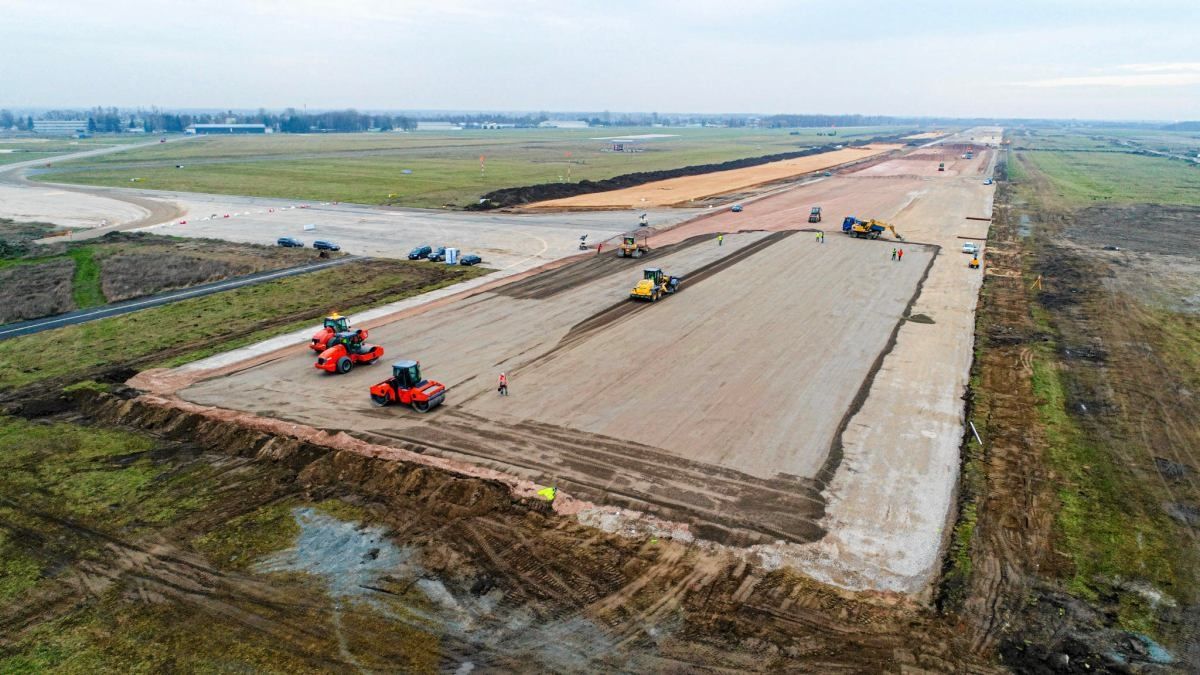
The successful contractors will be tasked with transforming the 41-square-kilometer site, located within the communes of Baranów, Teresin, and Wiskitki, from its current state into a construction-ready industrial hub. The primary duties under this framework include:
- Site Preparation: Extensive ground leveling and terrain grading.
- Logistical Foundations: Construction of temporary site facilities and essential access infrastructure.
- Utilities: Establishing connections to the civil engineering and utility networks required for a project of this magnitude.
- Civil Works: Managing demolition activities and handling administrative documentation, including construction notifications, geodetic surveys, and the preparation of comprehensive as-built technical specifications.
Chronology: A Roadmap of Progress
The CPK project has moved from conceptual planning to active execution with remarkable speed. The progression of the hub is marked by several critical milestones that demonstrate the government’s commitment to the 2023–2027 development timeline.
- October 2021: The STH launched a massive design tender for the railway component of the hub, valued at over PLN 7 billion (EUR 1.55 billion).
- December 2021: The company officially confirmed the preferred location for the airport, identifying the specific 41-square-kilometer zone in the Baranów area.
- January 2022: A tender was initiated to select a "contract engineer"—an entity tasked with providing oversight and quality control for the railway investment program, with an estimated value of PLN 2.5 billion (EUR 554.5 million).
- Early 2022: The current tender for preparatory works was announced, drawing the attention of 26 global firms.
- 2023 (Projected): The target start date for site-level preparatory works, coinciding with the commencement of major construction phases.
Supporting Data: Infrastructure and Capacity
The CPK is not merely an airport; it is a multimodal transport system designed to serve as a bridge between the East and West of the European continent.
Airport Infrastructure
The airport is planned in stages, with the first phase featuring two parallel runways, each spanning 4,000 meters. This configuration is intended to handle high-volume intercontinental traffic, positioning Warsaw as a primary air hub for Central and Eastern Europe.
The Rail Component
The railway integration is perhaps the most ambitious aspect of the project. Plans include:
- 1,300 km of new railway lines: These will create a "spoke-and-hub" model, linking major Polish cities directly to the CPK.
- The Mainline Network: Development of the Warsaw-STH-Łódź-Wrocław-Czech border corridor, which is intended to become a high-speed artery for the region.
- The Łódź Tunnel: A landmark engineering project involving the construction of a long-distance tunnel, which will facilitate efficient high-speed transit through one of Poland’s largest urban centers.
At present, the project is in the advanced stages of environmental and terrain impact studies. The Master Plan is nearing completion, and the complex process of property acquisition is currently underway to ensure the project has the necessary land clearance.
Official Responses: Strategy and Vision
The management approach adopted by the STH, led by CEO Mikołaj Wild, reflects a modern, agile procurement philosophy. By choosing a framework agreement model, the STH is prioritizing long-term partnerships over short-term transactional relationships.
"The market has responded positively to our concept of working with contractors under framework agreements," CEO Mikołaj Wild stated. "As with other framework agreements, in the first stage of the procedure, after checking the formal criteria, we will mainly take into account the experience, financial and economic capacity, and resources of the tenderers. However, the price and delivery time will play an important role in the executory contract procurement procedures."
This dual-layer selection process ensures that only those with the financial stability and technical pedigree to manage massive infrastructure projects are selected, while simultaneously maintaining cost-competitiveness during the execution of specific sub-projects.
Implications: A Catalyst for Economic Growth
The submission of tenders by 26 global companies is a significant vote of confidence in the Polish economy. The implications of this development are manifold:
Economic Stimulation
The infusion of billions of PLN into the construction sector will create a multiplier effect, supporting thousands of jobs across the logistics, engineering, and manufacturing supply chains. Furthermore, the selection of international firms ensures the transfer of global best practices and innovative construction technologies into the Polish market.
Regional Connectivity
The CPK is designed to mitigate the constraints of the current Warsaw Chopin Airport, which is limited by its urban location. By centralizing transport, the project will drastically reduce travel times between Polish cities and major European capitals, effectively shrinking the geography of the region.
Strategic Geopolitics
In the current geopolitical climate, the development of a state-of-the-art transport hub serves as a critical strategic asset for Poland and the NATO eastern flank. Enhanced connectivity—both by air and by high-speed rail—strengthens the nation’s capacity for trade, tourism, and rapid movement, solidifying Poland’s role as the logistics gateway to the Three Seas region.
The Path Forward
As the STH moves to verify the formal criteria of the bidders, the focus will soon shift to the implementation of the framework agreements. By integrating preparatory works with main construction milestones in 2023, the project organizers are signaling a desire to minimize the "delivery gap"—a common pitfall in large-scale infrastructure where delays in site prep cascade into years of project slippage.
For the international construction industry, the CPK is no longer a concept—it is a live, active investment opportunity. As the technical specifications are refined and the design phase progresses for the 1,300 km of rail, the Solidarity Transport Hub stands as a testament to Poland’s ambition to build the infrastructure of the future, today. The coming months will be critical as the selected firms are finalized, marking the transition from planning and procurement to the physical reality of building a world-class transport node.

