
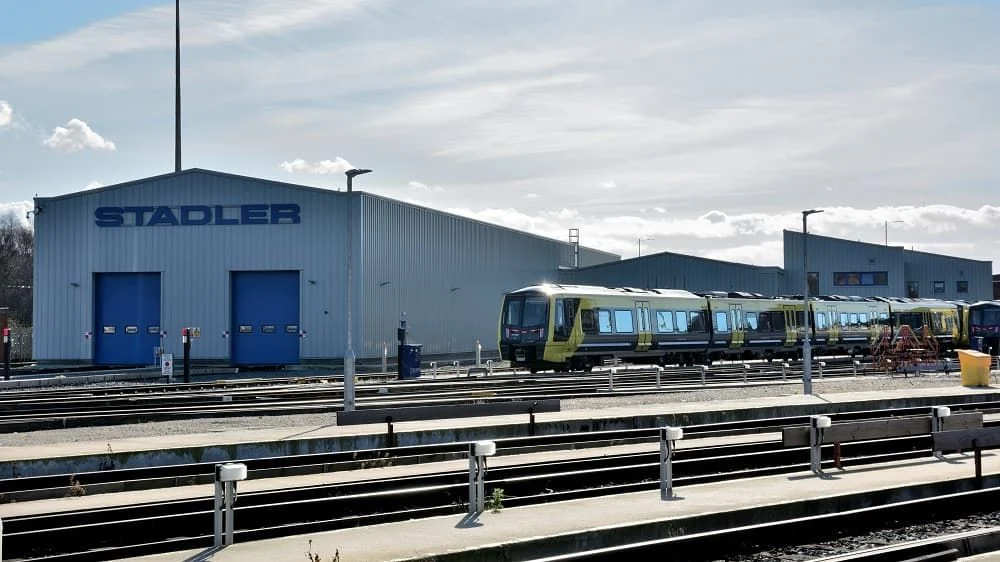
In a landmark move that signals the intensifying digital transformation of the European rail industry, Swiss rolling stock giant Stadler and Portuguese technology firm Critical Software have announced the formation of a strategic joint venture: Stadler Digital Labs (STADL). This partnership, which merges deep-rooted mechanical engineering prowess with high-stakes software expertise, is set to become a powerhouse in the development of mission-critical railway technology, cybersecurity, and advanced digital mobility solutions.
The establishment of STADL represents a calculated response to the rapidly evolving demands of the modern railway sector. As trains become increasingly autonomous, interconnected, and reliant on complex software architectures, the need for robust, safety-certified, and cyber-resilient systems has never been higher. By pooling their respective strengths, Stadler and Critical Software aim to define the next generation of rail operations.
The Genesis of the Partnership: Merging Two Worlds
The collaborative effort behind Stadler Digital Labs is built on a complementary foundation. Stadler, headquartered in Bussnang, Switzerland, is globally renowned for its high-quality rolling stock, including light rail vehicles, metros, and high-speed trains. Conversely, Critical Software, based in Coimbra, Portugal, has spent over two decades mastering the art of "zero-fail" software engineering—systems where human safety and operational integrity are non-negotiable, often serving the defense, space, and medical sectors.
The joint venture operates with a shareholding structure of 51% Stadler and 49% Critical Software. This distribution ensures that while Stadler retains the lead in industrial application, Critical Software remains a primary strategic partner, providing the technical DNA required to navigate the complexities of modern digital rail infrastructure.
Strategic Alignment
The partnership is not merely a service contract; it is an integrated innovation hub. By positioning the new entity as a specialized center for excellence, the partners intend to move away from the traditional, fragmented approach to railway software development. Instead, they are advocating for a standardized, reusable, and highly scalable model that promises to reduce time-to-market for new technologies while increasing the overall safety and reliability of the European rail network.
Chronology of the Digital Shift
To understand the weight of this announcement, one must look at the recent history of the railway sector.
- 1998: Critical Software is founded in Coimbra, carving out a niche in embedded systems for the aerospace and defense industries.
- Early 2010s: As the "Internet of Trains" begins to take shape, traditional rolling stock manufacturers start to realize that their hardware is only as good as the software that manages it.
- 2020–2024: Stadler aggressively expands its digital portfolio, investing in automation and smart train technology, as evidenced by its high-profile contracts for fully automated trains in cities like Copenhagen.
- February 2026: The official launch of Stadler Digital Labs (STADL). The announcement marks the culmination of months of negotiation and strategic planning, aimed at cementing a long-term partnership in the Iberian Peninsula.
- Future Outlook (2026–2029): STADL enters its aggressive growth phase, aiming to triple its workforce and establish itself as a primary innovation engine for Stadler’s global projects.
Supporting Data: Scalability and Human Capital
The operational footprint of Stadler Digital Labs is designed for rapid impact. Starting with a foundational team of approximately 100 specialists, the company is set to inhabit state-of-the-art facilities in both Lisbon and Coimbra. The choice of Portugal as the headquarters for this venture is strategic; the country has emerged as a vibrant hub for tech talent and software engineering, offering a high-quality labor market that can support the sophisticated needs of the railway industry.
The Three-Year Growth Roadmap
The business plan is aggressive. STADL has committed to scaling its workforce from 100 to 300 highly specialized engineers within the next three years. These specialists will focus on:
- Cybersecurity protocols: Hardening train control and management systems (TCMS) against external threats.
- Safety-Critical Systems: Developing software that meets the highest integrity levels (SIL 4) required for railway signaling and braking.
- Interoperability: Creating standardized digital products that can be deployed across diverse international rail networks, supporting the vision of a unified European mobility ecosystem.
The scale of this operation is significant, as it positions Portugal as a critical node in the global supply chain for railway innovation.
Official Responses and Strategic Vision
The leadership behind the joint venture has been vocal about the necessity of this union. For Rogério Gomes, the inaugural CEO of Stadler Digital Labs, the focus is on the synergy between national economic growth and continental connectivity.

"Stadler Digital Labs reflects the strategic alignment between two organizations with converging visions on innovation, safety, and modernization of the railway sector," said Gomes. "Railways are not only relevant for the growth of the Portuguese economy, but also for the development of a safe and interoperable European mobility ecosystem."
Gonçalo Quadros, president of Critical Software, emphasized the transfer of knowledge from other high-stakes industries to the rail sector. "Our experience in critical software engineering and complex systems will help bring Stadler’s ambitious vision for the rail and mobility sector to fruition," Quadros noted. "By bringing the rigor of the space and defense sectors into the railway environment, we are not just upgrading trains; we are future-proofing them."
Implications: The Future of Digital Rail
The formation of STADL has profound implications for the railway industry, particularly regarding how software is perceived and managed.
1. The Rise of "Software-Defined" Rolling Stock
Traditionally, trains were mechanical assets that received software updates as an afterthought. The STADL model suggests a paradigm shift where the train is designed from the ground up as a software-defined platform. This allows for over-the-air updates, predictive maintenance, and modular feature additions that can extend the lifecycle of a train by decades.
2. Cybersecurity as a Priority
As railway networks become more digitized, they also become more vulnerable to cyberattacks. By establishing a dedicated entity to handle cybersecurity, Stadler is positioning itself to meet tightening European Union regulations regarding the safety and security of critical infrastructure. STADL’s work will likely become the benchmark for other manufacturers struggling to integrate IT and OT (Operational Technology) security.
3. Standardization and Efficiency
The railway industry is currently plagued by non-standardized proprietary software, which makes interoperability between different train models and national networks difficult. By focusing on the reuse of software assets and the standardization of development processes, STADL aims to reduce the "engineering debt" that currently slows down many major rail projects across Europe.
4. A Boost for the Portuguese Tech Sector
The expansion of STADL serves as a validation of the engineering talent within Portugal. By creating 300 high-value jobs, the venture will likely foster a deeper talent pool in the region, encouraging further investment in rail-tech and software engineering education.
Conclusion: A New Track for Innovation
The creation of Stadler Digital Labs is more than a corporate merger; it is a signal that the railway industry has fully entered the digital age. As the world moves toward more sustainable and efficient transport, the reliance on advanced software to optimize speed, safety, and energy consumption will only increase.
By combining the industrial heritage of a Swiss titan like Stadler with the agile, safety-focused expertise of a Portuguese pioneer like Critical Software, the new entity is uniquely positioned to address the most pressing challenges in rail. Whether it is navigating the complexities of European cross-border interoperability or securing the train networks of tomorrow against digital threats, STADL stands at the intersection of progress and safety.
As the team in Lisbon and Coimbra begins its work, the global rail industry will be watching. If the ambitions of Rogério Gomes and Gonçalo Quadros are realized, Stadler Digital Labs will not only be a success story for its parent companies but a foundational pillar for the digital backbone of Europe’s future mobility.

