

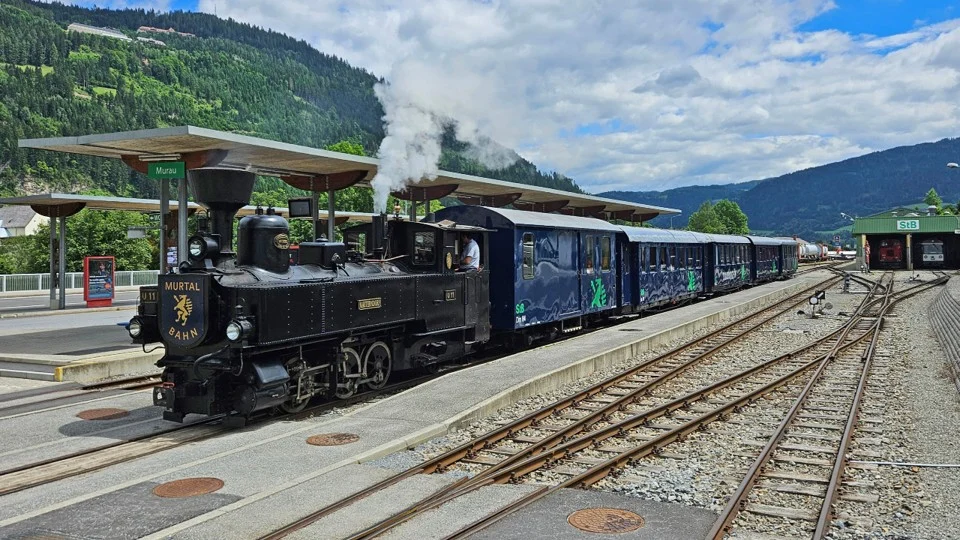
Executive Summary: A New Era for the 760mm Gauge
The Austrian state of Styria has unveiled a transformative infrastructure strategy aimed at revitalizing the historic Murtalbahn, a 760-mm narrow-gauge railway that serves as a vital artery for regional mobility and tourism. By transitioning from traditional diesel operations to a fully electrified network, the project promises to harmonize regional connectivity with the European Union’s ambitious "Green Deal" environmental mandates.
The initiative involves the procurement of state-of-the-art Electric Multiple Units (EMUs) and a comprehensive overhaul of existing infrastructure. This project is not an isolated endeavor but part of a collaborative tri-state procurement strategy involving the operators of the Zillertalbahn and the Pinzgauer Lokalbahn. By pooling resources, these operators aim to create a viable market for the specialized narrow-gauge equipment that has become increasingly difficult to source.
Chronology of the Murtalbahn: From Heritage to High-Tech
The Murtalbahn has long been a landmark of Austrian rail engineering. Connecting Unzmarkt in Styria with Tamsweg in the neighboring state of Salzburg, the line winds through the scenic Mur Valley.
- The Heritage Era: For decades, the line has relied on traditional rolling stock that, despite rigorous maintenance and comprehensive mid-life renovations, is approaching the end of its technical lifecycle.
- The Mid-2030s Deadline: Technical assessments have indicated that the current fleet will cease to be economically and operationally viable by the mid-2030s. This realization triggered the current planning phase.
- Strategic Alignment (2023–2024): Recognizing the niche nature of the 760-mm gauge, the Styrian state government, in coordination with the operators of the Zillertalbahn and Pinzgauer Lokalbahn, began exploring a joint procurement framework.
- Current Status: The working group is finalizing tender documentation, marking the transition from feasibility study to actionable procurement.
Supporting Data: Infrastructure and Financial Scope
The modernization project is as much about the tracks as it is about the trains. The financial commitment required to bring the Murtalbahn into the 21st century is substantial, reflecting the complexity of narrow-gauge electrification.
The Financial Breakdown
Styria has earmarked an investment of EUR 169 million for the project. However, the realization of this budget is contingent upon a tripartite financial agreement. The funding model relies on the following pillars:
- Styrian State Contribution: The primary driver of the project, contingent on federal support.
- Federal Government Co-financing: Crucial for the electrification of the line, which falls under federal transit infrastructure mandates.
- Salzburg State Contribution: Necessary given that the line extends into the Tamsweg region of Salzburg.
Technical Infrastructure Upgrades
The EUR 169 million investment covers more than just the purchase of five new railcars. Key infrastructure components include:
- Electrification: The installation of overhead catenary systems across the entire route.
- Depot and Workshop Adaptation: Existing facilities are currently geared toward diesel maintenance. These must be completely re-equipped to handle the high-voltage electrical components of the new EMUs.
- Modernization of the Route: Beyond electrification, the project aims to optimize the alignment and signaling systems. A headline target is the reduction of travel time between Unzmarkt and Murau from 36 minutes to just 24 minutes, a 33% efficiency gain that will make the train a truly competitive alternative to private road transport.
The Tri-State Alliance: Solving the "Niche Market" Dilemma
One of the most significant challenges facing narrow-gauge operators is the lack of a standardized market. Unlike standard-gauge (1,435 mm) rail equipment, which enjoys global demand, the 760-mm gauge is highly specialized.
Claudia Holzer, Regional Councilor for Transportation and Infrastructure in Styria, emphasized that individual procurement would have been prohibitively expensive—or perhaps impossible—due to the small order volumes. By banding together with the Zillertalbahn and Pinzgauer Lokalbahn to order a total of 17 EMUs, the group has:

- Created a Market: By aggregating demand, the group has incentivized rolling-stock manufacturers to bid on the tender.
- Reduced Unit Costs: Economies of scale allow for lower per-train costs, ensuring the project stays within the bounds of fiscal responsibility.
- Future Synergies: Standardized technology across these three lines will simplify future maintenance, spare parts procurement, and knowledge sharing between the technical crews of the three operators.
Official Responses and Strategic Implications
The decision to modernize the Murtalbahn represents a major shift in how regional authorities view "secondary" rail lines. Historically, narrow-gauge lines were often viewed through the lens of tourism and heritage. Today, they are being repositioned as essential elements of the public transport grid.
Government Position
The Styrian state government has maintained a firm stance: the project will proceed only if the federal government and the state of Salzburg provide matching funding. This "conditional commitment" serves as a strategic bargaining chip, emphasizing that the Murtalbahn is a matter of national, rather than merely local, transport policy.
Operational Continuity
Steiermarkbahn und Bus GmbH (StB), the operator of the line, currently holds a ten-year public transport service contract that runs until 2030. The current project is designed to bridge the gap toward the 2030s and beyond, ensuring that the service contract is supported by a fleet and infrastructure capable of meeting future passenger demand.
Implications for Regional Connectivity
The implications of this project are multi-faceted:
- Environmental Impact: The shift to electric traction will eliminate carbon emissions on the route, aligning the Mur Valley with Austria’s national goal of becoming climate-neutral by 2040.
- Economic Competitiveness: By slashing travel times by 12 minutes between key hubs, the railway becomes a more attractive option for commuters. This reduces road congestion in the valley and supports local economic integration.
- Tourism Preservation: While the primary goal is public transit, the electrification of the line ensures the long-term survival of the Murtalbahn, which remains a cornerstone of the regional tourism identity. A modern, reliable, and clean rail service is a significant value-add for visitors to the Styrian and Salzburg Alps.
The Broader European Context
The Murtalbahn project is emblematic of a broader trend across the European Union. Across the Alps, smaller rail lines are facing a "renew or perish" ultimatum. In countries like Switzerland and Austria, the integration of regional narrow-gauge networks into the national transit clock-face scheduling system is becoming a priority.
The successful procurement of 17 EMUs will serve as a pilot case for other regional operators in Europe. If the collaborative purchasing model proves effective, it could provide a blueprint for other niche operators facing similar technical and financial hurdles.
Conclusion: A Blueprint for the Future
The decision to modernize the Murtalbahn is a bold step that secures the future of one of Austria’s most iconic transit corridors. By overcoming the limitations of its narrow gauge through collaborative procurement and committing to a comprehensive electrification strategy, Styria is demonstrating that even the smallest rail lines have a significant role to play in a modern, sustainable transport network.
As negotiations move into their next phase, the focus will shift to the technical specifications of the EMUs and the logistical challenges of retrofitting an historic line. With the backing of the state and the promise of federal and inter-state cooperation, the Murtalbahn is well-positioned to move from the era of diesel-powered heritage to a future of electrified, high-efficiency regional transit. The result will be a faster, cleaner, and more reliable connection for the people of the Mur Valley, ensuring that this historic railway continues to serve its communities for decades to come.

