

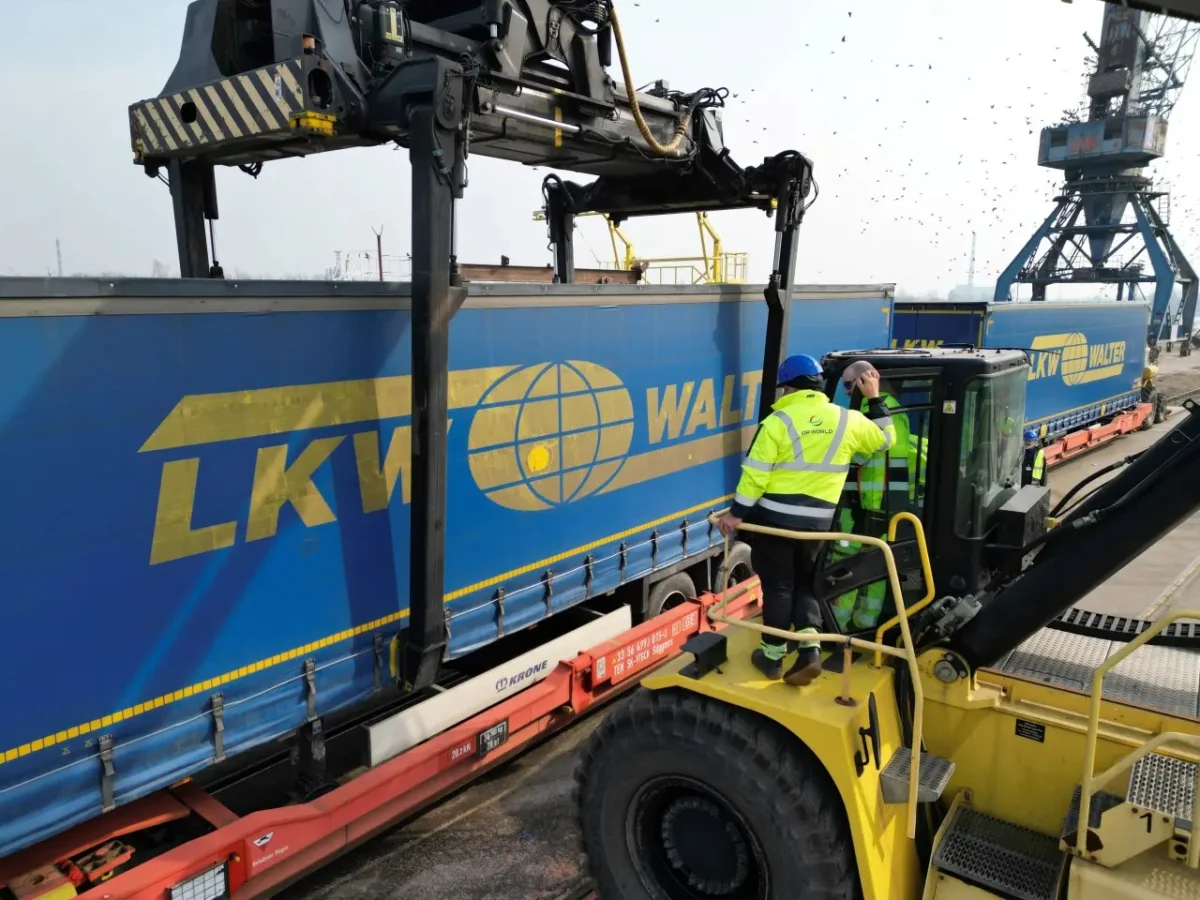
In a major development for the Balkan logistics landscape, DP World has officially inaugurated a new intermodal rail service connecting the Port of Novi Sad in Serbia to the Herne logistics hub in Germany’s Rhine-Ruhr industrial region. This move marks a pivotal shift in how goods flow between Southeast Europe and the European Union, offering a high-efficiency alternative to the traditional road-haulage reliance that has long defined the region’s supply chains.
The service, operated in collaboration with the prominent Austrian transport firm LKW Walter, establishes Novi Sad as the first terminal in Serbia to provide a regular, scheduled intermodal rail connection to Western Europe. With three weekly departures, the service promises to reshape trade dynamics, offering stakeholders a faster, more predictable, and significantly greener transport corridor.
The Core Facts: A New Arterial Route for Trade
The strategic partnership between DP World and LKW Walter has effectively turned the Novi Sad terminal into a vital node in the trans-European network. By leveraging rail as the primary mode for long-haul transport, the service bypasses many of the logistical bottlenecks typically associated with road freight.
The operational parameters are clear:
- Frequency: Three weekly departures.
- Route: Novi Sad (Serbia) – Herne (Rhine-Ruhr, Germany).
- Mode: Intermodal rail-road, utilizing rail for the primary transit and road for final-mile delivery.
- Environmental Impact: A reduction of CO2 emissions by up to 80% compared to exclusive road transport.
The Rhine-Ruhr region, often described as the industrial engine of Germany, serves as the perfect terminus for this route. By linking the Danube-connected hub of Novi Sad directly to this high-density industrial corridor, DP World is facilitating a seamless movement of goods that supports the manufacturing and retail sectors in both directions.
Chronology: From Regional Hub to European Integration
The launch of the Novi Sad–Herne service did not happen in a vacuum; it is the culmination of years of infrastructure development and strategic planning aimed at modernizing Serbia’s logistics capabilities.
Phase 1: Terminal Modernization (2020–2023)
Following its acquisition of the Port of Novi Sad, DP World undertook an extensive modernization program. This involved upgrading lifting equipment, improving storage capacity, and preparing the facility for intermodal handling. The goal was to transform a traditional river port into a multimodal logistics hub.
Phase 2: Market Assessment and Regulatory Shifts (2023–2024)
As geopolitical and regulatory pressures mounted on road freight—specifically concerning border crossing times and driver mobility rules within the EU—logistics operators in the Balkans began to signal a need for alternatives. DP World conducted feasibility studies to determine the demand for rail-based connections that could circumvent the increasing administrative burden of the road sector.
Phase 3: Operational Launch (Q1 2026)
With the necessary technical certifications in place and the partnership with LKW Walter finalized, the first trains began traversing the corridor in early 2026. This launch represents the first time a Serbian terminal has maintained a fixed-schedule, high-frequency rail link to the core of Western Europe.
Supporting Data: Why Intermodal is the Future
The shift toward intermodal transport is backed by compelling data that speaks to both economic efficiency and environmental stewardship.
Emissions Reduction
The transport sector is under immense pressure to decarbonize. Road transport is notoriously carbon-intensive, and the long distances between Serbia and Germany make it a major contributor to corporate carbon footprints. By shifting the bulk of the distance to rail, operators can achieve an 80% reduction in emissions. This is not merely a corporate social responsibility metric; it is a critical requirement for companies reporting under the EU’s Corporate Sustainability Reporting Directive (CSRD).
Predictability vs. Road Volatility
In recent years, the reliability of long-distance road freight between the Balkans and Western Europe has deteriorated. The combination of unpredictable congestion at EU borders and the implementation of the Entry/Exit System (EES) has forced trucking companies to navigate a minefield of administrative delays.

Rail, by contrast, offers:
- Scheduled Transit: Trains run on fixed timetables, allowing manufacturers to optimize "just-in-time" supply chains.
- Regulatory Bypassing: Rail shipments often benefit from streamlined customs and border procedures compared to individual trucks, which must undergo individual inspection processes.
- Labor Optimization: With a global shortage of professional heavy-goods vehicle (HGV) drivers and strict EU limitations on the number of days a non-EU driver can spend within the Schengen zone, the rail-heavy model reduces the reliance on human-intensive road transport.
Official Perspectives: Building a Strategic Gateway
The leadership at DP World Novi Sad views this connection as a cornerstone of Serbia’s economic evolution.
Gokhan Yurteken, General Manager of DP World Novi Sad, emphasized the long-term vision behind the project: "By connecting Novi Sad to the Rhine-Ruhr region through a scheduled intermodal service, we are strengthening Serbia’s integration into European supply chains and reinforcing its role as a strategic gateway for trade in Southeast Europe. This service will provide our customers with a faster and more predictable route from Serbia to Western Europe, reducing dependence on cross-border road transport, improving schedule reliability, and reducing emissions."
This sentiment is echoed by Vladica Ćulafić, Chief Commercial Officer of DP World Novi Sad, who points to the shift in customer demand. "As regulatory requirements for road transport evolve in the European Union, customers are looking for solutions that offer more speed, predictability, and less administrative complexity. Intermodal rail transport offers all these advantages, while also delivering measurable carbon savings," Ćulafić noted.
Implications: A Shift in the Regional Logistics Fabric
The inauguration of this rail link carries significant implications for the wider Balkan region and its commercial relationships with the European Union.
1. Reducing Border Bottlenecks
For years, the "wait time at the border" has been the single greatest risk factor for logistics managers in Serbia. By utilizing rail, goods are consolidated and cleared as part of a larger shipment, significantly reducing the frequency of individual vehicle stops. This efficiency is expected to attract more international manufacturers to set up production facilities in Serbia, knowing they have a reliable export route to the German market.
2. The "Greening" of Supply Chains
The 80% reduction in carbon emissions is a major selling point for European retailers and manufacturers. As EU consumers and regulators demand higher transparency in supply chain emissions, companies using this rail service will be able to market their products as being transported via a low-carbon route, providing them with a distinct competitive advantage.
3. Economic Integration
This service serves as a physical manifestation of Serbia’s increasing economic alignment with the European Union. By standardizing logistics processes and creating a high-frequency link to the heart of the Ruhr region, the service acts as a bridge that brings Serbia’s industrial capacity closer to the European market.
4. Setting a Precedent for Future Routes
The success of the Novi Sad–Herne connection will likely serve as a blueprint for future intermodal projects in the region. If the service achieves its targets for reliability and volume, it is expected to pave the way for additional connections to other industrial hubs in France, Italy, and Central Europe, further cementing the Balkans’ role as a vital transit and production corridor.
Conclusion
The new intermodal service operated by DP World and LKW Walter is more than just a train route; it is a vital upgrade to the logistics infrastructure of Southeast Europe. By tackling the dual challenges of regulatory complexity and environmental impact, this connection provides a robust, modern solution for the demands of 21st-century trade.
As Serbia continues to integrate into the European logistics chain, the Novi Sad–Herne rail link stands as a testament to the power of intermodal transport. It is a win-win scenario that rewards efficiency, embraces sustainability, and secures a more predictable future for the trade of goods across the continent. For logistics managers, manufacturers, and the regional economy, this is a clear sign that the future of freight in Southeast Europe is firmly on the rails.

