

By Editorial Staff
In a decisive move that marks the formal collapse of a decade-long infrastructure ambition, the U.S. Department of Transportation (DOT) has officially rescinded more than $26 million in federal grants earmarked for the Baltimore–Washington Superconducting Magnetic Levitation (SCMAGLEV) project. The announcement, delivered by Transportation Secretary Sean P. Duffy on August 2, serves as the final chapter for a high-speed rail proposal that had become synonymous with administrative gridlock, ballooning costs, and fierce community resistance.
The Federal Railroad Administration (FRA) confirmed not only the clawback of federal funding but also the rescission of the project’s Notice of Intent (NOI), effectively terminating the ongoing environmental review process. For a project that once promised to shrink the commute between the nation’s capital and Baltimore to a mere 15 minutes at speeds exceeding 300 mph, the federal government’s withdrawal signals a definitive halt to what was once billed as the future of American transit.
The Collapse of a High-Speed Vision: Key Facts
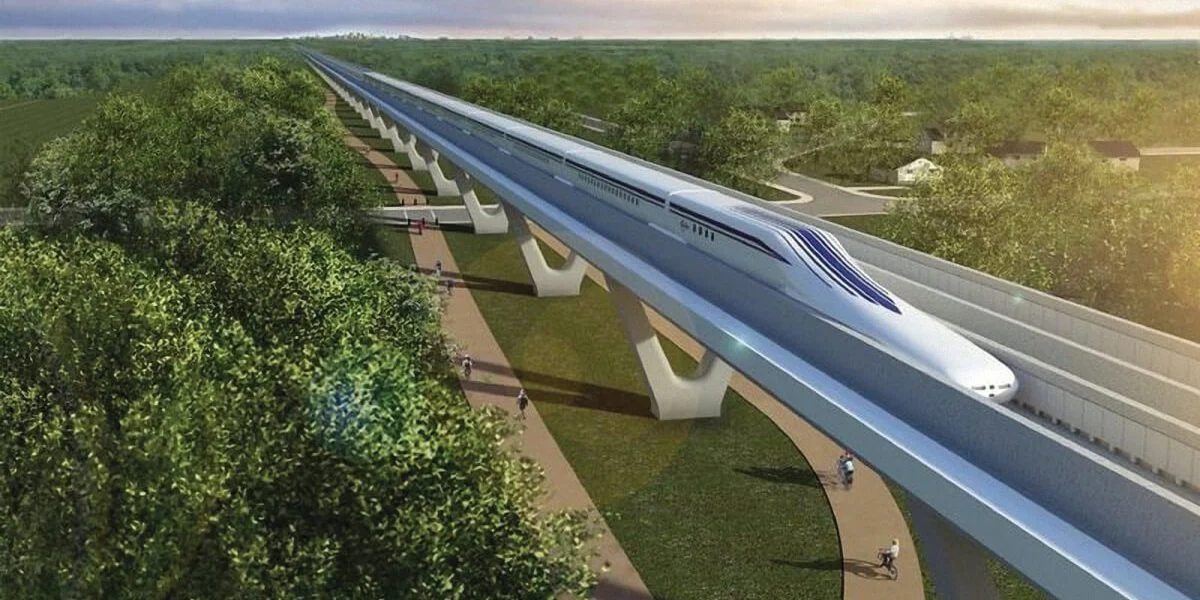
The SCMAGLEV project, spearheaded by Baltimore-Washington Rapid Rail (BWRR), was designed to utilize Japanese superconducting magnetic levitation technology. The proposal envisioned a subterranean and elevated guideway connecting Baltimore and Washington, D.C., with a singular stop at BWI Thurgood Marshall Airport.
Despite its technological promise, the project faced a brutal reality: it was a multi-billion dollar endeavor with little to show for its years of existence. The FRA’s decision to terminate support was based on several critical factors:
- Financial Unsustainability: The estimated capital expenditure for the project had ballooned to nearly $20 billion, rendering the initial $26 million in federal grants a mere drop in a bucket that critics argued would require endless taxpayer subsidies.
- Operational Stagnation: Environmental reviews had been effectively frozen since August 2021, with little progress reported by the project sponsors.
- National Security Conflicts: The proposed route intersected with high-stakes federal interests, leading to formal opposition from agencies including the NSA, the Department of Defense, and the Secret Service.
Chronology of a Stalled Dream
The rise and fall of the SCMAGLEV project can be mapped across a turbulent decade of planning and political maneuvering:
- 2016: The project gains traction, backed by private interests and significant support from the Central Japan Railway Company, which sought to export its successful Shinkansen and Maglev expertise to the U.S. market.
- 2017–2019: The planning phase enters high gear. Proponents argue that the line will revolutionize the Northeast Corridor, providing an alternative to the aging Amtrak infrastructure.
- 2020: The COVID-19 pandemic slows administrative processes, and community opposition begins to crystallize, with local advocacy groups questioning the necessity of a high-speed line between two cities already connected by MARC trains and Amtrak.
- August 2021: The environmental review process is officially paused. The project begins to face intense scrutiny from federal land-management and security agencies regarding its footprint.
- 2022–2024: The project remains in a state of suspended animation. Cost estimates skyrocket, and legal challenges from local neighborhood associations and environmental groups mount.
- August 2, 2025: Secretary Sean P. Duffy announces the formal termination of federal funding and the rescission of the Notice of Intent, effectively ending the federal government’s involvement.
The Weight of Opposition: Security and Environment
The fatal blow to the SCMAGLEV project was not merely financial; it was a matter of national security and environmental stewardship. The FRA’s final report noted that the project would cause "significant, unresolvable impacts" on critical federal property.
National Security Concerns
The proposed route cut through or near key government installations, including Fort George G. Meade, home to the National Security Agency (NSA). The Department of Defense expressed grave concerns regarding how the high-speed line—and the electromagnetic fields generated by its superconducting technology—would interact with sensitive intelligence infrastructure. Additionally, NASA and the U.S. Secret Service raised alarms about the disruption of their mission-critical operations.
Environmental and Community Impact
The U.S. Fish and Wildlife Service and the National Park Service identified potential threats to protected wetlands, wildlife corridors, and historic sites along the proposed corridor. Local residents, meanwhile, organized into powerful advocacy groups, arguing that the project would devastate neighborhoods, reduce property values, and create noise pollution without providing meaningful transit access to the average commuter, given the limited number of stops.
Official Responses: A Question of "Public Value"
The language used by the Department of Transportation in the wake of the decision reflects a shift in federal priorities toward projects that can demonstrate tangible, immediate public benefit.
"We want big, beautiful projects worthy of taxpayer dollars—including high-speed rail," Secretary Duffy stated in his address. "This project lacked everything needed to be a success, from planning to execution. It did not have the means to go the distance, and I can’t in good conscience keep taxpayers on the hook for it."
The sentiment is clear: the federal government is no longer willing to bankroll projects that operate in a state of perpetual planning. By labeling the project as a failure of execution, the DOT has signaled to future private-public partnerships that federal support is contingent upon rigorous, transparent, and viable development timelines.
As of this writing, Baltimore-Washington Rapid Rail (BWRR) has remained largely silent. The firm, which had previously positioned the SCMAGLEV as a solution to chronic I-95 congestion, now faces a landscape with zero federal funding and no environmental clearance.
Implications for Future Infrastructure
The demise of the SCMAGLEV project serves as a cautionary tale for the high-speed rail industry in the United States. While the FRA clarified that this decision "does not prevent the future deployment of MAGLEV technology," the practical reality is more sobering.
The Regulatory Hurdle
High-speed rail in the U.S. continues to face an uphill battle against a complex web of environmental, regulatory, and local land-use laws. The SCMAGLEV’s failure illustrates that even with private funding and international technological backing, a project can be brought to its knees by its inability to navigate the "Big Five" of American infrastructure: environmental review, inter-agency coordination, land-use rights, budget management, and public perception.
The Shift Toward Proven Solutions
Industry analysts suggest that this event may push the federal government to favor proven technologies—such as conventional high-speed electric rail—over more experimental, high-cost systems like SCMAGLEV. As the U.S. looks to modernize its transit infrastructure, the focus is increasingly turning toward projects that can be integrated into existing grids rather than those that require massive, disruptive, and costly new corridors.
A Legacy of "What If"
For the supporters of the SCMAGLEV, the project represented a bold, forward-thinking leap that would have defined the 21st century for the Northeast Corridor. For the skeptics, it was an expensive, misplaced fantasy that ignored the realities of the American landscape.
As the dust settles, the $26 million in rescinded grants will be reallocated to other infrastructure initiatives, and the dream of a 300-mph train between Baltimore and D.C. will return to the drawing board—or, more likely, into the archives of American transportation history as a monument to the complexities of "big project" development.
Ultimately, the failure of the SCMAGLEV underscores a fundamental lesson: in the world of large-scale infrastructure, technical brilliance cannot compensate for a lack of community consensus and fiscal discipline. The project promised to connect two cities, but in the end, it was the chasm between the project’s ambition and the government’s requirements that proved impossible to bridge.

