

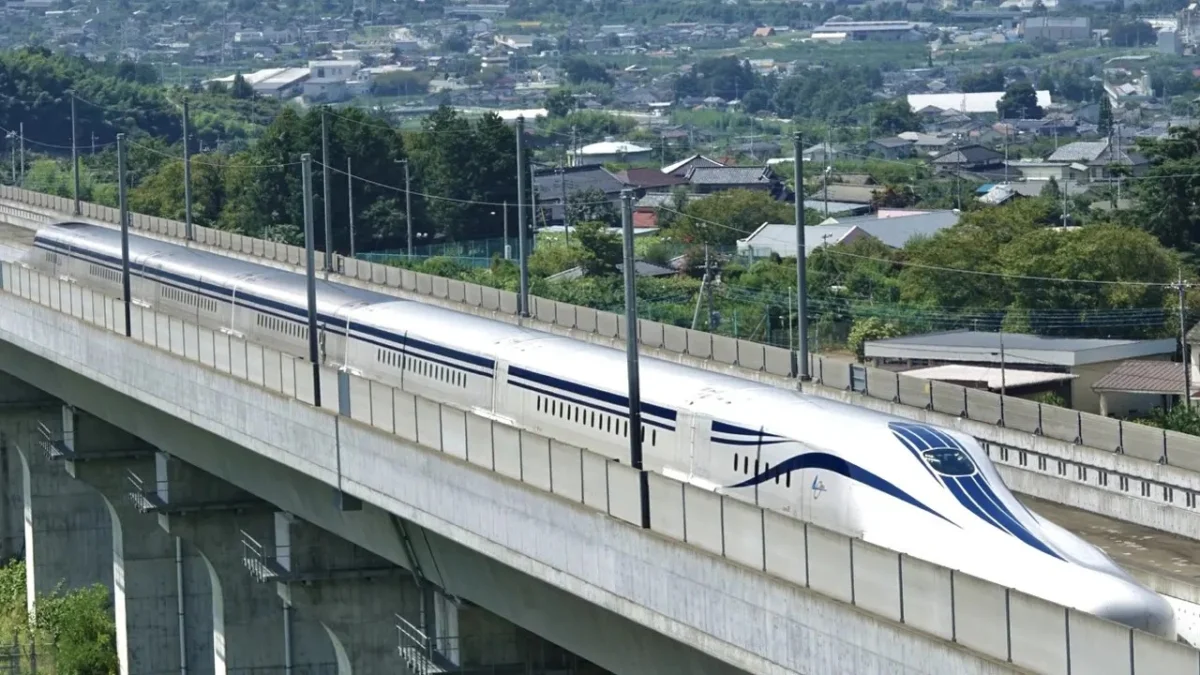
TOKYO, Japan – A monumental stride has been made in one of the world’s most ambitious infrastructure projects as the governor of Shizuoka Prefecture has officially approved the commencement of construction on the long-delayed section of the future Chuo Shinkansen line. This crucial decision, coming after a nearly nine-year impasse, paves the way for the development of a groundbreaking superconducting maglev railway designed to slash travel times between Tokyo and Nagoya to a mere 40 minutes. While the project, spearheaded by the Central Japan Railway Company (JR Central), now moves forward, the highly anticipated Tokyo-Nagoya segment is not expected to open before 2036, a significant revision from its original 2027 target.
The approval by Governor Yasutomo Suzuki marks a pivotal moment, unblocking the main administrative obstacle that had stalled progress since 2017. The Chuo Shinkansen, poised to revolutionize intercity travel in Japan, aims to connect Shinagawa Station in Tokyo with Nagoya, and later extend to Osaka, utilizing trains that levitate 10 centimeters above their guideway and travel at speeds up to 500 km/h.
A Decades-Long Vision Takes a Crucial Step Forward
The Chuo Shinkansen project, or "Linear Chuo Shinkansen" as it is often known, represents the pinnacle of Japan’s unwavering commitment to high-speed rail innovation. Conceived decades ago as a successor and alternative to the venerable Tokaido Shinkansen, the maglev line promises not just speed, but a new paradigm in rail transportation. Its journey, however, has been punctuated by significant engineering challenges, environmental scrutiny, and escalating costs.
The recent breakthrough in Shizuoka Prefecture resolves the most protracted and contentious hurdle. For nearly nine years, the construction of a critical tunnel section through the Southern Japanese Alps within Shizuoka had been on hold. This particular segment, though relatively short compared to the entire 286-kilometer Tokyo-Nagoya route, presented unique environmental and geological complexities.
The Nine-Year Stall: Environmental Concerns in Shizuoka
The heart of the dispute lay in profound environmental concerns raised by former Governor Heita Kawakatsu. His administration had consistently voiced apprehension that tunneling through the geologically sensitive Southern Japanese Alps could severely impact the region’s delicate ecosystem, most notably the flow of the Oi River. The Oi River is a vital water source for numerous communities, agricultural enterprises, and industrial activities across Shizuoka Prefecture. The fear was that the massive tunneling operations, especially at depths exceeding 1,000 meters in some areas, could disrupt underground water tables, leading to a significant reduction in the river’s flow and potentially causing irreparable damage to local livelihoods and biodiversity.
Governor Kawakatsu’s stance was rooted in a deep sense of responsibility towards the prefecture’s natural resources and its citizens. He argued that JR Central had not adequately addressed these concerns nor provided sufficient guarantees for mitigation and compensation. The lack of stations within Shizuoka Prefecture for the Chuo Shinkansen also fueled local resentment, as residents felt they would bear the environmental burden without reaping direct benefits from the project. This led to an entrenched standoff, with JR Central unable to proceed with a vital section of the line, thereby freezing the project’s overall timeline.
A New Chapter: Governor Suzuki’s Approval and Environmental Accord
The political landscape shifted with the recent election of Yasutomo Suzuki as the new governor of Shizuoka. His administration adopted a more conciliatory approach, engaging in renewed dialogue with JR Central. This fresh engagement culminated in the announcement that Shizuoka Prefecture will enter into a comprehensive environmental protection agreement with JR Central. This landmark document is designed to safeguard the Oi River’s water resources and the broader natural environment, addressing the core concerns that had previously blocked construction.
While the specifics of the agreement are yet to be fully disclosed, it is understood to include rigorous monitoring protocols, mitigation strategies for water flow management, and potential compensation mechanisms for any unavoidable environmental impacts. The new governor’s decision underscores a delicate balance between regional environmental stewardship and national infrastructure development. Construction in Shizuoka could now realistically commence later this year, though completing this particularly challenging mountainous section is projected to take at least a decade, pushing the Tokyo-Nagoya operational date to 2036 at the earliest.
Unprecedented Speed and Connectivity: The Maglev’s Promise
The Chuo Shinkansen is not merely an incremental upgrade to Japan’s already world-renowned high-speed rail network; it represents a generational leap. Its superconducting maglev technology promises a travel experience unparalleled in speed and efficiency, fundamentally reshaping the connectivity of Japan’s most vital economic hubs.
Revolutionizing Intercity Travel Times
Upon its completion, the maglev line will dramatically reduce travel times. The journey between Shinagawa Station in southern Tokyo and Nagoya, currently taking approximately 86 minutes on the Tokaido Shinkansen, will be slashed to a breathtaking 40 minutes. This nearly 50% reduction in travel time is expected to foster an even tighter integration of the Tokyo and Nagoya metropolitan areas, facilitating business, tourism, and daily commuting.
Looking further ahead, the second phase of the project envisions an extension to Osaka. Once completed, the Shinagawa-Osaka trip, which currently takes about 134 minutes on conventional Shinkansen services, is projected to be completed in approximately 67 minutes. This would effectively halve the journey time between Japan’s two largest economic centers, creating a "super-megalopolis" stretching across the country’s main island. The implications for economic synergy, talent mobility, and regional development are immense, potentially unlocking new growth opportunities and consolidating Japan’s economic prowess.
Strategic Importance: A Resilient Backbone for Japan
Beyond sheer speed, the Chuo Shinkansen holds profound strategic importance for Japan. The existing Tokaido Shinkansen, which opened in 1964, has served as the nation’s primary rail corridor between Tokyo, Nagoya, and Osaka for decades. While an engineering marvel of its time, its age and reliance on a single route present vulnerabilities. Japan is a country prone to frequent seismic activity and other natural disasters. The Chuo Shinkansen, running largely through tunnels and offering an alternative route, will provide critical redundancy for Japan’s essential transportation network. In the event of an earthquake or other disruption affecting the Tokaido line, the maglev system could serve as a vital backup, ensuring continued connectivity and economic resilience. This dual-corridor strategy is a testament to Japan’s long-term infrastructure planning and its commitment to national security and stability.
The Marvel of Superconducting Maglev Technology
At the heart of the Chuo Shinkansen’s transformative capabilities lies its cutting-edge Superconducting Maglev (SCMAGLEV) technology. This system moves beyond the conventional wheel-on-rail paradigm, leveraging the principles of electromagnetism to achieve unprecedented speeds and a uniquely smooth travel experience.
Levitation and Propulsion Explained

Unlike traditional trains, which rely on friction between wheels and rails for movement, Chuo Shinkansen trains will levitate above the track at cruising speeds. This is achieved through a sophisticated interplay of superconducting magnets installed on the train and coils mounted along the guideway. When the train accelerates, the interaction between these powerful magnets generates repulsive and attractive forces that lift the vehicle approximately 10 centimeters (about 4 inches) above the track. This elimination of physical contact between the train and the infrastructure drastically reduces friction, allowing for the exceptional speeds of up to 500 km/h.
Propulsion is also electromagnetic. The guideway coils are energized to create a moving magnetic field that pushes and pulls the superconducting magnets on the train, propelling it forward without any mechanical contact. This "linear motor" system is highly efficient and remarkably quiet, offering a ride free from the vibrations associated with traditional rail travel. Wheels are only engaged at low speeds, during departure and stopping, to guide the train until it reaches the velocity required for levitation. Once cruising speed is attained, the train smoothly lifts off the guideway, gliding silently along its route.
Designed for Japan’s Unique Environment
JR Central emphasizes that the SCMAGLEV system has been specifically engineered to operate robustly in a country prone to frequent earthquakes. The inherent stability of a train that is not physically linked to the ground, coupled with advanced seismic detection and response systems, is intended to provide a high level of safety and operational continuity even in challenging geological conditions. This focus on resilience is paramount for a critical infrastructure project in Japan.
Navigating the Financial and Geological Labyrinth
While the Shizuoka approval marks a significant victory, it does not erase the myriad challenges that have plagued the Chuo Shinkansen project, particularly concerning its escalating costs and complex geological realities. The very ambition of the project, coupled with unforeseen delays and the inherent difficulties of tunneling through mountainous terrain, has led to a substantial ballooning of the budget.
The Soaring Cost of Innovation
The financial trajectory of the Tokyo-Nagoya section alone paints a stark picture of the project’s increasing burden. The initial estimate for this segment was approximately 5,500 billion yen, equivalent to about EUR 29.7 billion at historical exchange rates. However, as delays mounted and geological complexities became clearer, this budget was first revised to 7,000 billion yen in 2021. The latest figures now place the estimated cost at approximately 11,000 billion yen, or nearly EUR 59.4 billion at current exchange rates. This represents a staggering doubling of the original cost estimate, underscoring the immense financial commitment required for such a pioneering endeavor.
Several factors contribute to these spiraling costs. The prolonged nine-year delay in Shizuoka alone generated significant overheads, including extended project management, revised planning, and the holding of equipment and personnel. Furthermore, the extensive tunneling required through the Southern Japanese Alps, involving some of the longest and deepest tunnels in the world, necessitates highly specialized and costly engineering techniques, advanced safety protocols, and continuous geological surveys. Material costs, labor expenses, and inflation over the extended project timeline have also played a role in pushing the budget skyward.
Revised Timelines and Contingencies
The financial revisions are inextricably linked to the project’s revised timeline. The original target for the Tokyo-Nagoya section’s opening was 2027. This ambitious deadline was rendered unattainable once JR Central encountered the insurmountable administrative and environmental hurdles in Shizuoka. The current estimate of 2036 at the earliest is now the working target, representing a full nine-year delay from the initial plan.
Even this 2036 estimate remains contingent on several critical factors. The rapid and uninterrupted commencement of tunnel work in Shizuoka is paramount. Any new technical difficulties encountered during the excavation, unforeseen geological formations, further environmental challenges, or additional financial pressures could push the timeline back even further. JR Central will undoubtedly face intense pressure to manage these variables meticulously to avoid further delays and cost overruns. The investment of nearly EUR 60 billion demands a return, and prolonged construction will only exacerbate the financial strain.
Beyond 2036: The Future of Japan’s Rail Network
The Chuo Shinkansen, even with its revised timeline and substantial costs, remains a cornerstone of Japan’s long-term infrastructure strategy. Its completion, particularly the eventual extension to Osaka, will solidify Japan’s position at the forefront of high-speed rail technology and create an unparalleled transportation spine for the nation.
The Osaka Extension: Completing the Vision
The full vision for the Chuo Shinkansen includes its extension from Nagoya to Osaka. While the focus is currently on the Tokyo-Nagoya segment, the Osaka extension is crucial for maximizing the economic and strategic benefits of the maglev line. Connecting Japan’s three largest metropolitan areas – Tokyo, Nagoya, and Osaka – with such unprecedented speed will foster a powerful economic corridor, stimulating trade, tourism, and innovation across the country. This interconnectedness is vital for Japan to maintain its competitive edge in the global economy.
A Legacy of Innovation and Potential for Export
Japan has invested decades in the research and development of magnetic levitation technology, conducting extensive tests where experimental trains have achieved speeds even higher than the planned commercial operation. The Chuo Shinkansen represents the culmination of this immense effort, transforming a cutting-edge experimental project into a regular, commercial transportation system that will serve millions.
Beyond its domestic impact, the successful deployment and operation of the Chuo Shinkansen could serve as a powerful testament to Japan’s technological prowess, potentially opening doors for the export of its advanced maglev technology to other nations grappling with similar challenges of urban congestion and the need for ultra-high-speed connectivity.
The approval in Shizuoka is more than just a green light for construction; it is a profound affirmation of Japan’s unwavering commitment to pushing the boundaries of engineering and transportation. While the path ahead for the Chuo Shinkansen remains challenging, the recent breakthrough ensures that this ambitious project, a symbol of national pride and technological leadership, will ultimately reshape the future of travel in Japan.

