

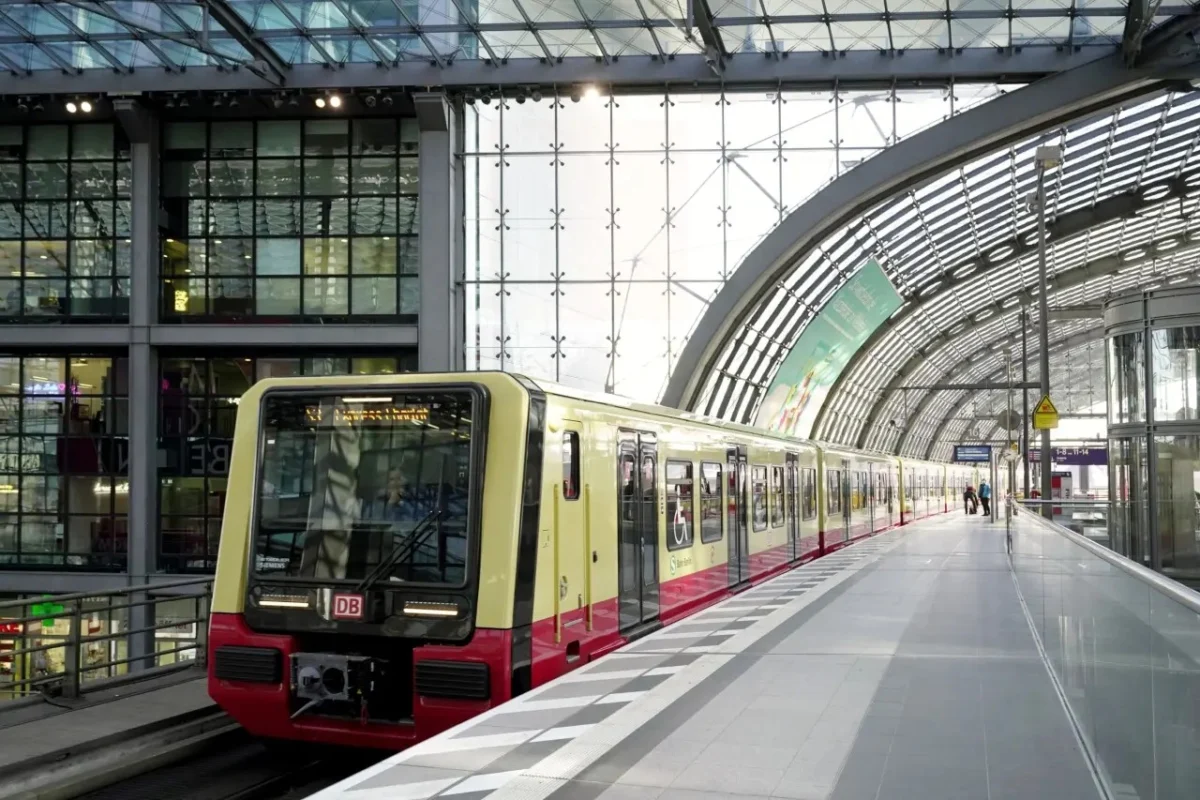
In a move that promises to define the mobility landscape of Germany’s capital for the next three decades, a powerful consortium consisting of S-Bahn Berlin, Siemens Mobility, and Swiss rail manufacturer Stadler has officially secured the contract to modernize Berlin’s iconic commuter rail network. This monumental project, which integrates manufacturing, digital maintenance, and operational management, marks one of the most significant urban rail investments in European history.
The agreement—a complex tripartite arrangement—calls for the production and delivery of 350 state-of-the-art four-car trains, the provision of comprehensive maintenance services for 30 years, and the continued operation of two critical subnetworks for the next 15 years.
Main Facts: The Scope of the Transformation
The finalized award procedure brings together the strengths of three industry titans. By combining S-Bahn Berlin’s operational expertise, Siemens Mobility’s digital infrastructure, and Stadler’s precision manufacturing, the project aims to create a seamless, high-capacity, and technologically advanced transit experience.
The core of the procurement includes:
- Rolling Stock: The production of 350 new four-car trains, engineered specifically for the unique demands of the Berlin S-Bahn environment.
- Longevity: A 30-year maintenance contract, ensuring that the fleet remains in peak condition through cutting-edge predictive technology.
- Operational Continuity: The continued operation of the "North–South" and "Stadtbahn" subnetworks, which serve as the backbone of Berlin’s public transport, for a 15-year term.
The new trains will be based on the latest generation of vehicles currently operating on the Ringbahn (circular line). Having already logged over 120 million kilometers of service with exceptional technical reliability, this platform provides a proven foundation that the consortium will now further refine for the next generation of commuters.
Chronology of the Bid and Procurement
The path to this contract has been characterized by rigorous planning and a commitment to long-term sustainability.
- Initial Procurement Phase: The tender process was designed to address the growing demand for capacity in Berlin and Brandenburg, where the population has seen steady growth, putting pressure on existing infrastructure.
- Consortium Formation: Recognizing the technical scale required, S-Bahn Berlin sought partners capable of delivering not just hardware, but a comprehensive digital ecosystem. The alliance with Siemens Mobility and Stadler was formed to address the duality of manufacturing excellence and digital-age operational efficiency.
- Final Award Decision: After an extensive review of proposals, the consortium was officially selected. The award marks the conclusion of a complex legal and technical vetting process that prioritized both economic viability and passenger comfort.
- Production Timeline: With the contract now signed, the consortium is preparing to scale up production. The commitment is to keep the "build in Berlin, for Berlin" philosophy at the heart of the project, supporting regional economic growth.
Supporting Data: Engineering for the Future
The new fleet is not merely an upgrade in aesthetics; it is a fundamental shift in how rail assets are managed and how passengers interact with public transit.
Advanced Climate Control and Interior Flexibility
Stadler’s engineering team has prioritized thermal comfort, particularly as climate change leads to more frequent heatwaves in the capital. The new trains feature an innovative air-conditioning system that utilizes halogen-free refrigerants and advanced water-cooled technology. This design ensures consistent interior temperatures even under extreme external conditions, a critical upgrade for a system that serves millions.
Accessibility has also been redesigned. The multifunctional areas are significantly larger, providing dedicated space for wheelchairs, prams, and bicycles. Special attention has been paid to passengers with reduced mobility, with seating configurations that accommodate companions and individuals of varying physical statures. Furthermore, acknowledging the needs of the modern commuter, USB-C ports will be integrated at every two seats, reflecting the shift toward digital-first transit experiences.
The Digital Backbone: Railigent X
Perhaps the most significant leap forward is the integration of Siemens Mobility’s Railigent X platform. This digital ecosystem will serve as the "brain" of the maintenance program. By collecting real-time data from onboard IT systems, sensors, and the rail infrastructure itself, the platform enables:

- Predictive Maintenance: Identifying component wear-and-tear before a failure occurs, shifting the model from reactive repairs to proactive care.
- Optimized Availability: By reducing the time trains spend in the depot, the network ensures that the maximum number of carriages are available during peak hours.
- Lifecycle Cost Reduction: Through precision monitoring, the consortium aims to significantly lower the long-term maintenance costs associated with such a massive fleet.
Official Responses: A Vision for Regional Mobility
The leadership of the partner organizations has emphasized that this project is about more than just steel and electronics—it is about the social and economic fabric of the region.
Peter Spuhler, Chairman of the Board of Directors of Stadler Rail, expressed pride in the local impact of the project: "The 350 trains will be built in Berlin and for Berlin. We are honored to contribute to the city’s future by providing a generation of trains that will define the subway and S-Bahn network for decades."
Heiko Büttner, Director of S-Bahn Berlin, highlighted the operational significance: "Together with our employees and strong partners, we want to continue ensuring mobility in the region for decades to come. Transporting 1.4 million passengers daily is a massive responsibility, and this contract provides the stability we need to meet that challenge."
Implications: A Boost for the Capital Region
The implications of this contract extend far beyond the tracks.
Economic Impact
By committing to manufacturing and maintenance within the capital region, the consortium is securing thousands of high-skilled jobs. This creates a ripple effect throughout Berlin and Brandenburg, fostering an ecosystem of engineering, software development, and technical support. It positions the region as a global hub for smart rail technology.
Strengthening the Core
The North–South and Stadtbahn corridors are the lifeblood of Berlin. The Stadtbahn, in particular, acts as the city’s central artery, connecting major transit hubs such as Berlin Hauptbahnhof, Friedrichstraße, Alexanderplatz, and Ostbahnhof. By securing the operation of these lines, the consortium ensures that the central nervous system of the city’s transport remains stable and reliable.
Sustainability and Growth
The S-Bahn is the most sustainable mode of transport in the region. By increasing capacity and reliability, the city is providing a viable alternative to private vehicle ownership. As Berlin continues to grow, the ability of the S-Bahn to scale its capacity—supported by predictive maintenance and high-tech rolling stock—will be the deciding factor in the city’s environmental goals.
A Blueprint for Other Cities
The structure of this contract—integrating the manufacturer, the digital maintainer, and the operator—is likely to serve as a blueprint for other European capitals. As urban centers look to modernize aging infrastructure, the "Berlin Model" offers a clear path toward balancing innovation with long-term operational security.
Conclusion: The Road Ahead
The modernization of Berlin’s S-Bahn is a marathon, not a sprint. Over the next 30 years, the partnership between S-Bahn Berlin, Siemens Mobility, and Stadler will reshape how residents and tourists traverse the capital. With a focus on passenger comfort, cutting-edge predictive analytics, and regional industrial support, the project stands as a testament to the power of public-private cooperation.
As the first of the 350 trains begin to take shape on the assembly lines, Berliners can look forward to a transit experience that is faster, more reliable, and better adapted to the challenges of the 21st century. The city is not just replacing trains; it is upgrading the very experience of living and working in one of Europe’s most vibrant capitals.

