

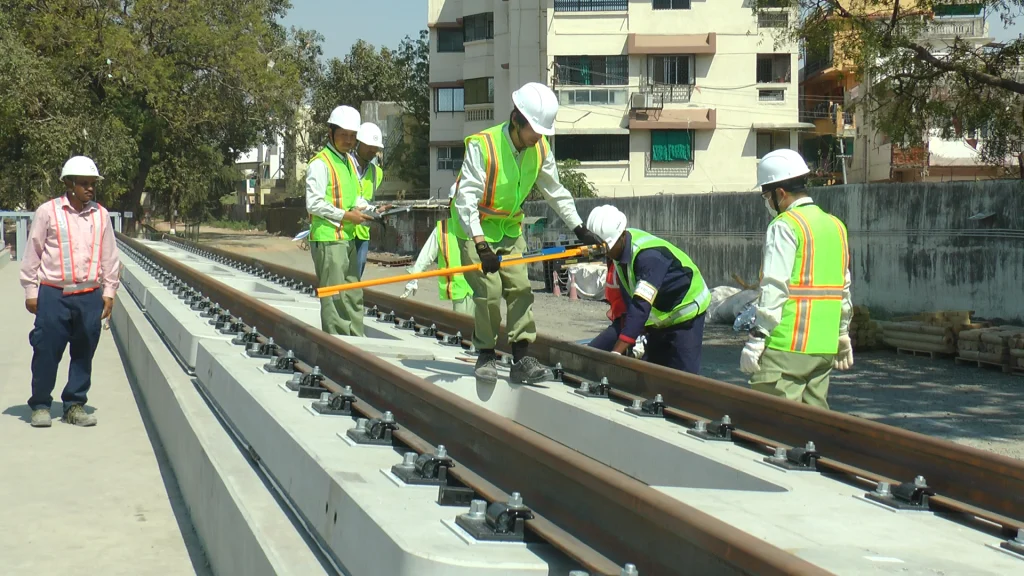
Main Facts: A Milestone for Indian Railways
In a monumental step forward for India’s transport infrastructure, the National High-Speed Rail Corporation Limited (NHSRCL) has officially identified Larsen & Toubro (L&T) as the lowest bidder for a significant portion of the Mumbai-Ahmedabad High-Speed Rail (MAHSR) corridor. Valued at approximately USD 4.6 billion, the contract represents one of the largest infrastructure tenders in the nation’s history.
The scope of this massive contract covers approximately 47% of the total 508-kilometer alignment. Specifically, the project entails the design and construction of a 237-kilometer stretch extending from Vapi (Zaroli Village at the Maharashtra-Gujarat border) to Vadodara in Gujarat. Beyond the tracks, the project includes the construction of four state-of-the-art high-speed rail stations—Vapi, Billimora, Surat, and Bharuch—along with the development of the Surat rolling stock depot.
This development marks a decisive shift from the planning and bureaucratic phase to the active construction phase for the ambitious "Bullet Train" project, which aims to bridge the economic gap between India’s financial capital and the industrial hub of Gujarat.
Chronology: From Concept to Financial Bidding
The journey toward this landmark contract has been characterized by meticulous planning and a fast-tracked evaluation process. The timeline of the MAHSR development underscores the government’s commitment to meeting ambitious deadlines:
- September 2020: The NHSRCL opened the technical bids for the massive 237-km stretch. The transparency and rigor of the evaluation process were highlighted as a priority by the corporation, ensuring that only firms with the highest technical capabilities were shortlisted.
- October 2020: In a swift follow-up, the financial bids were opened less than a month after the technical evaluation. This rapid transition demonstrated the efficiency of the bidding process despite the logistical constraints imposed by the global health crisis during that period.
- August 2020 (Preceding Developments): Before the L&T announcement, the NHSRCL had already initiated the bidding process for an 18-km viaduct stretch between Anand and Sabarmati, which includes key stations in Ahmedabad. Simultaneously, technical bids covering 64% of the total alignment (325 km and five stations) were opened, setting the stage for the massive L&T contract.
- 2020 Planning Phase: Throughout the year, the NHSRCL conducted multiple online pre-bid meetings, particularly regarding the construction of 14 critical bridges, signaling a proactive approach to stakeholder engagement and technical alignment.
Supporting Data: The Scale of the MAHSR Project
The Mumbai-Ahmedabad corridor is not merely a transport project; it is a massive engineering feat designed to redefine Indian mobility. Key metrics defining the project include:
- Corridor Length: 508 kilometers.
- Station Network: 12 stations connecting major economic centers.
- Operational Speed: The system is designed for commercial speeds of 320 km/h, which will reduce the travel time between Mumbai and Ahmedabad to approximately two hours—a journey that currently takes significantly longer via conventional rail or road.
- Passenger Capacity: Projections estimate a ridership of approximately 17,900 passengers per day per direction during the initial years of operation, with significant growth expected as economic integration deepens.
- Technical Complexity: The alignment includes complex structures, such as 31 crossing bridges, six of which are sophisticated steel truss bridges, requiring high-grade structural engineering.
Economic Implications: Building an ‘Atmanirbhar’ Infrastructure
The selection of L&T for this project carries profound implications for the Indian economy. Beyond the engineering achievement, the project serves as a cornerstone for the "Make in India" initiative.
Employment Generation
The project is projected to create more than 90,000 direct and indirect jobs throughout the construction phase. This massive influx of employment opportunities spans a wide spectrum, from highly skilled civil and electrical engineers to logistics managers and general labor. The ripple effect of this hiring will be felt across local economies in Maharashtra and Gujarat.
Industrial Boost and Supply Chain Localization
A critical requirement of the contract is the emphasis on indigenous manufacturing. All cement, steel, and structural steel components used in the construction of the 237-km stretch must be produced within India. This mandate provides a guaranteed market for domestic steel and cement giants, fostering industrial growth and capacity expansion. Furthermore, the massive demand for specialized construction machinery—such as girder launchers and segment lifters—is expected to revitalize the heavy equipment manufacturing sector.
Technological Transfer and Skill Development
The involvement of international expertise alongside Indian giants like L&T ensures a massive transfer of technology. Indian engineers are gaining exposure to world-class Japanese Shinkansen technology, which will elevate the country’s domestic construction capabilities for future high-speed rail projects.
Official Responses and Strategic Vision
The NHSRCL has maintained that the selection process was defined by strict adherence to global standards of fairness and competitive bidding. While several international and domestic consortia participated, the evaluation focused on technical prowess, financial stability, and the ability to meet the stringent safety standards required for high-speed rail.
The government’s strategic vision for the MAHSR is to create a "growth corridor." By linking the economic hubs of Mumbai and Ahmedabad, the project is intended to stimulate investment, improve regional connectivity, and create a template for a nationwide high-speed rail network.
Challenges and Future Outlook
Despite the momentum, the project has faced its share of hurdles, including land acquisition challenges and the complexity of building in densely populated areas. However, the consistent opening of bids and the awarding of contracts for bridges and viaducts indicate that the NHSRCL has successfully navigated the initial obstacles.
Looking ahead, the successful execution of the L&T contract will serve as a bellwether for the remaining segments of the corridor. With 64% of the alignment already in the advanced stages of bidding or contract award, the project is steadily transitioning from a blueprint into a physical reality.
Conclusion: A New Era for Indian Rail
The awarding of this contract is more than a commercial agreement; it is a declaration of India’s entry into the elite club of high-speed rail nations. As L&T begins its work on the 237-km stretch, the project will undoubtedly transform the landscape of civil engineering in India. With the integration of domestic materials, the promise of massive job creation, and the objective of world-class transit times, the Mumbai-Ahmedabad High-Speed Rail project stands as a testament to India’s ambition to modernize its infrastructure for the 21st century.
As the nation watches the first pillars rise, the focus will now shift to the timely execution and quality control of the work. If the current pace is maintained, the MAHSR project will not only bridge two cities but also pave the way for a more connected, efficient, and technologically advanced India.

