

Introduction: A Strategic Pivot Toward Sustainable Rail
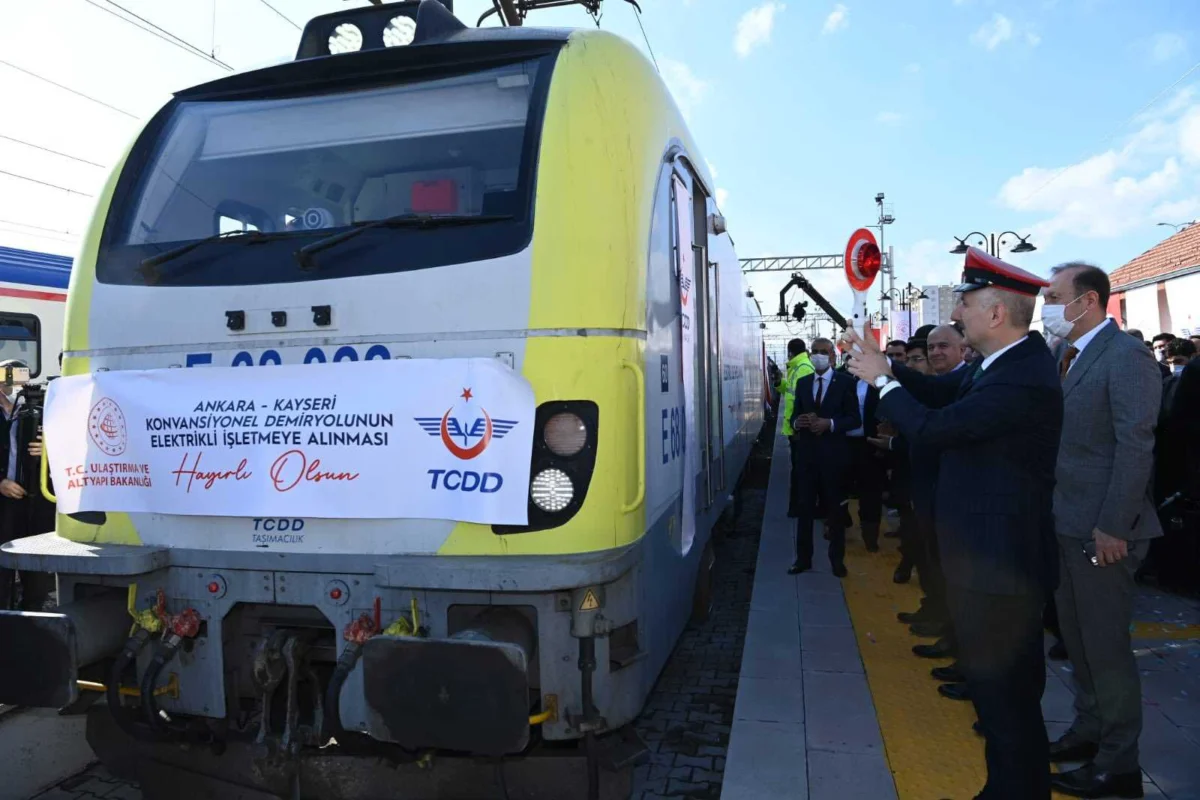
Turkey’s transportation landscape is undergoing a profound transformation. Under the guidance of the Ministry of Infrastructure and Transport, the nation is aggressively modernizing its century-old rail legacy to align with 21st-century economic and environmental demands. The recent inauguration of the Nenek-Şefaatli electrification project marks a pivotal milestone, completing the electrification of the entire 352 km Ankara-Kayseri conventional railway line. This development is not merely an isolated engineering feat; it is a fundamental pillar of Turkey’s "Green Development" strategy, designed to slash carbon emissions, reduce logistics costs, and unify the country’s industrial hubs through a high-efficiency, electrified rail network.
Main Facts: Completing the Ankara-Kayseri Corridor
The completion of the Nenek-Şefaatli rail section and the Tüpraş rail junction stands as a testament to the Turkish government’s commitment to continuous infrastructure improvement. By finalizing the electrification of these critical nodes, the Turkish State Railways (TCDD) has enabled electric train operations across the entire 352 km Ankara-Kayseri corridor.
The project scope was extensive, involving the installation of 372 km of catenary lines, the deployment of 118 km of high-voltage energy transmission lines, and the construction of six dedicated transformer centers. This infrastructure upgrade allows for seamless transit from the western regions of Turkey to the south via the Boğazköprü junction. Consequently, freight and passenger trains originating from major western industrial centers can now navigate a fully electrified route, facilitating a more streamlined connection to cities like Adana, Malatya, and beyond.
Chronology of Rail Development: From Tradition to Innovation
The history of the Ankara-Kayseri line is rooted in the early 20th century, with the tracks originally laid nearly 100 years ago. For decades, these lines served as the backbone of the Anatolian economy, relying primarily on diesel-powered locomotives. However, the post-2003 era marked a significant shift in policy.
- 2003–2010: The initiation of the "Railway Reform" phase, focusing on the renewal of decaying infrastructure and the introduction of high-speed rail concepts.
- 2010–2020: Rapid acceleration of signaling and electrification projects, aimed at increasing safety and operational efficiency across the 12,803 km network.
- 2021: The initiation of trials on the Ankara-Sivas high-speed line and dynamic testing on the Konya-Karaman section, signaling a move toward high-speed, high-frequency services.
- Late 2021 – Early 2022: Completion of the Nenek-Şefaatli electrification, cementing the Ankara-Kayseri corridor as a modern, green transport artery.
This chronology illustrates a systematic effort to transition from an aging, inefficient network to a digitized, electrified, and high-speed infrastructure capable of supporting a globalized economy.
Supporting Data: Economic and Environmental Impact
The benefits of the Nenek-Şefaatli electrification are quantifiable and significant. The Ministry of Infrastructure estimates that this single project will yield annual savings of approximately TRY 20 million (EUR 1.44 million). This figure is broken down into two primary components:
- Fuel Efficiency: A reduction of TRY 9 million (EUR 647,515) in annual fuel oil expenditures.
- Environmental Mitigation: A reduction of TRY 11 million (EUR 791,407) in costs associated with environmental impact, primarily driven by the prevention of 35,000 tonnes of carbon emissions annually.
Beyond the specific Ankara-Kayseri line, the broader national rail statistics underscore the scale of the ongoing transition:
- Electrification Progress: Currently, 5,753 km (45%) of the total 12,803 km network is electrified. The goal is to reach 50% coverage by the end of 2023.
- Signaling Upgrades: Signaling infrastructure has increased by 172% since 2003, drastically reducing the risk of human error and increasing train frequency.
- Investment Capital: Turkey has already invested TRY 222 billion (USD 16 billion) into the rail sector, with a total commitment to spend TRY 1.36 trillion (USD 81.78 billion) by 2071.
Official Responses and Strategic Vision
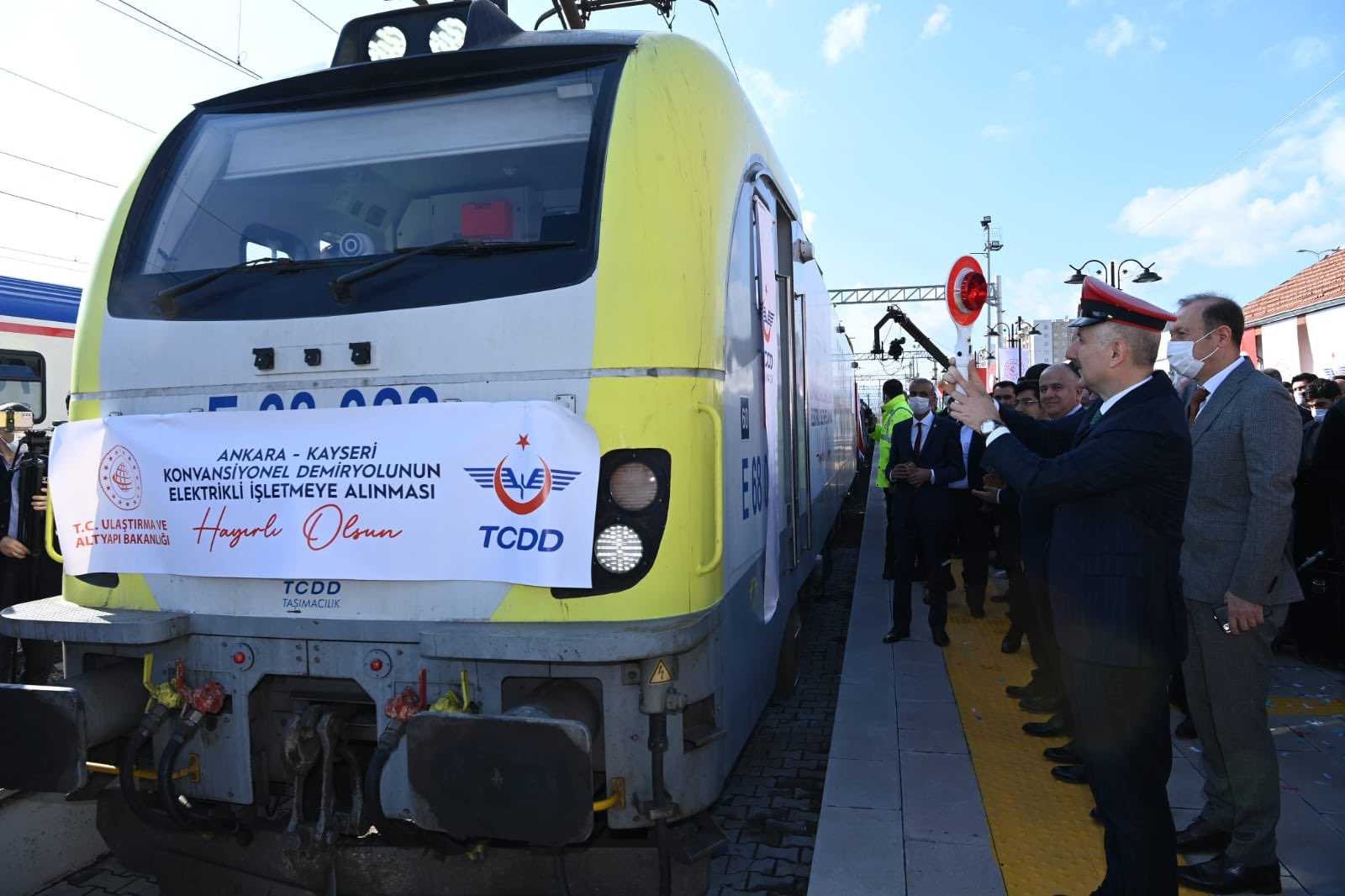
During the inauguration ceremony, Minister of Infrastructure Adil Karaismailoğlu emphasized the project’s role in creating a more livable environment. "Whatever we do for our country, it is our duty to leave a more livable, greener, carbon-neutral Turkey for our nation," he remarked, noting that the electrification of the Nenek-Şefaatli line is a direct contribution to Turkey’s green development goals.
Metin Akbaş, the Director General of TCDD, echoed these sentiments, highlighting the logistical benefits. "Trains departing from İzmir and Edirne will now be able to traverse the country to Adana and Malatya on electrified tracks," Akbaş stated. He further noted that the "most important reform process" involves the construction of new lines, citing the 2,149 km of new conventional lines and 1,213 km of high-speed rail connections built since 2003.
Implications: The Future of Turkish Logistics and Connectivity
The current wave of investment is not merely about electrification; it is about building a comprehensive, multimodal logistics network.
High-Speed Expansion Projects
Turkey is currently pushing forward on several high-profile corridors:
- Ankara-Sivas: A 405 km line that will reduce travel time from 12 hours to just 2 hours. With 95% of the infrastructure completed, it stands as the flagship of the high-speed network.
- Ankara-İzmir: A 503.2 km project that has reached 47% completion. Once finished, it will cut travel time from 14 hours to 3.5 hours, providing a massive boost to tourism and commercial exchange between the capital and the Aegean coast.
- Bursa-Yenişehir-Osmaneli: A critical 201 km link that is 82% complete, aimed at integrating the industrial powerhouses of Bursa into the national high-speed spine.
International Partnerships and Industrial Localization
A clear sign of Turkey’s growing rail maturity is the recent USD 1.8 billion contract with the China Machinery Engineering Corp (CMEC) for the Aksaray-Ulukışla-Mersin Yenice project. This 196 km double-track electrified line is designed for speeds of 250 km/h and serves as a model for international cooperation. Crucially, the government mandates that the rail infrastructure be built in partnership with Turkish firms, and the broader 2071 vision requires that 80% of vehicle components and systems be produced locally.
Logistics and the "Rail Vision 2071"
Turkey’s long-term strategy aims to increase the share of rail in total logistics to 45%. This will be achieved through:
- Rail Junctions: Construction of 600 km of new rail junctions connecting directly to factories, ports, and industrial zones.
- Sustainability: The development of a "Railway Energy and Climate Change Action Plan" to ensure that the transition to electric traction is supported by renewable energy sources, effectively decoupling transport growth from carbon output.
- Efficiency: Increasing the coverage of digital signaling systems from the current 65% to 90%, allowing for higher train density and safer operation.
Conclusion
The completion of the Nenek-Şefaatli electrification project serves as a microcosm of Turkey’s broader developmental trajectory. By prioritizing the modernization of aging assets while simultaneously building a cutting-edge high-speed network, Turkey is effectively shrinking its geography. The shift from diesel to electric power, the integration of signaling technologies, and the aggressive pursuit of high-speed connectivity are positioning Turkey as a critical logistical bridge between Europe and Asia. As the nation moves toward its 2023 and 2071 targets, the railway is set to remain the driving force of its economic and environmental future, transforming the way both people and goods traverse the Anatolian landscape.

