

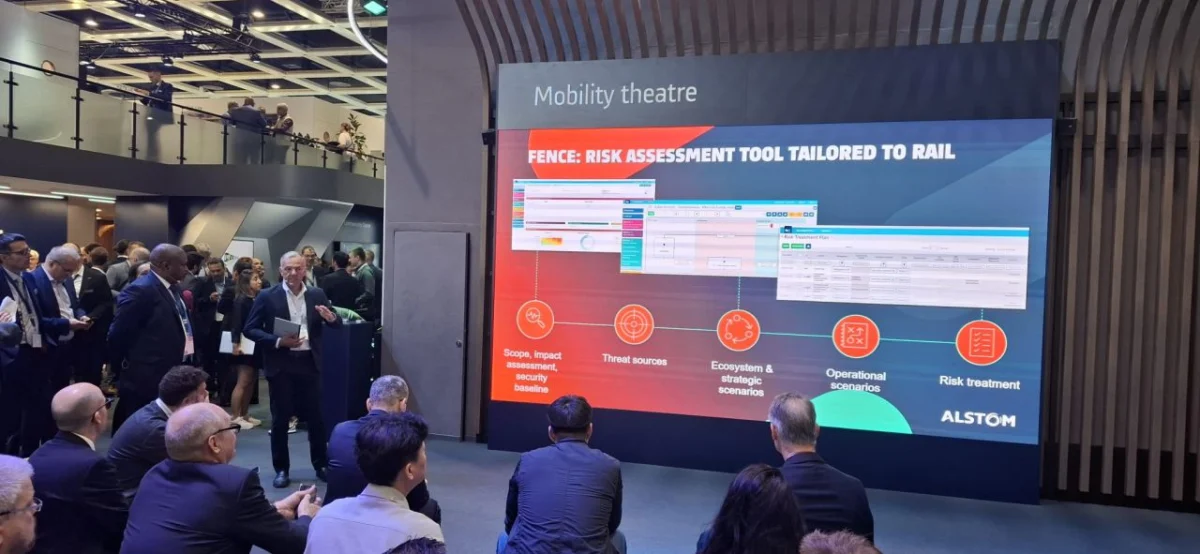
BERLIN, GERMANY – As the global transportation landscape accelerates its digital transformation, the vulnerability of critical infrastructure has moved to the forefront of international security agendas. At InnoTrans 2024, the world’s leading trade fair for transport technology, a strategic partnership between two industrial titans—Alstom and Airbus Protect—marked a turning point for the rail industry. The companies announced a successful breakthrough in the development and field-testing of a standardized, comprehensive Risk Assessment Methodology specifically tailored for rail sector industrial security.
This milestone represents the culmination of years of collaborative effort, aiming to create a robust digital shield for the world’s rapidly digitizing railway networks. By integrating aeronautical-grade security rigor with the operational demands of global rail, the partners are setting a new benchmark for how transport operators manage cyber resilience.
The Genesis of a Digital Shield: A Chronology of Collaboration
The journey toward this unified security methodology did not happen in a vacuum. It is the result of a deliberate, multi-year strategy to address the evolving threat landscape of 21st-century mobility.
- September 2021: The Strategic Alliance. Alstom and Airbus Protect formally signed a worldwide cooperation agreement. The objective was clear: to leverage Airbus’s deep-seated expertise in cybersecurity—honed within the mission-critical environments of the aeronautical and defense sectors—to address the unique, distributed, and complex nature of railway information systems.
- 2022–2023: The Developmental Phase. The partners spent these years mapping the technical specifications of global rail systems against the rigorous security frameworks required for critical infrastructure. During this period, teams worked on harmonizing the EBIOS RM (Expression of Needs and Identification of Security Objectives) risk management framework with the specific requirements of the rail industry.
- Early 2024: The Pilot Deployment. The methodology moved from theoretical models to field-testing. By applying the risk assessment protocols to real-world Alstom projects, the teams were able to identify friction points and refine the integration of Airbus Protect’s proprietary risk management software, Fence.
- September 2024: The InnoTrans Reveal. Following the successful validation of the pilot, Alstom and Airbus Protect utilized the global stage of InnoTrans 2024 to announce that the methodology is now ready for full-scale deployment across Alstom’s global portfolio.
Supporting Data: Why Rail Security Demands a New Approach
The necessity for this partnership is underscored by the current state of industrial cybersecurity. Modern rail networks are no longer isolated mechanical systems; they are sophisticated, interconnected ecosystems utilizing IoT (Internet of Things) sensors, automated signaling, cloud-based traffic management, and passenger-facing digital services.
The Regulatory and Technical Landscape
To remain compliant and secure, rail operators must navigate a complex web of international standards. The new methodology developed by Alstom and Airbus Protect acts as a "translator" for these requirements:
- IEC 62443: The global standard for Industrial Automation and Control Systems (IACS) security.
- CLC/TS 50701: The specific technical specification for railway applications, focusing on cybersecurity.
- EBIOS RM: A risk management method used to anticipate and manage cyber threats effectively.
By centralizing these standards within the Fence platform, Alstom has effectively created a "single source of truth." Fence allows the company to maintain a centralized risk database, which provides three distinct operational advantages:
- Knowledge Reuse: Security assessments performed on one project can be adapted for others, drastically reducing the time and cost associated with security auditing.
- Centralized Governance: Management can oversee security postures across diverse international projects from a single interface.
- Granular Permissioning: The tool allows for strict access control, ensuring that sensitive infrastructure data remains secure even as it is managed by large, distributed teams.
Official Perspectives: Bridging Industry Expertise
The significance of the partnership lies in the cross-pollination of industrial philosophies. By bringing aerospace precision to rail, the companies are addressing a "security-by-design" gap that has long plagued legacy transit systems.
Eddy Thesee, Vice President of Digital & Cybersecurity at Alstom, highlighted the existential nature of this work:
"In the context of rising cyber risks across all sectors, Alstom is committed to safeguarding the rail assets of our customers. Our collaboration with Airbus Protect will ensure the continued success of green mobility worldwide. As we make trains more efficient, we must ensure they remain resilient against an increasingly sophisticated landscape of bad actors."
The sentiment was echoed by Julien Touzeau, Head of Cyber Consulting at Airbus Protect, who emphasized the cultural shift required for industrial security:
"Innovating and collaborating across industries is part of the Airbus Protect DNA. As specialists in the cybersecurity of industrial systems and mobility solutions, we are proud to be working closely with Alstom, bringing our experience in the aeronautical sector to enhance the security of information systems in the rail sector. We aren’t just securing IT; we are securing the physical movement of people and goods."
Implications: The Future of Secure Mobility
The rollout of this methodology has profound implications for the rail industry, ranging from operational stability to long-term sustainability.
Safeguarding the "Installed Base"
One of the most significant challenges in rail is the "legacy problem." Much of the world’s rail infrastructure relies on hardware that has been in operation for decades. A key implication of the Alstom-Airbus partnership is that their cybersecurity approach is not restricted to new, "greenfield" projects. It is designed to be applicable to the existing installed base, retrofitting modern security protocols onto aging but critical systems. This allows operators to protect current investments without the need for immediate, wholesale replacement of hardware.
Streamlining Compliance
For rail operators and national authorities, the primary hurdle to security is often bureaucratic complexity. By harmonizing global standards (IEC 62443, CLC/TS 50701, and EBIOS RM), Alstom is significantly reducing the administrative burden on its clients. This allows for faster project certification and, ultimately, more reliable service delivery for passengers.
Driving Sustainable, Digital Transport
Alstom’s broader mission involves transitioning the world to greener, more energy-efficient transport. Digitalization is the engine of this transition—allowing for "smart" trains that use less electricity, optimize routes to reduce wear and tear, and increase passenger capacity. However, digital systems are inherently more vulnerable than mechanical ones. The Alstom-Airbus methodology acts as the "security layer" that allows this sustainable digital transition to proceed without compromising public safety.
Conclusion: A New Standard for Global Infrastructure
As the lines between physical infrastructure and cyber-networks continue to blur, the Alstom-Airbus Protect collaboration serves as a model for industrial security. By moving away from fragmented, project-specific security measures toward a unified, centralized, and standards-compliant methodology, the partners are not merely reacting to threats—they are proactively building a resilient foundation for the future of global mobility.
In an era where a single digital vulnerability can disrupt the movement of millions, the ability to assess, manage, and mitigate risk at scale is perhaps the most critical component of modern rail engineering. With the successful deployment of their new methodology, Alstom and Airbus Protect have ensured that while the trains of the future will be faster, smarter, and more sustainable, they will also be fundamentally more secure.

