

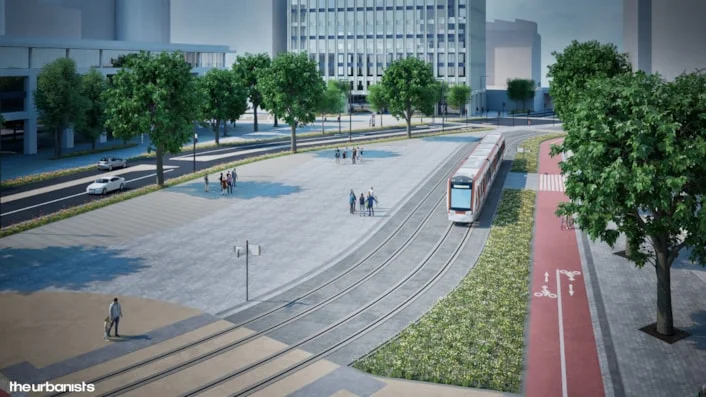
Transport for Wales (TfW) and Cardiff Council have officially unveiled ambitious plans for a transformative new tramway, marking a significant milestone in the development of the "Cardiff Crossrail." This project seeks to bridge the gap between the city’s historic central transport hub and the bustling Cardiff Bay waterfront, promising to redefine urban mobility for thousands of residents, commuters, and tourists.
The proposal represents more than just a new track; it is a foundational element of a wider, long-term vision to create a comprehensive, sustainable, and high-frequency transport network for the Welsh capital.
Main Facts: The Scope of the Project
At the heart of the proposal is the construction of a direct tramway link that will, for the first time, offer a seamless, high-capacity connection between Cardiff Central and Cardiff Bay. The project is being delivered as a collaborative effort between the local authority and the national transport operator, reflecting a shared commitment to the South Wales Metro project.
Key Infrastructure Highlights:
- Cardiff Central Integration: The scheme includes the construction of a brand-new, two-platform station situated in the southern car park of Cardiff Central. This design is specifically intended to facilitate easy, intuitive interchange for passengers arriving from the national rail network.
- The Route: The tramway will depart from the new southern platform, traverse the iconic Callaghan Square, and integrate with the existing Cardiff Bay line, creating a fluid transition into the waterfront area.
- Expansion at Cardiff Bay: Beyond the initial route, the plan calls for the addition of a third platform at Cardiff Bay railway station. This is a critical enhancement, as it complements the second platform already under construction as part of the broader South Wales Metro improvements.
- Consultation Period: The project is currently in the public engagement phase. A six-week consultation period opened on 16 September and will conclude on 27 October 2024. During this time, residents and stakeholders are invited to provide feedback on the proposed designs and the potential for wider public space improvements along the route.
Chronology: A Vision Years in the Making
The announcement on 16 September 2024 is the culmination of years of strategic planning and advocacy for better connectivity within Cardiff.
The Path to Implementation:
- Conceptualization: The idea of a "Crossrail" for Cardiff has been a long-held ambition for city planners. The goal has always been to move beyond a hub-and-spoke rail model toward a cross-city network that serves deprived communities and high-density employment areas alike.
- Strategic Alignment: The project was integrated into the South Wales Metro framework, which prioritizes the electrification of lines and the introduction of modern tram-train technology to improve frequency and reliability.
- Ongoing Transformation: In the months preceding this announcement, work has been steadily progressing on the existing Cardiff Bay line to accommodate the new rolling stock. The current addition of a second platform at Cardiff Bay serves as the immediate precursor to this larger expansion.
- September 2024: The formal launch of the consultation for the Cardiff Central to Cardiff Bay tramway marks the transition from theoretical planning to actionable design.
- Future Phases: While the current focus is on the "Phase One" link, the long-term roadmap envisions the Crossrail extending from the northwest of the city, through the city centre, and terminating in the east at the proposed Cardiff Parkway railway station.
Supporting Data: Why Connectivity Matters
The necessity for this tramway is supported by both economic and social data. Cardiff, like many rapidly expanding European cities, faces significant challenges regarding traffic congestion and the environmental impact of private vehicle reliance.
Urban Mobility and Sustainability
The primary objective of the Cardiff Crossrail is to provide a viable, attractive alternative to the private car. TfW’s data suggests that by offering a high-frequency service—likely supported by new tram-trains—the city can significantly reduce the number of short-distance car journeys currently clogging major arterial roads.
Bridging the Socio-Economic Gap
One of the most compelling arguments for the project is its potential to improve social equity. The proposed route will pass through areas that have historically lacked direct, efficient access to the city’s primary transport artery. By linking Butetown and other surrounding communities directly to the city centre, the project provides residents with better access to employment opportunities, education, and leisure facilities. This is a key pillar of the council’s "15-minute city" aspirations, where essential services are reachable via sustainable transport within a quarter-hour.
Official Responses: Leadership Perspectives
The project has garnered strong support from both local government and transport leadership, emphasizing a unified approach to the city’s future.
Cllr De’Ath, Cabinet Member for Climate Change, Strategic Planning & Transport at Cardiff Council:
"The Cardiff Crossrail project has been a long-held ambition for a long time and when fully complete will connect some of the most deprived communities in Cardiff to the railway network for the first time. Subject to funding, the Cardiff Crossrail will eventually run from the northwest of the city, all the way to the east of the city connecting with the proposed Parkway railway station. To start this process, the first phase of the scheme must be built between Cardiff Central and Cardiff Bay. This will finally ensure that Butetown is properly connected to the city centre, through the new tramway, providing further capacity for residents and visitors to access the wide range of attractions that Cardiff has to offer."
Dan Tipper, Chief Infrastructure Officer at TfW:
"Today, in partnership with Cardiff Council, we’ve shared exciting plans for the delivery of a brand-new tramway between Cardiff Central station and Cardiff Bay station. These plans align with work already underway to build a new track on the Cardiff Bay line, which will allow faster and more frequent services using brand-new tram-trains. Our ambition is that the new tramway will contribute towards a more sustainable transport network for Cardiff, encouraging more people to leave their cars at home and instead choose more sustainable ways to travel. We want to hear as many thoughts, opinions and questions on the proposals as possible, which will help to inform key decisions on the scheme. Contributions from our communities will help to shape this project so we can deliver a public tramway that people are proud of."
Implications: A Catalyst for Urban Regeneration
The development of the Cardiff Crossrail carries profound implications for the future of the city.
Economic Regeneration
The introduction of a modern tramway is widely considered a catalyst for commercial and residential development. Areas surrounding the new station and the route through Callaghan Square are likely to see increased investment. Improved transport links historically lead to higher footfall for local businesses and a boost in property values, making these areas more attractive to developers and small business owners alike.
Environmental Impact
By shifting the transport mode share from private vehicles to electric tram-trains, Cardiff aims to make a substantial dent in its carbon footprint. The project is a critical component of the city’s Climate Change strategy, directly addressing the need for cleaner air and lower greenhouse gas emissions in high-density urban corridors.
Public Engagement and Community Shaping
The current consultation period is not merely a formality; it is a mechanism for democratic input. The project team is actively seeking views on "public realm" improvements—the parks, walkways, and seating areas that will surround the tramway. By incorporating community feedback into the design, the council and TfW hope to ensure that the infrastructure feels like an asset to the local neighborhood rather than a barrier.
Moving Forward: How to Participate
For the public, the coming weeks represent an opportunity to influence the trajectory of Cardiff’s transport infrastructure. TfW and Cardiff Council have organized a series of "drop-in" events where citizens can review detailed maps, speak with engineers and planners, and raise concerns regarding the construction phase or the operational impact of the tramway.
As the consultation draws to a close on 27 October, the data gathered will be synthesized to refine the designs. With the South Wales Metro project already demonstrating the benefits of integrated transit, the Cardiff Crossrail is poised to be the next great leap forward in the capital’s journey toward a modern, accessible, and environmentally conscious future.
Whether it is the daily commuter seeking a faster route to the office or a visitor navigating the city’s attractions, the new tramway promises to simplify, speed up, and enhance the experience of traveling through Cardiff.

