

Introduction: A New Paradigm for Russian Industrial Energy
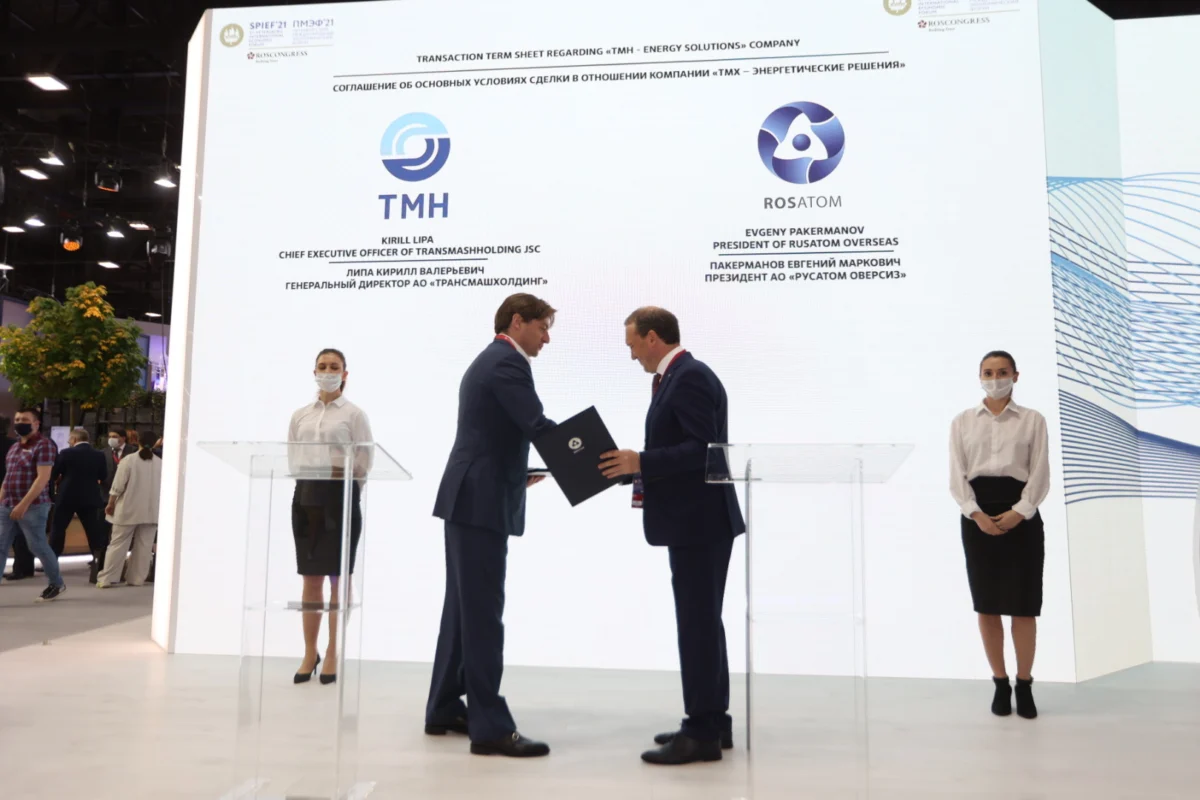
In a landmark development for Russia’s industrial and energy sectors, Rusatom Overseas—a subsidiary of the state-owned nuclear giant Rosatom—has officially entered into an agreement to acquire a stake in TMH-Energy Solutions, the specialized energy arm of Transmashholding (TMH). The agreement, formalized during the 24th St. Petersburg International Economic Forum (SPIEF) in June 2021, marks the beginning of a strategic collaboration aimed at redefining the landscape of alternative fuels, hydrogen infrastructure, and advanced power generation.
This partnership is not merely a financial transaction; it represents a convergence of nuclear-grade technological expertise and massive industrial manufacturing capacity. By combining Rosatom’s vast scientific research and development capabilities with TMH’s dominant position in the transport engineering market, the two entities aim to capture a market segment estimated to be worth over RUB 200 billion (approximately USD 2.72 billion) over the next decade.
The Core Agreement: A Strategic Merger of Competencies
The agreement structure stipulates that while TMH will maintain a majority stake in TMH-Energy Solutions, Rosatom will act as a strategic investor and technical partner. The finalization of the deal, expected by the end of 2021, remains subject to customary due diligence and the formal evaluation of corporate assets.
Objectives of the Joint Venture
The collaboration is built upon a multifaceted roadmap designed to address both internal domestic needs and international market expansion. The primary pillars of the joint venture include:
- Alternative Fuels and Hydrogen Infrastructure: A core focus on developing the hydrogen economy, specifically targeting fuel cell technology for heavy rail transport.
- Diesel Engine Manufacturing: A push toward aggressive import substitution, reducing reliance on foreign components for high-capacity diesel engines.
- Distributed and Backup Power: Leveraging TMH’s existing hardware to deploy modular energy solutions for industrial, remote, and emergency scenarios.
- Technological Synergy: Integrating Rosatom’s nuclear industrial competencies into transport manufacturing, effectively "upgrading" traditional mechanical engineering with high-tech energy solutions.
Chronology of the Partnership
The trajectory toward this partnership did not happen in a vacuum. It is the culmination of years of realignment within Russia’s state-backed industrial framework.
- 2020: The Formation of TMH-Energy Solutions: Recognizing the rapid shift in global energy requirements, TMH established a dedicated entity to consolidate its energy assets. The goal was to provide an agile, market-responsive unit capable of addressing complex demands in the power sector.
- Early 2021: Initial Synergies: Discussions intensified between TMH and Rosatom regarding the commercial viability of hydrogen transport and the need for localized production of critical energy components.
- June 2–5, 2021: SPIEF Announcement: At the St. Petersburg International Economic Forum, the definitive agreement was signed, publicly marking the formalization of the partnership.
- Post-June 2021: Due Diligence Phase: The companies entered a period of asset valuation and financial review, with a firm target of finalizing the ownership structure by Q4 2021.
- Ongoing: Pilot Projects: Running in parallel to the corporate acquisition, the two entities have already initiated pilot projects, most notably in the Sakhalin region, focusing on hydrogen-powered rail transport.
Supporting Data and Market Potential
The rationale behind this alliance is rooted in hard numbers. The global transition toward decarbonization is creating an unprecedented demand for integrated energy solutions.
Market Dynamics
The anticipated RUB 200 billion market volume over the next ten years reflects a shift in three key areas:
- Energy Resilience: Russia’s vast geography necessitates localized, distributed energy solutions for remote territories, a sector currently ripe for modernization.
- Import Substitution: By localizing the production of high-performance diesel engines, TMH-Energy Solutions is insulating the Russian transport sector from global supply chain shocks—a priority for the Russian government.
- The Hydrogen Pivot: As global transport networks pivot toward net-zero emissions, hydrogen fuel cells have emerged as the frontrunner for heavy-duty rail. The collaboration leverages Rosatom’s expertise in hydrogen production (electrolysis) and TMH’s expertise in rolling stock.
Official Responses: Aligning the Vision
The leadership of both organizations has expressed high confidence in the synergy created by this deal.
Perspective from Transmashholding
Kirill Lipa, CEO of TMH, emphasized that the decision to create TMH-Energy Solutions was a direct response to market signals. "There is a growing demand for integrated energy solutions," Lipa stated at the forum. "That is why in 2020 TMH incorporated a dedicated entity bringing together respective assets for addressing the requirements of the market. Its value-creating potential has ensured the interest and participation of our partners from Rosatom."

Perspective from Rosatom
For Rosatom, the deal is a cornerstone of its diversification strategy. Kirill Komarov, First Deputy General Director for Global Business Development at Rosatom, highlighted the importance of technological sovereignty. "It is an important step for Rosatom towards the development of new businesses. We see significant opportunities and joint prospects with Transmashholding, and we are committed to future cooperation and the implementation of advanced solutions for various sectors of the economy of Russia," Komarov said.
He further underscored the novelty of the endeavor, noting, "It is important that we are going to introduce and develop products which are currently not being made in our country."
Implications: The Road Ahead
The implications of this partnership extend far beyond the balance sheets of the two companies.
Technological Sustainability and Export Potential
By pooling their resources, TMH and Rosatom are creating a domestic pipeline for high-technology exports. The transition from being an importer of engine components to an exporter of complete energy solutions and hydrogen rail systems represents a significant upgrade to Russia’s industrial value chain.
The Sakhalin Pilot: A Proving Ground
The most visible manifestation of this partnership is the ongoing pilot project in the Sakhalin region. Conducted in coordination with Russian Railways and the Sakhalin regional government, this initiative aims to test hydrogen fuel cell technology in real-world conditions. The success of this pilot is expected to serve as a blueprint for the electrification and decarbonization of regional rail networks across the Russian Federation.
Transforming the Energy Pattern
The collaboration seeks to "emerge a new energy pattern" for Russia. This involves:
- Decentralization: Moving away from reliance on massive, centralized power plants toward localized, containerized, and efficient power generation units.
- Integration: Treating the train or the industrial site not just as a consumer of energy, but as a node in a broader, intelligent energy grid.
- Innovation-Led Growth: Utilizing the "nuclear-industrial" competency of Rosatom to solve problems in heavy machine building, an area that has traditionally seen slow innovation cycles.
Conclusion
The partnership between Rosatom and TMH is a classic example of "industrial marriage" aimed at achieving strategic goals that neither party could easily accomplish alone. As the global economy undergoes a fundamental energy shift, this alliance positions Russia to be a player in the new hydrogen-based transport economy.
With the deal moving toward finalization, the focus will now shift to the execution phase. The market will be watching closely to see if the ambitious goals of import substitution and hydrogen-led transport can be met with the same level of strategic coordination that brought these two giants together in St. Petersburg. If successful, the joint venture will not only bolster Russia’s technological sustainability but could also rewrite the future of the nation’s transport and energy sectors for decades to come.

