

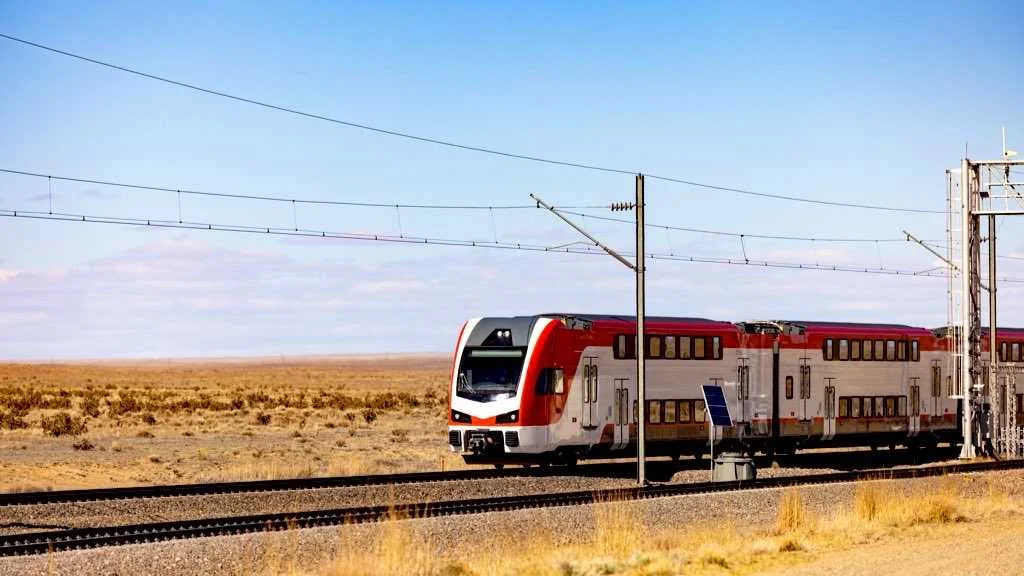
The Caltrain Electrification Project (PCEP), a cornerstone of Northern California’s transportation modernization, has reached a critical juncture. As the transit agency works to transition from diesel-powered locomotives to a high-performance electric fleet, it has announced a significant budget adjustment. The total cost of the project has climbed to $2.44 billion, marking a substantial increase from the initial $1.98 billion projection. This $462 million shortfall—which also exceeds the Federal Transit Administration’s (FTA) earlier estimates by $129 million—has prompted a strategic recalibration of the project’s funding and delivery timeline.
Despite these financial headwinds, project officials remain resolute. The PCEP is not merely an infrastructure upgrade; it is a fundamental transformation of the commuter rail experience along the San Francisco Peninsula, promising reduced greenhouse gas emissions, improved air quality, and a tripling of transport capacity by 2040.
The Financial Landscape: Bridging the $462 Million Gap
The budgetary expansion stems from a complex confluence of historical site conditions, global supply chain disruptions, and the logistical challenges inherent in upgrading a 150-year-old rail corridor. To reconcile this deficit, Caltrain has initiated an aggressive outreach strategy, collaborating with regional, state, and federal stakeholders.
Current Funding Initiatives
The agency has already secured critical stopgap measures, including $52.4 million in additional federal funding, access to a $150 million financing credit, and the strategic deployment of $60 million from the Measure RR capital reserve. However, the path to full funding looks toward the broader horizon of the Federal Infrastructure and Investment Jobs Act and pending state transport budget allocations.
The strategy is twofold: leverage existing legislative support while positioning the project as a premier example of sustainable, high-capacity transit to capture new federal grant opportunities.
A Chronology of Progress and Setbacks
The PCEP’s journey from inception to the current phase has been marked by significant technical hurdles. Construction began in 2017, setting into motion an ambitious plan to electrify the corridor between San Francisco’s 4th and King station and the Tamien station in San Jose.
Key Milestones and Delays
- 2017: Official groundbreaking and commencement of civil works.
- 2018–2020: Discovery of unforeseen site conditions during foundation drilling. Working on a 150-year-old right-of-way presented significant geotechnical challenges, requiring custom solutions for over 3,000 foundations.
- 2020–2021: The global COVID-19 pandemic introduced unprecedented delays, affecting labor availability, supply chain logistics, and project management efficiency.
- Late 2021: Settlement negotiations with Balfour Beatty (BBII), the lead contractor, concluded. This agreement resolved commercial disputes related to the project’s timeline extension to 2024 and established a new framework for risk management.
- 2022 (Projected): Completion of all 10 traction power facilities and the installation of the full overhead catenary system.
The Balfour Beatty Settlement: A New Path Forward
A primary driver of the budget increase is the formal settlement with Balfour Beatty. The agreement was essential to resolve ongoing commercial tensions arising from the project’s extension. By addressing the costs associated with the delayed timeline, Caltrain has effectively "reset" the project’s operational expectations.
Crucially, the settlement does more than just pay for past delays; it implements a shared risk pool. This mechanism is designed to incentivize the contractor to hit key milestones—such as the initiation of revenue service—ahead of schedule. By shifting from a purely transactional relationship to a partnership model, Caltrain and Balfour Beatty aim to provide the schedule certainty that both the public and oversight bodies have demanded.
Supporting Data: Infrastructure and Technical Readiness
The technical complexity of the electrification project cannot be overstated. The transition from diesel to Electric Multiple Unit (EMU) trains requires a complete overhaul of the track infrastructure.

Engineering Achievements
- Foundational Integrity: Out of 3,000 required foundations, 95% are now installed, leaving only 59 remaining. This marks the near-completion of the most high-risk civil engineering phase.
- Power Facilities: The 10 traction power facilities, which will act as the heartbeat of the electrified system, are on track for completion in early 2022.
- Catenary Systems: The overhead lines, which will supply electricity to the trains, are expected to be fully installed by the summer of 2022.
- Testing and Integration: The next phase shifts from heavy civil construction to sophisticated system integration. 2022 will witness the first electric locomotives testing the catenary system, followed by the highly anticipated arrival of the first full EMU train sets in the spring.
Official Responses and Independent Oversight
Recognizing the sensitivity of a nearly half-billion-dollar cost overrun, Caltrain engaged outside experts to conduct a rigorous audit of the budget. This move was intended to ensure that the $2.44 billion figure is not merely a reactive number, but a realistic reflection of the remaining work.
The review focused on:
- Inflationary Pressures: Factoring in the rising costs of materials and labor exacerbated by the pandemic.
- Scope Creep: Re-evaluating utilities and real estate requirements that were not fully captured in original 2017 estimates.
- Risk Mitigation: Ensuring the project schedule is insulated against further external shocks.
Official communications from Caltrain emphasize that the project’s fundamentals remain strong. By moving past the "foundation phase"—where the most significant unknowns regarding the 150-year-old corridor were unearthed—the agency believes it has mitigated the primary risks that lead to ballooning budgets.
Implications for the Future of Bay Area Transit
The electrification of Caltrain is not a standalone infrastructure project; it is the backbone of the region’s long-term sustainability goals. The implications for the San Francisco Peninsula are profound.
Environmental Impact
By removing diesel locomotives, the project will drastically reduce greenhouse gas emissions along the corridor. This aligns with California’s aggressive climate goals and sets a precedent for regional transit authorities across the United States.
Capacity and Reliability
The adoption of EMU technology allows for faster acceleration and deceleration, which means more frequent stops and shorter travel times. By 2040, the project is expected to triple the transport capacity of the Caltrain line. This increased efficiency is vital for a region struggling with traffic congestion and housing accessibility.
Economic Catalyst
A reliable, fast, and electric rail system serves as a magnet for transit-oriented development (TOD). The stations along the line are already seeing increased interest in high-density housing and commercial projects, as the corridor becomes a more attractive alternative to the highway network.
Conclusion: Lessons Learned and Looking Ahead
The journey of the Caltrain Electrification Project has been a masterclass in the difficulties of modernizing legacy infrastructure. The $462 million increase is a significant hurdle, but it is one that the agency is addressing with transparency and strategic planning.
As the project moves into its final phases—signaling, systems integration, and the introduction of electric trains—the focus shifts from the "what" to the "when." With the civil work nearly finalized and a new, collaborative agreement with Balfour Beatty in place, the end goal is finally within sight. For the residents of the San Francisco Peninsula, the transition to an electrified future promises a cleaner, faster, and more robust connection to the heart of the Bay Area. While the road to completion has been costlier and longer than originally envisioned, the long-term utility of the PCEP remains an essential investment in the region’s future.

