

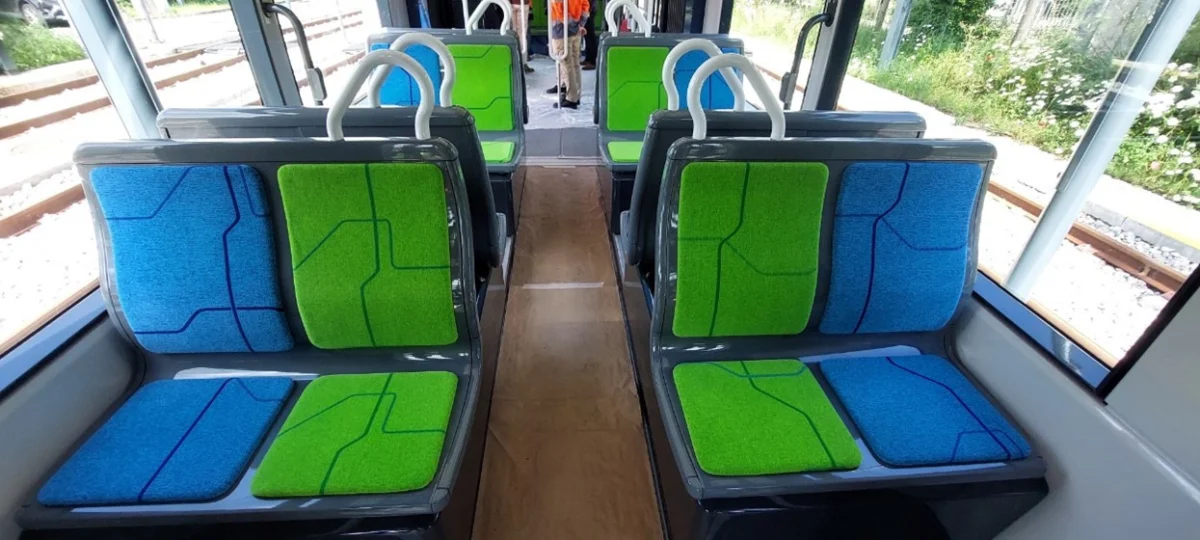
The backbone of Paris’s suburban transit network is undergoing a historic transformation. Île-de-France Mobilités (IDFM), the regional transport authority, has officially announced a significant expansion of its rolling stock procurement program. Following an initial order of 37 units placed in 2021, the authority has finalized a contract for 28 additional TW20 (Alstom Citadis 305) tram sets. This procurement, valued at approximately €89 million, represents a cornerstone of the region’s long-term strategy to revitalize its tramway infrastructure and accommodate surging ridership across the northern and eastern peripheries of the capital.
Main Facts: The TW20 Expansion
The acquisition of the 28 new Citadis 305 units is not merely a replacement exercise; it is a strategic capacity injection designed to facilitate the massive expansion of the T1 tram line. As one of the busiest lines in the entire Île-de-France network, the T1 is currently in the midst of a critical extension project. The line, which currently operates between Asnières Quatre Routes and Noisy-le-Sec, is being pushed eastward toward Montreuil by 2027, with a further extension to Val-de-Fontenay scheduled for 2029.
By integrating these new, high-capacity vehicles, IDFM aims to increase service frequency during peak hours, moving from the current five-minute interval to a more efficient four-minute headway. This shift is expected to significantly reduce platform congestion and improve the overall reliability of the line, which serves a diverse population across the departments of Hauts-de-Seine and Seine-Saint-Denis.
Chronology of Modernization
The journey toward the current fleet upgrade has been a multi-year effort rooted in the regional mandate to modernize aging rolling stock.
- 2021: Île-de-France Mobilités places the initial order for 37 TW20 (Citadis 305) trams, setting the stage for the replacement of the line’s older vehicles.
- May 2024: The first TW20 unit arrives in the Île-de-France region, marking a major milestone. Dynamic testing begins, subjecting the vehicle to the rigorous demands of the existing track geometry and electrical systems.
- July 2024: The regional authority confirms the procurement of an additional 28 units, bringing the total order volume to 65 vehicles to support the T1 extension project.
- Late 2024: Expected entry into service of the first TW20 units on the T1 line.
- 2027: Scheduled completion of the first phase of the T1 extension to Montreuil.
- 2029: Scheduled completion of the extension to Val-de-Fontenay.
Supporting Data: Fleet Logistics and Network Integration
The modernization strategy is not limited to the T1. IDFM has simultaneously implemented a sophisticated rolling stock redistribution plan to optimize performance across the network. A key component of this is the transfer of seven TW10 (NTL Translohr) trams from lines T7 and T8 to the T2 line. This operation, costing €11.5 million, is a testament to the authority’s focus on inter-line efficiency.
The T1 Performance Metrics
- Current Length: ~18 kilometers.
- Current Service: 5-minute peak frequency.
- Future Service: 4-minute peak frequency.
- Key Municipalities Served: Asnières-sur-Seine, Gennevilliers, Villeneuve-la-Garenne, L’Île-Saint-Denis, Saint-Denis, La Courneuve, Drancy, Bobigny, and Noisy-le-Sec.
The T2 Transfer Strategy
The T2 line, which handles an impressive 225,000 passengers daily, requires higher capacity to meet the growing demand stemming from major infrastructure projects, including the extension of the RER E line to the west and the development of the Grand Paris Express Metro Line 15 South. The transfer of the seven Translohr units is supported by a €2.4 million investment in infrastructure, including platform modifications, maintenance workshop upgrades, and signaling adjustments, ensuring that the legacy systems can accommodate the relocated fleet seamlessly.
Official Responses and Strategic Vision
The procurement of the Citadis 305 units reflects the broader goals set by the President of the Île-de-France region and the IDFM board. The authority has emphasized that the TW20 is not just a transport tool, but a "more comfortable, more capacious, and more stylish" evolution of public transit.
In public statements, representatives from Alstom have highlighted that the Citadis 305 is designed to meet the highest standards of accessibility and energy efficiency. By focusing on low-floor technology and wide door apertures, the new trams ensure that passengers with reduced mobility or those traveling with strollers can board and exit with ease—a critical requirement for the high-density urban environments of the Paris suburbs.

The modernization policy is part of a "General Policy of Accelerating Modernization," which seeks to ensure that the region’s transport assets do not fall behind the rapid demographic and economic growth of the Paris metropolitan area.
Implications for the Urban Fabric
The deployment of the TW20 units and the expansion of the T1 line carry profound implications for the municipalities of the northern and eastern suburbs.
Social and Economic Connectivity
By connecting the eastern districts to the existing core, the T1 extension acts as an economic catalyst. Improved transit links reduce the "peripheral isolation" that has historically plagued some of these neighborhoods. The reliability offered by a 4-minute frequency is expected to encourage modal shift, persuading commuters to abandon private automobiles in favor of public transit, thereby reducing carbon emissions and local traffic congestion.
Technical Challenges
Integrating new rolling stock into a legacy network is rarely straightforward. The dynamic tests currently underway are critical. Engineers must ensure that the braking systems, pantographs, and onboard communications of the new Alstom units are perfectly calibrated for the existing track bed. Furthermore, the infrastructure works for the T2 transfer highlight the complexity of the "intermodal puzzle." Modifying maintenance workshops for the Translohr units is a necessary investment to ensure that the lifespan of these vehicles is maximized before they are eventually phased out for newer technology.
The Future of Paris Transit
The move to consolidate and modernize the fleet is indicative of a wider trend in French transport policy. The focus has shifted from mere expansion of track length to the optimization of the passenger experience. Features such as modern air-conditioning, USB charging points, and enhanced real-time information displays in the new TW20s reflect the changing expectations of the modern commuter.
Moreover, the financial commitment—nearly €90 million for the additional T1 trams and over €11 million for the T2 fleet redistribution—underscores the region’s willingness to leverage debt and public funding to maintain its status as a global leader in urban mobility.
Conclusion
As the first of the TW20 units begin their journey on the rails of the T1, the people of Île-de-France are witnessing the tangible results of a long-term urban planning strategy. The transition toward a more robust, frequent, and comfortable tram network is essential for the region’s sustainability. By carefully balancing the procurement of state-of-the-art rolling stock with the strategic reuse of existing assets, Île-de-France Mobilités is ensuring that the Paris tramway remains a world-class model of efficiency.
For the residents of the northern and eastern suburbs, the promise of a tram every four minutes is more than just a schedule change; it is a promise of better access to employment, education, and the vibrant life of the capital. As the extension projects continue to break ground, the new Citadis fleet will undoubtedly stand as the face of this modernized, connected, and rapidly evolving metropolitan region.

