

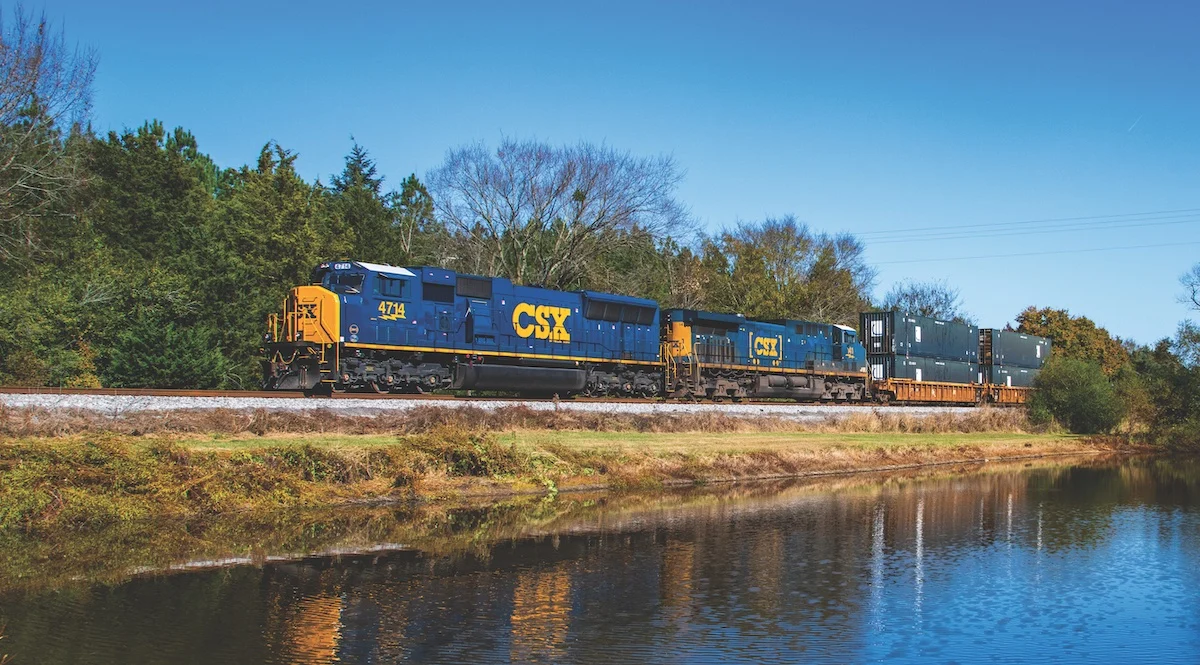
In a landmark development for the North American logistics sector, Schneider National, Inc. has announced the launch of a new, high-efficiency intermodal service slated to begin operations in December. This strategic initiative establishes a seamless rail connection between key industrial hubs in Mexico and Texas and the burgeoning consumer markets of the Southeastern United States. By leveraging a recently forged partnership between rail giants CSX Corp. and Canadian Pacific Kansas City (CPKC), Schneider is poised to offer shippers a robust, rail-based alternative to traditional long-haul over-the-road (OTR) trucking.
This development marks a significant shift in regional supply chain dynamics, offering a more reliable, secure, and environmentally sustainable option for goods moving across the U.S.-Mexico border.
The Core Facts: Bridging the Continent via Rail
The new intermodal service is designed to bridge the geographic gap between the high-growth manufacturing sectors in Mexico and Texas and the high-demand distribution centers in Florida and Georgia. By utilizing the combined networks of CSX and CPKC, Schneider will provide a "single-carrier" experience that mitigates the complexity often associated with cross-border logistics.
Key Operational Pillars:
- Launch Date: December 2024.
- Key Routes: Connecting Mexico and Texas to Florida and Georgia.
- Primary Partners: Schneider National, Inc. (logistics provider), CSX (Eastern U.S. rail operator), and CPKC (North-South transcontinental rail operator).
- Value Proposition: A truck-competitive service that prioritizes transit reliability, security, and a reduced carbon footprint.
Unlike traditional trucking, which is often subject to the volatility of border congestion and driver availability, the CPKC-CSX interchange provides a controlled environment. By streamlining the border-crossing process, the partnership aims to minimize the risk of freight loss and delivery delays, offering a level of predictability that has historically been difficult to achieve via road transport on this specific corridor.
Chronology of the Collaboration
The path to this service launch is the result of long-term strategic planning and the evolution of the North American rail landscape.
1. The Foundation: The CPKC Merger
The transformation of the North American rail network began in earnest with the combination of Canadian Pacific and Kansas City Southern to form CPKC. As the only single-line railway connecting Canada, the U.S., and Mexico, CPKC became the bedrock upon which new north-south logistics solutions were built.
2. Strengthening the East: The CSX-CPKC Interchange
Recognizing the need for a more integrated network, CSX and CPKC announced a strategic partnership to create a new, competitive interchange. This partnership was specifically designed to open up new lanes of traffic that were previously underserved by direct rail, particularly those connecting the Gulf Coast and the Mexican manufacturing heartland to the Southeast.
3. Schneider’s Strategic Positioning
As a major customer of both railroads, Schneider National identified the potential of this interchange early. By aligning its intermodal resources with the new capacity provided by CSX and CPKC, Schneider has positioned itself as the primary logistics integrator for shippers looking to transition from OTR to rail.
Supporting Data: Why This Matters for the Industry
The shift toward intermodal transport is not merely a matter of operational preference; it is a response to structural changes in the global supply chain.
The Nearshoring Effect
The "nearshoring" trend—the practice of moving manufacturing operations closer to the end consumer—has turned Mexico into a vital industrial hub for the U.S. market. According to recent trade data, Mexico has become a primary trade partner for the United States, driving a massive increase in cross-border freight volume. However, the existing infrastructure has struggled to keep pace, leading to chronic congestion at major border crossings.
The Sustainability Mandate
Schneider has set an ambitious goal to double its intermodal capacity. This is part of a broader industry push to reduce carbon emissions. Rail transport is statistically significantly more fuel-efficient than trucking; moving freight by rail can reduce a company’s carbon footprint by up to 60-80% compared to long-haul trucking. For major retail and manufacturing clients, this transition is a critical component of meeting ESG (Environmental, Social, and Governance) targets.
The Capacity Challenge
The trucking industry faces persistent challenges regarding driver shortages and rising insurance costs. By shifting volume to rail, Schneider is providing a buffer for its clients, ensuring that even during periods of high driver turnover or fuel price spikes, their freight continues to move with consistent velocity.
Official Responses: Insights from the Leadership
The launch has drawn praise from the leadership teams at all three involved organizations, emphasizing the synergistic nature of the collaboration.
Jim Filter, Executive Vice President and Group President of Transportation and Logistics at Schneider:
"This represents a major leap forward in our industry, combining the best-in-class service of two renowned railroads, and it will transform the intermodal landscape. Our customers can now enjoy unparalleled efficiency and reliability in their supply chains. It will be especially useful for shippers looking to diversify their transportation solutions and support and fortify nearshoring strategies."
Kevin Boone, Executive Vice President and Chief Commercial Officer at CSX:
"By leveraging the strengths of our combined networks, we are able to provide customers with unparalleled efficiency, reliability, and security in their supply chains. This service strengthens our commitment to delivering sustainable, innovative transportation solutions that support the evolving needs of our customers."
John Brooks, Executive Vice President and Chief Marketing Officer at CPKC:
"This new interchange we are establishing with CSX is going to provide new competitive services and solutions to customers like Schneider, reaching additional rapidly growing markets. By providing more efficient options and routes for Schneider’s current and future customers, we are bringing new capacity to supply chains and taking trucks off the road. Our team is excited to create this truck-competitive service with Schneider and to expand on our shared success."
Implications: The Future of Cross-Border Logistics
The introduction of this service carries profound implications for the logistics landscape of the 2020s and beyond.
A New Competitive Frontier
For years, the Southeast-Mexico lane was dominated by OTR carriers. While trucking offers flexibility, it is prone to the "bullwhip effect" of supply chain disruptions. By introducing a reliable rail alternative, Schneider is effectively forcing a new standard of competition. Carriers that rely solely on trucking may find themselves at a disadvantage as rail intermodal becomes the preferred mode for high-volume, long-haul freight.
Enhanced Security and Risk Management
Freight theft and loss remain significant concerns for shippers moving high-value goods across borders. The enclosed, secure nature of rail transportation significantly reduces exposure to these risks. By consolidating freight onto rail, Schneider is offering a "hardened" supply chain that appeals to industries such as electronics, automotive, and high-end consumer goods.
Infrastructure Development
The success of this route will likely spur further investment in terminal infrastructure. As volume increases, the need for efficient transloading facilities at both ends of the line—Mexico and the Southeastern U.S.—will drive innovation in terminal technology, including automated loading systems and advanced tracking software.
A Greener Logistics Ecosystem
Perhaps the most lasting legacy of this initiative will be the measurable reduction in carbon emissions. As corporations face increasing pressure from investors and regulators to report and reduce their Scope 3 emissions (emissions resulting from their supply chain), shifting freight from diesel-powered trucks to energy-efficient rail provides a clear, actionable path toward carbon neutrality.
Conclusion
The collaboration between Schneider, CSX, and CPKC is more than just a new train schedule; it is a structural redesign of how goods move between two of North America’s most important economic regions. By combining the strengths of an integrated rail network with the sophisticated logistics management of Schneider, the industry is moving toward a future defined by efficiency, security, and sustainability.
As December approaches and the first trains begin their journey, the eyes of the logistics world will be on this corridor. If it delivers on its promise of reliability and truck-competitiveness, it will almost certainly serve as the blueprint for future intermodal expansions across the continent, proving that in the modern supply chain, cooperation is the ultimate competitive advantage.

