

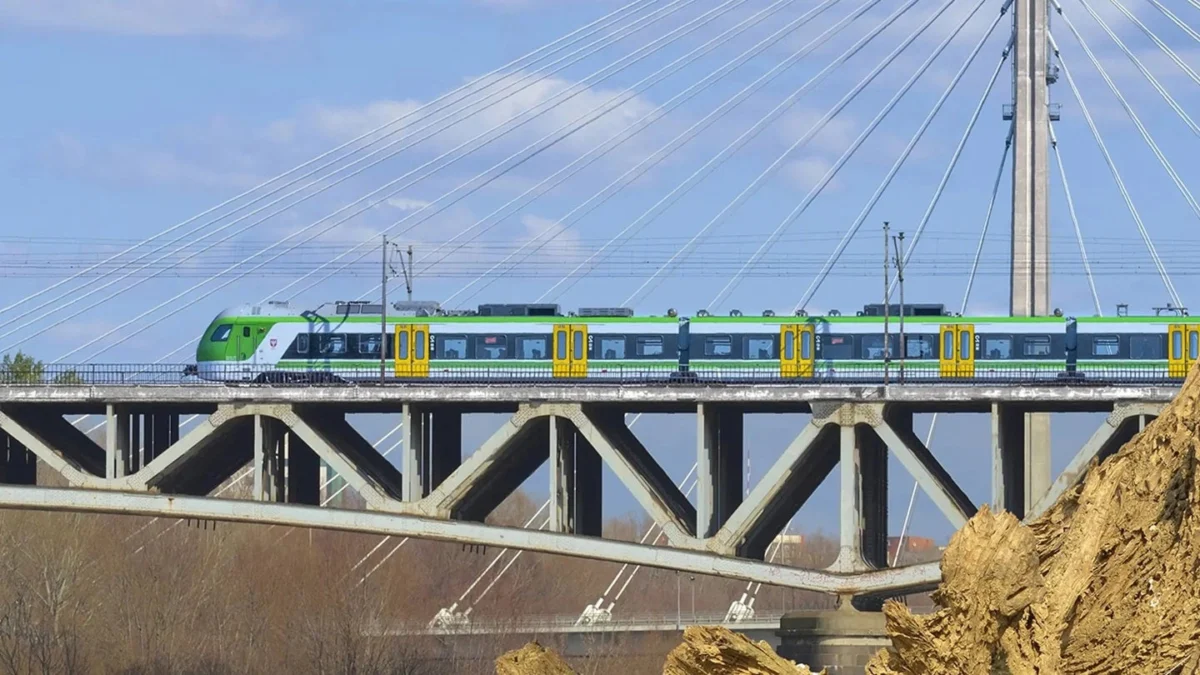
WARSAW, POLAND — Koleje Mazowieckie (Masovian Railways), the regional rail operator for Poland’s most populous province, has officially signed a contract with Stadler Polska for the purchase of 11 additional FLIRT electric multiple units (EMUs). This milestone agreement marks the completion of the largest rolling stock investment program in the operator’s history, securing a total of 75 state-of-the-art trains under a sweeping framework agreement.
The contract represents a major leap forward for regional transport in Poland, consolidating Koleje Mazowieckie’s position as a modern, environmentally conscious transit provider. Beyond the delivery of the high-speed regional trains, the agreement encompasses a comprehensive support package, including long-term maintenance services, technical training for rail personnel, and dedicated repair packages. All 11 vehicles will be manufactured at Stadler’s production facility in Siedlce, Poland, utilizing a robust network of local suppliers and partners.
1. Main Facts of the Agreement
The newly signed executive contract represents the final call-off option from a historic framework agreement designed to overhaul public transport in the Masovian Voivodeship.
Key Elements of the Contract:
- Procurement Volume: 11 five-car FLIRT (Fast Light Intercity and Regional Train) electric multiple units.
- Framework Completion: This order completes the delivery schedule of 75 FLIRT units stipulated under the operator’s landmark modernization initiative. Prior to this signing, 64 units had been formally contracted.
- Comprehensive Service Support: Stadler Polska will provide preventive and corrective maintenance services, extensive technical training for Koleje Mazowieckie’s operations and engineering staff, and specialized spare parts and repair packages.
- Domestic Production: The assembly and commissioning of all units will take place at Stadler’s Siedlce plant in eastern Poland, emphasizing domestic manufacturing and localized supply chains.
- Financing Strategy: The procurement of the initial 64 units has already secured substantial financial backing from European Union development funds. Koleje Mazowieckie has confirmed it will actively apply for supplementary EU co-financing to cover the costs of the final 11 units.
2. Chronology of the Koleje Mazowieckie–Stadler Partnership
The relationship between Koleje Mazowieckie and Stadler Rail spans nearly two decades, serving as a blueprint for successful international-domestic industrial cooperation in the European rail sector.
[2004] Koleje Mazowieckie established to operate regional rail services in Masovia.
  │
[2006] Initial landmark contract signed for 10 FLIRT EMUs; Stadler establishes Siedlce plant.
  │
[2008] First-generation FLIRTs enter service on the high-density Warsaw–Siedlce line.
  │
[2018] Historic framework agreement signed for up to 75 latest-generation FLIRT EMUs.
  │
[2020–2023] Delivery and deployment of 61 FLIRT units under initial execution phases.
  │
[2024] Signing of the final executive contract for the remaining 11 FLIRT units, completing the 75-train framework.
  │
[Post-2025] Full delivery completion, expanding the operator's total FLIRT fleet to 146 units.
The Early Years (2006–2019)
The partnership began in 2006 when Koleje Mazowieckie placed its first order for 10 first-generation FLIRT trains. To fulfill this contract and establish a permanent foothold in the Polish market, Stadler made the strategic decision to build a manufacturing facility in Siedlce. These initial trains entered service in 2008, primarily operating on the busy Warsaw–Siedlce corridor, and continue to operate reliably today.
The Modernization Surge (2018–2023)
Recognizing the rapid growth of the Warsaw metropolitan area and the need to replace aging EN57 Soviet-era trainsets, Koleje Mazowieckie launched its largest-ever fleet modernization program. In 2018, the operator signed a framework agreement with Stadler for 75 units. Between 2020 and 2023, Stadler successfully delivered 61 of these advanced EMUs, which quickly became the backbone of regional transit in Masovia.
The Final Phase (2024–2025 and Beyond)
Of the 64 units previously contracted under the framework, 25 are currently in various phases of production, commissioning, and rigorous type-testing. The newly signed contract for the final 11 units completes the 75-train framework. Once deliveries are concluded over the 2024–2025 production cycle, Koleje Mazowieckie will operate a total of 146 FLIRT trains across its entire network, establishing the largest fleet of this vehicle type in Poland.
3. Supporting Technical and Operational Data
The FLIRT platform is celebrated globally for its modularity, lightweight design, and exceptional energy efficiency. The units destined for Koleje Mazowieckie are customized to meet the demanding requirements of high-frequency suburban and regional services.
Technical Specifications of the Koleje Mazowieckie FLIRT EMUs:
| Feature | Specification / Detail |
|---|---|
| Train Type | Five-car Electric Multiple Unit (EMU) |
| Maximum Speed | 160 km/h (99 mph) |
| Carbody Construction | Lightweight extruded aluminum profiles, reducing axle load and energy consumption |
| Electrification | 3 kV DC overhead catenary compatibility |
| Safety Systems | ETCS (European Train Control System) Level 2, national SHP safety systems |
| Accessibility | Fully compliant with TSI PRM (Persons with Reduced Mobility); low-floor boarding, boarding ramps, and spacious interior toilets |
| Passenger Amenities | High-capacity air-conditioning, CCTV surveillance, passenger Wi-Fi, USB charging ports, and dynamic passenger information systems (PIS) |
| Safety Innovation | Integrated onboard Automated External Defibrillators (AEDs) for medical emergencies |
Fleet Scaling and Operational Impact:
Upon final delivery, the integration of 146 FLIRT units will drastically transform Koleje Mazowieckie’s daily operations:
- Capacity Increase: The five-car configuration maximizes passenger throughput on high-density commuter lines radiating from Warsaw West, Warsaw Central, and Warsaw East stations.
- Energy Savings: The lightweight aluminum construction, combined with advanced regenerative braking systems (which feed energy back into the overhead catenary during deceleration), reduces overall power consumption by up to 25% compared to older steel-bodied rolling stock.
- Maintenance Optimization: Standardizing a massive portion of the regional fleet on a single vehicle family (the FLIRT platform) allows the operator to streamline spare parts logistics, reduce maintenance downtime, and lower life-cycle costs.
4. Official Responses and Leadership Insights
The completion of this framework agreement has been hailed by industry leaders as a triumph of regional transport planning and domestic industrial execution.
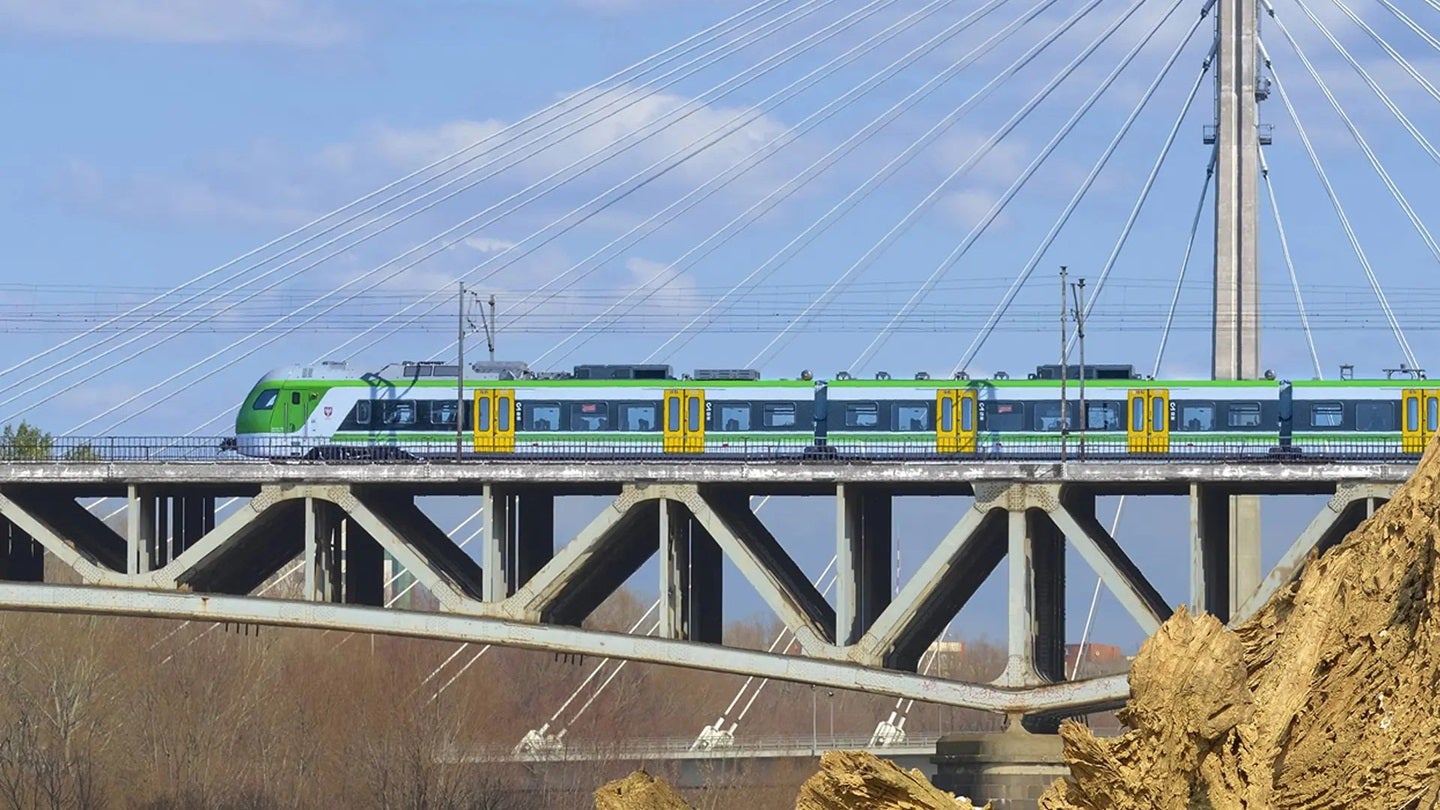
Robert Stępień, CEO and General Director of Koleje Mazowieckie, emphasized the strategic importance of the acquisition:
"We are pleased to see the full implementation of the framework agreement for 75 FLIRT trains. This marks an important milestone for our company and a further step toward modernizing our fleet. The purchase of 64 units has already received EU funding, and we will be applying for additional funding for the remaining 11. Our passengers deserve modern, safe, and comfortable travel, and these trains deliver exactly that."
Radosław Banach, CEO of Stadler Polska, highlighted the local economic benefits and job creation driven by the project:
"The signing of this final executive contract is a milestone for us. Completing the full framework agreement allows us to continue expanding our Siedlce operations and strengthening our presence in the region. This year alone, we have created nearly 400 new jobs at Stadler Polska, and our engineering team has grown to 100 specialists—and we are still recruiting. This is excellent news not only for Stadler but also for our local partners, who play a vital role in delivering this project."
5. Strategic Implications for Polish Rail and Regional Transport
The finalization of this contract carries profound implications for the Polish railway market, regional economic development, and European transit policy.
Accelerating the Shift to Rail
The Masovian Voivodeship, centering on Warsaw, is the economic engine of Poland. As suburban sprawl continues to expand, regional highways face chronic congestion. By deploying a highly reliable fleet of 146 fast, comfortable, and air-conditioned EMUs, Koleje Mazowieckie is providing a viable, low-carbon alternative to private car ownership. This alignment supports both Poland’s national environmental goals and the broader EU Green Deal, which aims to double high-speed and regional rail traffic across the continent by 2030.
Strengthening Poland’s Railway Manufacturing Hub
Poland has established itself as one of Europe’s premier manufacturing corridors for railway rolling stock. Stadler’s Siedlce plant is a cornerstone of this ecosystem. By utilizing local partners and suppliers for structural components, interior fittings, and electrical subsystems, the project generates a powerful economic multiplier effect. The creation of 400 new jobs at Stadler Polska in a single year demonstrates how public transport investments directly foster high-skilled industrial employment and localized engineering expertise.
Strategic Leverage of European Union Funding
Poland’s aggressive modernization of its rail sector has been heavily supported by EU cohesion policies. Koleje Mazowieckie’s success in securing EU funding for the first 64 units showcases the effective deployment of public capital to improve regional connectivity. The pursuit of additional funding for the final 11 units highlights the critical role that European financial institutions continue to play in upgrading transit infrastructure throughout Central and Eastern Europe.
With this final order, Koleje Mazowieckie and Stadler Polska have solidified a partnership that not only redefines regional commuting in Masovia but also sets a benchmark for successful industrial and public transit collaboration in Europe.

