

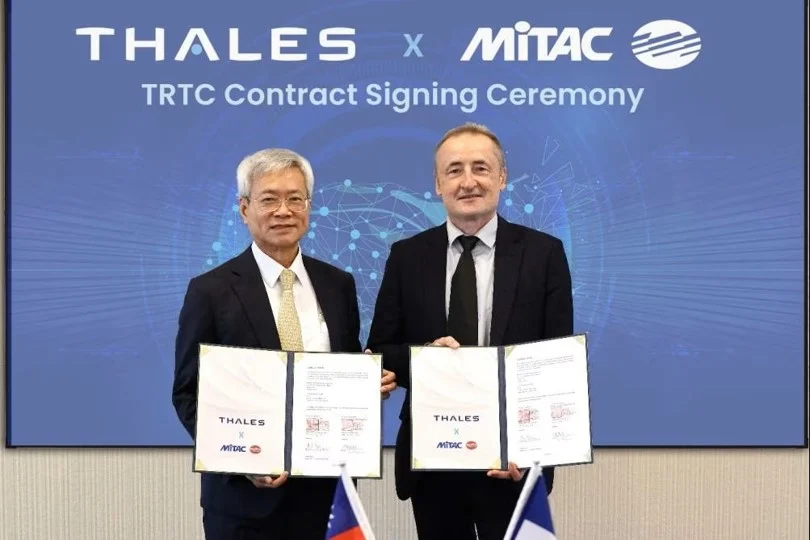
Main Facts: A Digital Transformation for Taipei’s Transit Backbone
The Taipei Rapid Transit Corporation (TRTC) has officially embarked on a transformative journey to modernize its transit infrastructure, announcing a landmark partnership with the global technology powerhouse Thales and its local partner, Mitac Information Technology Corp. This strategic collaboration is set to overhaul the existing Automatic Fare Collection (AFC) system across the entire Taipei Metro network.
At the core of this initiative is the integration of diverse, modern electronic payment methods. By upgrading the Electronic Main Module (EMM) across 1,500 ticket gates spanning 120 stations, the project aims to replace legacy constraints with a seamless, high-tech experience. The Taipei Metro, which serves a sprawling network of six lines covering 137 kilometers, will soon support EMV contactless credit cards (VISA, MasterCard, American Express, and JCB) and a wide array of QR code payment solutions, including proprietary TRTC SJQR codes and third-party platforms such as LinePay, EasyCard, and iCash transit QR codes.
This shift represents a significant move away from the traditional, limited reliance on physical contactless tokens and specific stored-value cards, positioning Taipei as a global leader in transit-oriented payment innovation.
Chronology: The Evolution of Taipei’s Fare Collection
The history of the Taipei Metro’s ticketing system is one of constant iteration, mirroring the rapid digitalization of the city itself.
- The Early Era (1996–2000s): When the Taipei Metro first launched, it relied heavily on magnetic stripe paper tickets and manual intervention at stations. As ridership grew, the system transitioned to the iconic contactless IC token—a revolutionary move at the time that set the standard for rapid transit efficiency in Asia.
- The Stored-Value Revolution: The introduction of the EasyCard (and later iCash and iPass) fundamentally changed commuter behavior. These stored-value cards became the backbone of the transit experience, allowing for seamless tap-and-go travel. However, as mobile payments and global credit card usage exploded, the rigid nature of these closed-loop systems began to show its limitations.
- The Planning Phase (2020–2022): Recognizing the global shift toward Open-Loop payment systems (where transit agencies accept bank-issued cards directly), the Taipei City Government began drafting policies to move beyond proprietary cards. This period involved rigorous feasibility studies, security assessments, and the search for technical partners capable of handling the high-volume traffic of the Taipei Metro.
- The Partnership Announcement (Late 2023): TRTC selected the Thales-Mitac consortium following a competitive bidding process. The selection was based on Thales’ proven track record in Revenue Collection Systems (RCS) and Mitac’s deep local expertise in Taiwan’s IT infrastructure.
- The Implementation Timeline (Current/Future): The current phase focuses on the complex engineering required to retrofit 1,500 gates. This involves hardware upgrades, software integration, and extensive testing to ensure that the new system maintains the sub-second latency required for high-frequency peak hour traffic.
Supporting Data: By the Numbers
To understand the scale of this technological leap, one must look at the operational requirements of the Taipei Metro.
- Network Reach: The system encompasses 137 kilometers of trackage, organized across six major lines.
- Station Footprint: 120 individual stations are slated for equipment upgrades.
- Gate Throughput: A total of 1,500 ticket gates will be retrofitted with new Electronic Main Modules.
- Passenger Volume: The network manages approximately 2 million passenger transactions daily. This massive volume necessitates a system that is not only secure but also highly resilient, capable of handling surges during rush hours without bottlenecking.
- Payment Diversity: The new system will accommodate four major global credit card networks and multiple QR code ecosystems, effectively turning every gate into a versatile, multi-modal point-of-sale terminal.
Official Responses: Strengthening Partnerships
The collaboration between Thales and Mitac is viewed by both parties as a benchmark for successful international-local industrial cooperation.
Kent Chen, Vice President of Mitac, emphasized the long-term nature of their relationship with Thales. "We are proud to maintain a long-term partnership with Thales GTS. This project award demonstrates our huge success and winning customer trust in our technology solutions," Chen stated. He underscored that the primary focus remains on execution: "The next key milestone is to deliver the project as committed, ensuring that the transition is invisible to the end-user while providing the massive functionality upgrades promised."
Jean-Marc Reynaud, Vice President for Revenue Collection Systems at Thales, highlighted the strategic importance of the Taipei contract. "We are very pleased to collaborate with our long-term partner Mitac on this project for the Taipei Mass Rapid Transit in Taiwan. The award of this project has reinforced the position of Thales in the transport market in Taiwan with the support and trust from our long-term customer and partner. We look forward to many more achievements and occasions to demonstrate our expertise together in the future."
The rhetoric from both companies highlights a mutual commitment to technical excellence and a shared vision of transforming the Taipei commuter experience into a truly modern, friction-free environment.
Implications: A New Standard for Smart Cities
The implications of this upgrade extend far beyond the convenience of using a credit card at a gate. This project represents a shift in urban governance and city planning.
Enhancing Passenger Experience
For the average commuter, the new system eliminates the "barrier to entry." Visitors, tourists, and residents alike will no longer need to purchase specific transit cards or deal with cash-only ticket vending machines. By enabling EMV and QR payments, the Taipei Metro becomes instantly accessible to anyone with a smartphone or a bank card, significantly reducing the friction associated with urban navigation.
The Rise of Open-Loop Transit
The global transit industry is currently undergoing a paradigm shift toward "Open-Loop" systems. Taipei’s move places it in the company of cities like London, New York, and Singapore, which have successfully implemented bank-card-based transit. This transition reduces the operational overhead of managing proprietary card systems while simultaneously opening up data streams that can help the TRTC better understand commuter patterns and optimize service delivery.
Policy and Digital Integration
The Taipei City Government has been vocal about its ambition to become a premier "Smart City." This policy, which mandates the integration of various electronic payments, serves as a blueprint for other Taiwanese transit networks. It aligns with the government’s broader goals of promoting digital inclusion and providing a seamless "Mobility as a Service" (MaaS) ecosystem. By ensuring that transit gates are compatible with a wide array of fintech platforms, the city is effectively turning the metro network into a digital hub.
Economic and Technical Resilience
From a technical perspective, the retrofitting of 1,500 gates is a complex undertaking that requires significant software architecture updates to ensure security. Thales’ expertise in cybersecurity and high-throughput transaction processing is critical here. By upgrading the Electronic Main Modules (EMM), the city is future-proofing its infrastructure, ensuring that as new payment technologies emerge, the metro gates can be updated via software patches rather than complete hardware overhauls.
Conclusion: The Path Ahead
The partnership between TRTC, Thales, and Mitac serves as a testament to the power of integrating global technical expertise with local operational knowledge. As the Taipei Metro undergoes this significant digital transformation, it does more than just upgrade its turnstiles; it reinforces its commitment to the 2 million daily passengers who rely on it.
By embracing the versatility of EMV and QR code payments, Taipei is signaling to the world that it is prepared for the next era of urban mobility. The project is not merely a technical upgrade; it is a fundamental improvement in the quality of life for the city’s inhabitants. As the rollout progresses, the eyes of the global transit community will remain fixed on Taipei, watching how a massive, legacy-heavy system successfully transitions into a model of modern, digital, and hyper-connected public transport.
With the project milestones firmly in place and a clear mandate from the municipal government, the modernization of the Taipei Metro is set to become a defining case study in how major metropolises can adapt to the digital age without compromising on the efficiency or reliability that their citizens demand.

