

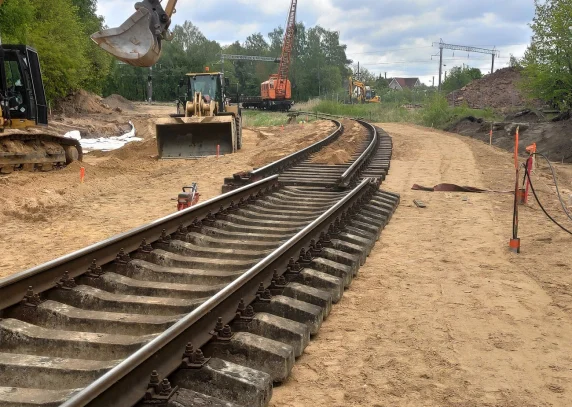
Lithuania has officially accelerated its contribution to the landmark Rail Baltica project, initiating a series of massive procurement tenders valued at EUR 475 million. This development marks a critical juncture in the construction of the high-speed railway, which aims to integrate the Baltic States into the European rail network. The tenders encompass the construction of the Kaunas–Panevėžys railway line, the development of essential engineering infrastructure, and the erection of the longest railway bridge in the Baltic States, spanning the Neris River near Jonava.
As the Baltic region seeks to move away from Soviet-era rail gauges and toward the European standard, this project stands as the backbone of regional connectivity. With an aggressive timeline dictated by European Union funding cycles, Lithuania is moving rapidly to transform its transportation landscape.
The Core Facts: Breaking Down the Tenders
The EUR 475 million procurement package is not a single contract but a sophisticated, multi-stage initiative managed by AB Lietuvos Geležinkeliai Infrastruktūra (Lithuanian Railways Infrastructure). The scope of work is vast, intended to bridge the gap between Kaunas and the Lithuanian-Latvian border.
The project has been strategically divided into four primary purchase object groups to optimize execution efficiency and manage technical complexity:
- Railway Embankment and Engineering Structures: Forming the base of the high-speed line.
- Upper Railway Structure Installation: The tracks, electrification, and signaling systems.
- The Neris River Bridge: A flagship engineering project near Jonava, costing an estimated EUR 67 million alone.
- Connecting Road Infrastructure: Ensuring that the rail corridor integrates seamlessly with the existing local road network.
The procurement process follows a rigorous two-stage format. In the initial stage, authorities are vetting construction companies against stringent qualification requirements. Once the shortlist is finalized, these entities will be invited to submit detailed technical and financial proposals for specific project segments.
Chronology of Progress: From Concept to Construction
The journey of Rail Baltica has been one of long-term planning and complex geopolitical maneuvering.
- 2017 – The Foundation: A comprehensive cost-benefit analysis and expert evaluation set the total estimated cost for the Kaunas to Lithuanian-Latvian border section at EUR 977 million. This provided the financial roadmap for subsequent funding applications.
- 2020 – The Procurement Surge: Lithuania shifted from planning to execution. Recognizing that EU funding under the current Multiannual Financial Framework (MFF) had strict deadlines—specifically requiring utilization by 2023—the Lithuanian government fast-tracked the tendering process.
- The Current Phase: The launch of the EUR 475 million tender represents the largest procurement push in the project’s recent history. By running qualification competitions in parallel with the drafting of second-stage technical requirements, authorities are aiming to compress the timeline to ensure that work begins on the ground without delay.
Financial Architecture and Economic Implications
The financing of Rail Baltica is a testament to the European Union’s commitment to "The European Green Deal" and the "Trans-European Transport Network" (TEN-T).
Funding Breakdown
The project relies heavily on the European Union, which provides up to 85% of the required capital. The remaining 15% is sourced from the Lithuanian national budget. For the current tender cycle, Lithuania has successfully secured a commitment of EUR 201 million in immediate EU funding.
Furthermore, an additional EUR 202 million has been earmarked within the MFF framework. This financial structure creates a "use-it-or-lose-it" dynamic. As Karolis Sankovski, Director-General of AB Lietuvos Geležinkeliai Infrastruktūra, has noted, the strict deadlines associated with EU funding mean that delays are not an option. The urgency is not merely bureaucratic but fiscal; failing to meet the 2023 utilization targets could jeopardize the availability of these critical funds.
Regional Impact
The construction of the Neris River bridge is perhaps the most symbolic aspect of this investment. As the longest railway bridge in the Baltic States, it represents a feat of modern engineering that will serve as a visual landmark for the new rail corridor. Beyond the engineering prestige, the rail line is expected to:

- Boost Regional GDP: By slashing travel times between Vilnius, Kaunas, and Riga.
- Enhance Logistics: Providing an alternative to road freight, thus reducing carbon emissions in line with EU climate goals.
- Strengthen Geopolitical Integration: Connecting the Baltic states more firmly to the Central European rail hub, reducing dependence on older, non-standardized rail links.
Official Perspectives: The Leadership Mandate
The leadership at AB Lietuvos Geležinkeliai Infrastruktūra has been vocal about the necessity of this dual-stage tender process. According to Karolis Sankovski, the complexity of the project requires a "best-fit" approach to procurement.
"In the first stage, we are identifying the industry leaders who possess the technical capacity, financial stability, and proven experience to handle projects of this magnitude," Sankovski explained. "By separating the contracts into four clear object groups, we allow for specialized firms to bid on their areas of expertise, whether that is bridge building or complex track laying."
Sankovski’s commentary emphasizes that this is not just about laying steel; it is about creating a high-performance system. The technical requirements being drafted for the second stage are designed to meet the highest safety and interoperability standards defined by the European Union Agency for Railways (ERA).
Implications for the European Transport Corridor
The implications of this project extend far beyond Lithuanian borders. Rail Baltica is part of the North Sea–Baltic TEN-T core network corridor. The completion of the Kaunas–Latvian border section is a vital link in a chain that will eventually connect Helsinki, Tallinn, Riga, Vilnius, and Warsaw.
Overcoming Technical and Logistical Hurdles
The project faces unique challenges, including the "technological differences in work execution" mentioned in project reports. Transitioning from the 1520 mm broad gauge (a legacy of the Soviet era) to the 1435 mm standard European gauge requires significant structural adjustments to signaling, electrification, and rolling stock maintenance facilities.
Furthermore, the integration of new bridges and embankments into existing terrain requires intensive environmental impact assessments and coordination with local municipalities. By initiating the tender for road connections simultaneously, Lithuania is demonstrating a holistic approach to infrastructure development, ensuring that the rail project does not disrupt local economic activity but rather enhances it.
Future Outlook
As the qualification phase progresses, the international construction industry is watching closely. The scale of the investment makes these tenders some of the most attractive infrastructure opportunities in Northern Europe. For Lithuania, the successful execution of these contracts will define the country’s transportation policy for the next century.
The pressure is high. With the EU’s financial oversight and the regional need for a modern, sustainable transit link, the successful bidder will be at the heart of one of the most transformative engineering projects in the Baltic region.
Conclusion: A New Era of Baltic Mobility
The launch of the EUR 475 million tender represents a bold step forward for Lithuania. By aligning national infrastructure goals with the broader ambitions of the European Union, the country is positioning itself as a central hub in the Northern European transport corridor.
As the construction phases move from the drafting board to the reality of the landscape near the Neris River, the focus remains on the synergy between technical excellence and strict fiscal discipline. The coming years will see the transformation of the Baltic landscape, with Rail Baltica serving as the primary catalyst for economic growth, regional security, and environmental sustainability. For now, the process is underway, and the clock is ticking—a challenge that Lithuania appears ready to meet.

