

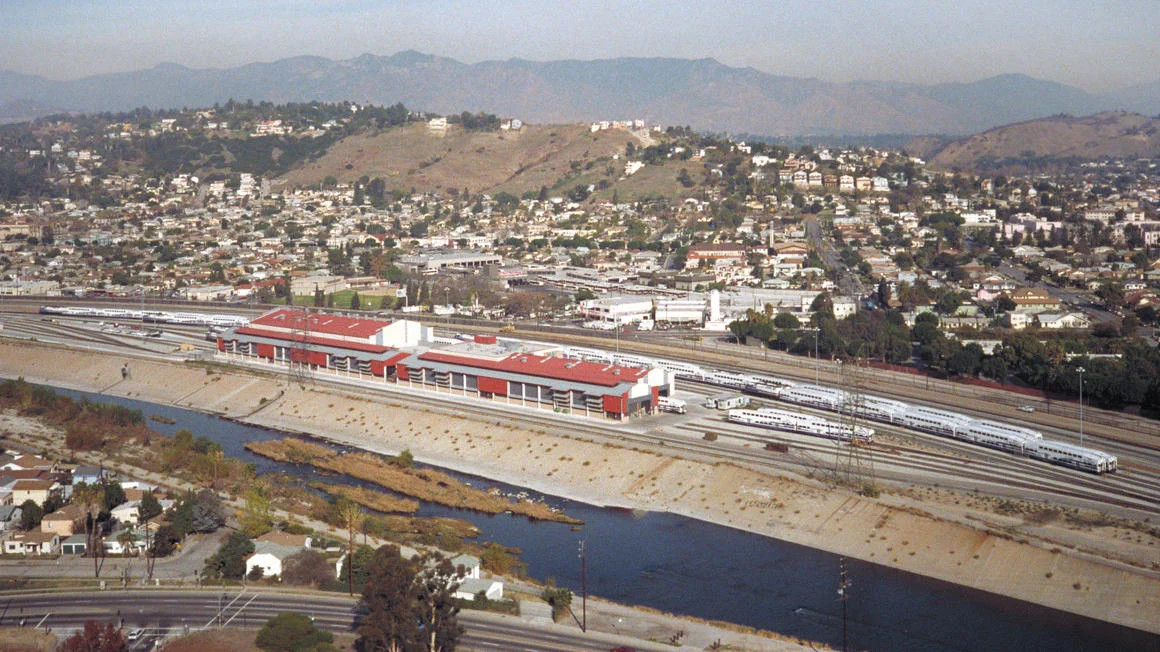
In a landmark development for North American passenger rail, the Southern California Regional Rail Authority (Metrolink) has awarded a comprehensive operations and maintenance contract to Alstom, the global leader in sustainable mobility. This strategic agreement marks a significant expansion of a multi-decade relationship between the two entities and positions Alstom as a pivotal player in the future of Southern California’s transit landscape.
The contract, valued at approximately USD 515 million (EUR 490 million) for an initial five-year base term, will see Alstom take on a holistic role in managing the region’s rail network. Spanning from January 1, 2025, to June 30, 2030, the agreement underscores a shift toward centralized, integrated service management. With a built-in provision for a three-year extension, the total valuation of the partnership could climb to approximately USD 860 million (EUR 817 million), cementing the contract as one of the most significant service agreements in the U.S. rail sector.
The Scope of the Agreement: A Holistic Approach to Transit
The partnership goes beyond traditional maintenance. Under the new agreement, Alstom will assume responsibility for the end-to-end operation of the Metrolink system. This encompasses the daily orchestration of train crews, customer service functions, rigorous rolling stock maintenance, and facility management. Additionally, the contract includes an option for materials management, providing Metrolink with a streamlined supply chain solution.
For Alstom, this win is a testament to its long-standing operational footprint in the United States. The company plans to mobilize more than 400 team members across Southern California to support these expanded duties. Notably, the transition of operational responsibilities—specifically the management of train crews—will commence on July 1, 2025, following a phased transition period.
A Legacy of Collaboration: The Chronology of Partnership
The relationship between Alstom and Metrolink is deeply rooted in history, dating back over 30 years to the delivery of the transit agency’s inaugural fleet of bilevel coaches. This foundational hardware delivery set the stage for a deeper operational integration.
- Early 1990s: Alstom initiates its relationship with Metrolink through the supply of specialized bilevel passenger coaches, establishing the technical standard for the region’s commuter rail fleet.
- 1998: The partnership matures as Alstom assumes its first official maintenance contract, taking responsibility for the health and longevity of Metrolink’s rolling stock.
- 2010–2022: During this period, Amtrak and TransitAmerica Services Inc. provided operational oversight for the network and the Arrow service, respectively. Alstom remained a constant technical partner, focusing on the maintenance of the locomotives and coaches.
- 2024: Metrolink announces the decision to unify its operations and maintenance under the Alstom banner, moving away from a fragmented service model toward a singular, integrated provider.
- January 1, 2025: Official start date of the five-year base term contract.
- July 1, 2025: Commencement of Alstom-led train operations, marking the full integration of the company’s services.
Supporting Data: The Scale of the Metrolink Network
To understand the magnitude of this contract, one must look at the sheer scale of the Metrolink infrastructure. As the primary commuter rail provider for Southern California, the network is a sprawling entity that facilitates transit across six counties: Los Angeles, Orange, Riverside, San Bernardino, Ventura, and San Diego.
- Total Service Miles: 545.6 miles of track.
- Station Footprint: 67 stations serving millions of passengers annually.
- Rolling Stock Fleet: 258 passenger rail cars (comprising 57 cab cars and 201 coaches) and 60 locomotives.
- Specialized Services: The network includes the Arrow service, a nine-mile link between San Bernardino and Redlands.
The inclusion of the Arrow service into Alstom’s management portfolio is particularly noteworthy. While Alstom will not maintain the specialized Diesel Multiple Units (DMUs) or the forthcoming Zero Emission Multiple Units (ZEMUs), they will provide the operating crews and management personnel. This highlights the adaptability of the Alstom team in managing both traditional heavy rail and modern, light-rail-adjacent transit technologies.
Official Perspectives: Aligning Vision with Execution
The transition to a new operational model has been met with enthusiasm from both the transit agency’s leadership and the private contractor.
Michael Keroullé, President of Alstom Americas, emphasized the importance of the contract in the context of the region’s future. "We are grateful for the trust the Southern California Regional Rail Authority and their Board of Directors has placed in Alstom," Keroullé stated. "Metrolink customers are doing their part to reduce traffic congestion and pollution, and we are committed to bringing them our experience and dedication to deliver world-class service."
Keroullé also pointed to the unique challenges and opportunities awaiting Southern California in the coming years. With major global sporting events on the horizon, the region is preparing for a massive influx of international visitors. Alstom’s role will be to ensure that the rail infrastructure serves as a reliable, high-capacity backbone for these events, reinforcing the agency’s goal of becoming a premier regional passenger rail operator.
Darren Kettle, CEO of Metrolink, acknowledged the contribution of outgoing service providers while framing the new contract as a "transition" in the agency’s identity. "We are excited to continue our transition from a traditional commuter railroad to becoming a true regional passenger rail operator," Kettle noted. "We are grateful for the efforts and dedication of the Amtrak crews who have been operating our Metrolink trains since 2010 and the TransitAmerica Services Inc. team members who have been operating Arrow since 2022. We know Alstom will work collaboratively over the next several months to ensure a seamless transition."
Implications for the North American Rail Sector
The consolidation of operations and maintenance under Alstom represents a growing trend in the North American transit market. As transit agencies face mounting pressure to optimize costs, improve safety metrics, and integrate sustainable technologies, the "single-source" model provided by firms like Alstom offers a compelling solution.
1. Operational Efficiency and Safety
By managing both the maintenance of the trains and the operation of the crews, Alstom is uniquely positioned to reduce "hand-off" friction. When a single entity is responsible for the state of the rolling stock and the personnel operating that stock, the feedback loop between mechanical issues and service reliability is significantly shortened.
2. The Green Transition
The inclusion of the ZEMU technology—North America’s first hydrogen-powered train—on the Arrow line serves as a bellwether for the entire industry. While Alstom’s immediate scope for the Arrow service is focused on operations, the integration of such cutting-edge technology into a broader, Alstom-managed network provides a template for how other regions might adopt zero-emission rail.
3. Market Consolidation
With this win, Alstom effectively secures its position as the leading private provider of Operations and Maintenance (O&M) services in North America. This provides the company with a massive data set on passenger behavior, maintenance requirements, and network performance in one of the most complex transit environments in the world. This experience will likely be leveraged by Alstom to secure further contracts in other high-density urban corridors across the United States.
4. Economic Impact
The mobilization of 400+ employees in Southern California creates a stable, high-skilled workforce within the regional economy. By focusing on local hiring and training, Alstom ensures that the operational expertise stays embedded within the community, supporting the long-term sustainability of the transit network.
Conclusion: A New Chapter for Southern California Transit
The awarding of this contract is more than a administrative transition; it is a strategic alignment of resources for the future. As Southern California grapples with the dual pressures of traffic congestion and the need for a lower carbon footprint, the reliability of the Metrolink system becomes a vital component of the region’s economic and environmental health.
By combining Alstom’s global technological prowess with the local operational expertise of a workforce deeply familiar with the Metrolink lines, the partnership is poised to deliver a more responsive, efficient, and forward-thinking rail service. As the calendar turns to 2025, all eyes will be on how this integrated management approach shapes the daily commute for thousands of Californians and sets the stage for the region’s debut on the global stage for the major international events to follow.

