

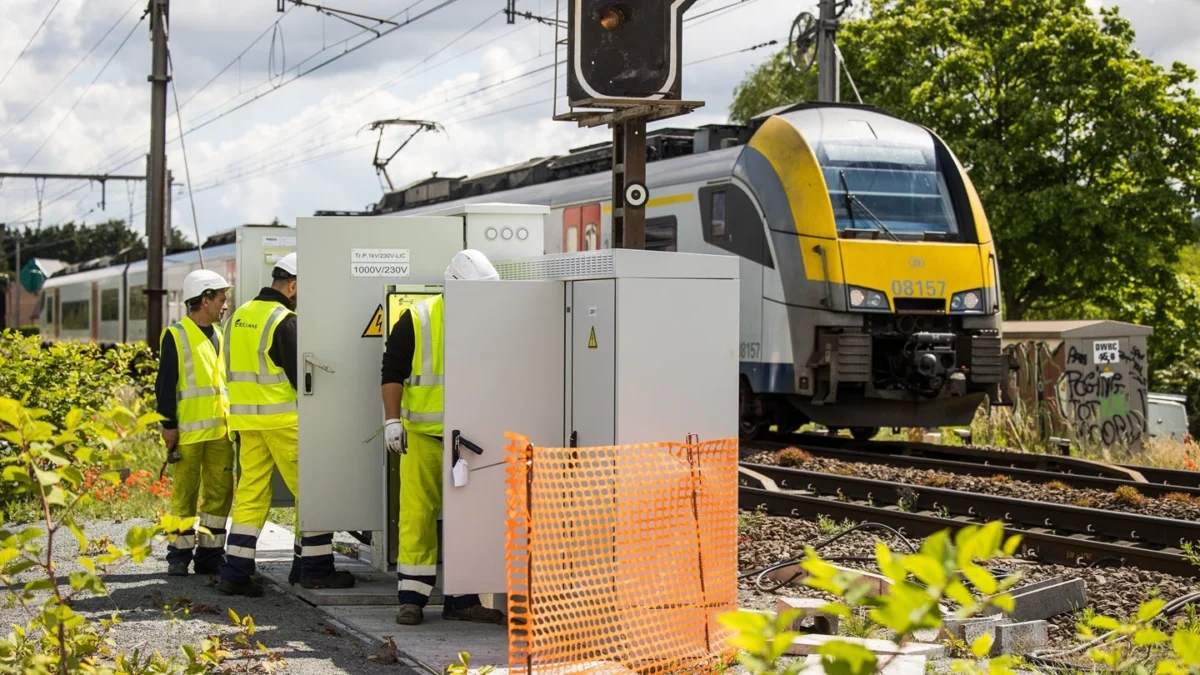
Belgium has officially crossed the finish line of a monumental infrastructure initiative, marking the successful completion of the European Train Control System (ETCS) Level 2 rollout across its national railway network. This achievement, which comes exactly ten years after the inception of the project in 2015, positions Belgium as a pioneer in European rail modernization, setting a new benchmark for cross-border interoperability and operational efficiency.
The project, driven by the ambitious "ETCS Masterplan," saw a massive collaboration between the Belgian rail infrastructure manager, Infrabel, and a technical consortium led by Siemens Mobility and Equans. By upgrading 2,274 kilometers of track with cutting-edge digital signalling, Belgium has effectively future-proofed its rail network, ensuring that it meets the rigorous safety and performance standards mandated by the European Union.
A Chronology of Digital Transition (2015–2025)
The journey to a fully digitized signalling environment was a calculated, multi-phase endeavor. When the ETCS Masterplan was first conceived, the Belgian rail network relied on a patchwork of legacy systems that were increasingly difficult to maintain and created significant bottlenecks for cross-border traffic.
- 2015: The Launch: Infrabel initiated the comprehensive upgrade, seeking to replace aging, disparate signalling infrastructure with a unified, high-performance ETCS Level 2 system. The goal was clear: to enhance safety and allow trains to move seamlessly across European borders without the need for multiple signalling systems in the driver’s cab.
- 2016–2020: The Scaling Phase: During the first half of the decade, the consortium focused on the most critical European corridors. This involved complex logistical planning to ensure that the work could be performed under "rolling conditions"—meaning the network had to remain operational for daily passenger and freight traffic while the digital upgrades were being installed.
- 2021–2024: Complexity and Integration: As the project moved into secondary and regional lines, the technical challenges grew. Connecting major hubs like Arlon, Bruges, Ghent, Hasselt, Mons, and Verviers required the precise installation of thousands of track-side components. The integration of Radio Block Centres (RBCs) became the primary focus, ensuring that data transmission between the track and the train was both constant and encrypted.
- December 2025: The Milestone: The project reached its conclusion this month, successfully hitting the deadline set by the ETCS Masterplan. The completion signifies that Belgium’s entire rail backbone is now fully compliant with the latest EU signalling standards.
Technical Scope: The Anatomy of a Modern Network
The scale of this project is difficult to overstate. To transition Belgium to ETCS Level 2, the consortium had to deploy a massive array of hardware and software components across the country. The final tally of the network’s digital upgrade includes:
- 46 Advanced Interlockings: These systems serve as the "brain" of the rail network, ensuring that points and signals are coordinated to prevent collisions and optimize traffic flow.
- 37 Radio Block Centres (RBCs): These are the critical communication hubs that enable ETCS Level 2. They monitor the position and speed of trains via GSM-R communication, transmitting movement authorities directly to the train driver’s display.
- 19,000+ Balises: These electronic beacons installed between the rails provide essential location and speed data to the train’s onboard computer, allowing for precise positioning even in adverse weather conditions.
- 4,536 Signals: The legacy of the older system has been integrated with the new digital overlay, creating a hybrid environment that is significantly more responsive than its predecessor.
By transitioning to ETCS Level 2, the network can now support higher traffic density, improved punctuality, and a drastic reduction in human-error-related safety incidents.
The Synergy of Partnership: Siemens Mobility and Equans
The successful delivery of such a complex project was the result of a specialized division of labor between two industrial giants. Siemens Mobility acted as the systems architect and primary technology provider. Their responsibility was to manage the implementation of the ETCS Level 2 logic, the RBCs, and the software that ties the entire network together.
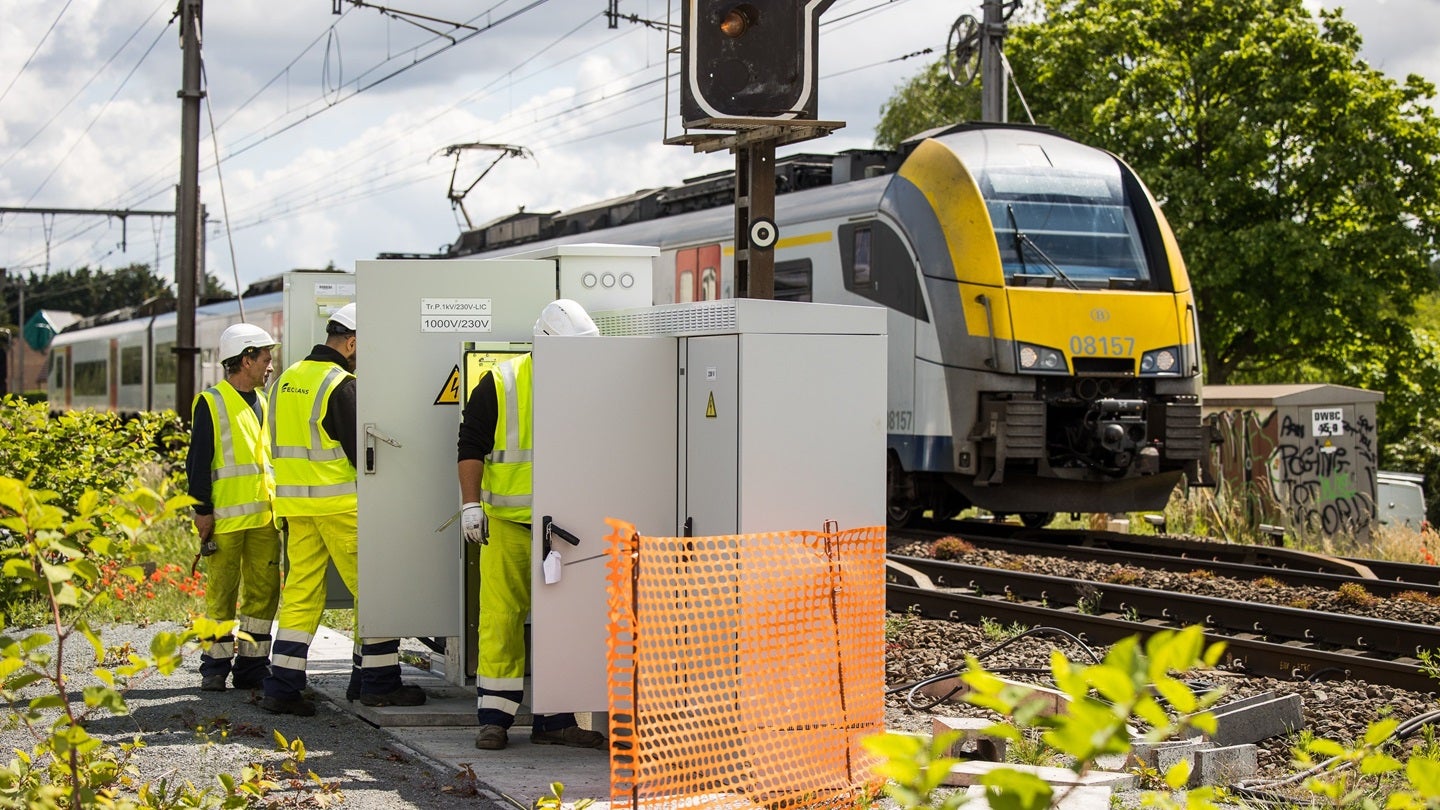
Equans, meanwhile, served as the essential partner for physical infrastructure deployment. Their teams were responsible for the grueling task of site installation, which included thousands of kilometers of cabling, complex civil engineering works, electrical fitting, and the hardware deployment required to house the new signalling equipment.
This division of labor allowed for a rapid, parallel-track approach to construction. According to project managers, the ability of Equans to handle the "ground-up" physical deployment while Siemens handled the "top-down" software and signalling integration was the primary driver of the project’s on-time completion.
Official Responses and Strategic Significance
The completion of the ETCS rollout has drawn praise from both the corporate partners and the wider European transport community.
Michael Peter, CEO of Siemens Mobility, highlighted the unique nature of the implementation: "Belgium is the first country to implement ETCS across a highly complex network under rolling conditions with almost no closures—setting the example Europe must follow. The on-time completion and commissioning of this project, exactly ten years after its start, reflects the strength of our partnership with Infrabel and the consortium’s unwavering commitment."
Mark Dirckx, CEO of Equans Belux, echoed these sentiments, emphasizing the logistical triumph: "With the nationwide installation of the European train control system ETCS and the achievement of the ETCS Masterplan, we have made an important contribution to safer, more efficient, and future-proof rail transport in Belgium. Thanks to a partnership with Siemens Mobility, we realised a technically and logistically complex project of impressive scale."
Implications: A New Era for Belgian Rail
The implications of this upgrade are far-reaching. By aligning its infrastructure with the European standard, Belgium has removed the "technological borders" that once hindered international logistics.
1. Operational Efficiency
With the removal of legacy signalling systems, the frequency of train services can be increased. ETCS Level 2 allows for "moving block" signalling concepts, which enable trains to follow each other at closer intervals safely. This effectively increases the capacity of existing tracks without the need for expensive and disruptive construction of new lines.
2. Enhanced Safety Standards
ETCS Level 2 is fundamentally designed to prevent human error. If a driver fails to react to a signal, the system automatically intervenes, applying the brakes if the train exceeds the speed limit or enters an occupied block. This provides a robust safety net that was not possible under older, manual, or semi-automated systems.
3. Cross-Border Interoperability
Historically, European rail has been fragmented, with different countries using different signalling standards. This necessitated that international trains swap locomotives or drivers at borders. Belgium’s full integration with ETCS Level 2 means that international rolling stock equipped with the same system can now traverse the country without interruption, significantly reducing transit times for both freight and passenger services.
4. A Blueprint for Europe
Perhaps the most significant takeaway from the Belgian project is the proof of concept. Many other European nations are still in the early stages of their own ETCS rollouts. Belgium’s ability to complete this transition while maintaining 100% of its daily rail traffic provides a clear roadmap for other infrastructure managers. It demonstrates that with the right combination of digital technology, expert engineering, and political will, a nation’s rail system can be completely modernized without bringing the economy to a halt.
Looking Toward the Future
While the primary goal of the ETCS Masterplan has been achieved, the focus for Infrabel and its partners now shifts toward maintenance and the eventual transition to even higher levels of automation, such as Automatic Train Operation (ATO).
The digital infrastructure laid down over the past decade provides the perfect foundation for future innovations. As Belgium celebrates this milestone, the rail sector in Europe is watching closely. The completion of the Belgian network is not just an end-of-project celebration; it is the beginning of a truly connected, efficient, and safe European rail network. The 2,274km of upgraded track now serves as a high-tech artery, ready to facilitate the next generation of sustainable transport across the continent.

