
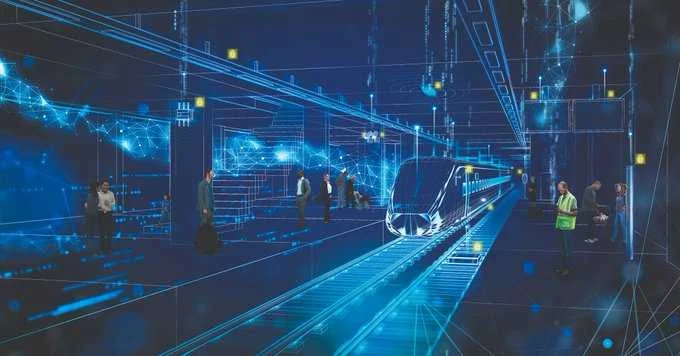
In an era defined by the rapid digitalization of public infrastructure, the railway sector has transitioned from mechanical reliability to software-dependent performance. As trains evolve into "data centers on wheels," the threat landscape has shifted, moving beyond traditional physical security to the volatile realm of cyber warfare. In a landmark move to address these vulnerabilities, Siemens Mobility and British cybersecurity specialist RazorSecure have entered into a strategic cooperation agreement, aimed at fortifying rolling stock against the growing menace of digital disruption.
This partnership, which integrates RazorSecure into Siemens Mobility’s broader "Alliance for Availability," marks a pivotal shift in how the rail industry approaches the convergence of operational technology (OT) and information technology (IT). By combining Siemens’ massive footprint in global rail infrastructure with RazorSecure’s specialized, real-time intrusion detection capabilities, the duo seeks to set a new benchmark for fleet safety and cybersecurity resilience.
The Main Facts: A Synergistic Defense Strategy
The core objective of the partnership is the deployment of advanced, real-time cyber monitoring solutions across international rolling stock fleets. As modern trains rely on intricate software ecosystems to manage everything from signaling and braking to passenger information systems, they represent a significant attack surface for bad actors.
Under the terms of the agreement, Siemens Mobility will leverage RazorSecure’s proprietary technology to enhance its existing digital asset management suites, most notably its Railigent platform. RazorSecure provides an "inside-out" approach to security, focusing on the unique behavioral patterns of railway networks. Unlike standard enterprise cybersecurity software, which may not account for the specific communication protocols used in trains, RazorSecure’s technology is engineered to recognize the "baseline" of normal traffic within a train’s network. Any deviation from this baseline—a potential indicator of unauthorized access or a malware infection—is flagged in real-time.
This is not merely a software integration; it is a strategic alignment of two distinct philosophies. Siemens brings the scale, the physical infrastructure, and the maintenance logistics, while RazorSecure brings the specialized, agile cybersecurity "sentinel" required to navigate the complexities of rail-specific hardware.
Chronology: The Evolution of a Strategic Partnership
The road to this partnership began with the industry’s broader recognition that "security by design" is no longer an optional luxury, but a fundamental operational requirement.
- Pre-2020: The rail industry witnesses a spike in global cybersecurity concerns. Reports of attempted hacks on transport infrastructure across Europe and North America create an industry-wide consensus that legacy systems are insufficient for the modern digital age.
- 2020-2021: RazorSecure gains traction in the UK market, proving its technology on regional rail networks. Simultaneously, Siemens Mobility expands its "Alliance for Availability," an initiative designed to foster collaboration between rail operators, suppliers, and tech firms to solve the "complexity challenge."
- Late 2021: The formalization of the cooperation agreement. Siemens Mobility identifies RazorSecure as the missing piece in their cybersecurity puzzle, specifically regarding the protection of onboard rolling stock systems.
- Post-Agreement (Ongoing): The companies begin integrating their workflows. RazorSecure is officially inducted into the Siemens Mobility partner ecosystem, with a focus on scaling these cybersecurity solutions to a global client base.
Supporting Data: Why Rail Security is at a Tipping Point
To understand the gravity of this partnership, one must look at the data driving it. Modern trains are essentially interconnected networks of hundreds of sensors, control units, and communication modules. According to industry research, the average modern train generates terabytes of data daily, all of which is transmitted via proprietary and standardized bus systems (such as CAN or Ethernet).
The "Complexity Challenge"
- Hardware Lifecycles: Unlike the consumer tech sector, where hardware is replaced every three to five years, railway rolling stock is designed to last 30 to 40 years. This creates a "legacy gap," where modern software must run on aging hardware architectures that were never designed with internet connectivity in mind.
- Operational Availability: Rail operators run on razor-thin margins where downtime costs thousands of dollars per minute. A single cyber-incident resulting in a fleet-wide grounding could lead to catastrophic financial and reputational losses.
- The Threat Vector: The rise of the "Internet of Trains" (IoT) has expanded the entry points for cyber-attacks. From onboard Wi-Fi portals to maintenance remote access, every node is a potential gateway for malicious actors.
RazorSecure’s approach addresses these concerns by offering a flexible layer of protection that sits on top of existing infrastructure. By monitoring the "behavior" of the systems—rather than just scanning for known viruses—the software is capable of detecting "zero-day" threats, which are previously unknown vulnerabilities that standard firewalls often miss.
Official Responses: Aligning the Vision
The leadership at both organizations has emphasized that this collaboration is a response to the evolving nature of global threats.
Alex Cowan, CEO of RazorSecure, highlighted the importance of rail-specific engineering:
"The rail industry needs innovative solutions that are designed specifically for its unique challenges. By partnering with Siemens Mobility, we are able to collaborate and build on our product portfolio with the rail cybersecurity expertise, to offer the best comprehensive solutions that enhance the protection of rolling stock."
Cowan’s statement reflects the core of the partnership: the recognition that general-purpose cybersecurity is inadequate for the high-stakes environment of moving trains.

Johannes Emmelheinz, CEO of Customer Service at Siemens Mobility, underscored the operational necessity of the partnership:
"Real-time monitoring and the earliest possible detection of irregularities in the IT and software structure of our trains are the only way to ensure 100 per cent fleet availability while maintaining the highest level of cybersecurity. RazorSecure can help us achieve this goal with their expertise and proven solutions."
Emmelheinz’s focus on "100 percent fleet availability" highlights that for Siemens, cybersecurity is not just a defensive measure—it is a performance metric. In their view, a secure train is a reliable train.
Implications: The Future of Rail Infrastructure
The partnership between Siemens Mobility and RazorSecure carries significant implications for the future of the global rail industry.
1. Setting a New Industrial Standard
By integrating specialized cybersecurity into the standard maintenance lifecycle of a train, Siemens is effectively setting a new "gold standard" for the industry. Other manufacturers and rail operators will likely be forced to follow suit, turning cybersecurity from a niche "add-on" into a standard requirement in rolling stock procurement contracts.
2. The Power of the "Alliance for Availability"
The success of this partnership hinges on the "Alliance for Availability." By bringing together 22 global partners—ranging from universities to software developers—Siemens is breaking down the "silo mentality" that has historically plagued the rail sector. This ecosystem approach ensures that when a security vulnerability is identified on one network, the entire alliance can benefit from the shared intelligence, creating a collective immune system for global rail.
3. Addressing Regulatory Pressure
As governments worldwide begin to classify rail networks as "Critical National Infrastructure," the pressure from regulatory bodies to implement rigorous cybersecurity protocols is mounting. This partnership provides operators with a turnkey solution to comply with emerging international standards, effectively de-risking the adoption of new digital technologies.
4. A Shift in Maintenance Philosophy
Traditionally, rail maintenance was reactive or scheduled based on physical wear and tear. With the integration of RazorSecure, maintenance is becoming predictive. By monitoring IT health alongside mechanical health, operators can now identify when a system is behaving erratically due to an impending cyber-attack or a software fault, allowing them to perform "digital maintenance" before a physical failure occurs.
Conclusion: A Resilient Path Forward
The collaboration between Siemens Mobility and RazorSecure represents more than just a business deal; it is a necessary evolution of the railway industry. As trains become increasingly intelligent and interconnected, the physical safety of passengers and the reliability of transport networks will become inextricably linked to the integrity of their digital structures.
By fostering an open ecosystem of expertise and prioritizing the real-time, behavioral monitoring of rail-specific networks, the two companies are providing a blueprint for how critical infrastructure can be defended in an age of uncertainty. As the Alliance for Availability continues to grow, it is clear that the future of the railway is not just about moving people from point A to point B—it is about ensuring that the journey is as secure in the digital realm as it is on the physical track.
As the industry moves forward, the success of this partnership will be measured not by the attacks they prevent, but by the seamless, uninterrupted availability of the rail networks that keep the world moving.

