

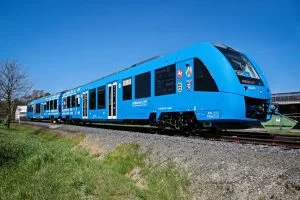
In a strategic move that underscores the global pivot toward sustainable transportation, Alstom, the global leader in smart and sustainable mobility, has officially joined the Spanish Hydrogen Association (AeH2). This partnership marks a significant milestone in Alstom’s commitment to decarbonizing the railway sector, positioning hydrogen fuel cell technology as the primary alternative to traditional diesel traction on non-electrified rail lines.
As Europe accelerates its efforts to achieve climate neutrality by 2050, the integration of green hydrogen into the transport mix is no longer a futuristic concept—it is a present-day necessity. By aligning with AeH2, Alstom is set to play a pivotal role in the industrial and technological evolution of Spain’s railway network, helping to translate national decarbonization roadmaps into tangible, emission-free reality.
The Case for Hydrogen in Rail: Bridging the Electrification Gap
While electrification remains the gold standard for high-speed and high-density rail, it is not always economically or technically feasible for every route. Across Europe, approximately 40% of the main railway network—some 80,000 kilometers—remains non-electrified. In these regions, transport continues to rely on aging diesel fleets, which contribute significantly to carbon emissions and noise pollution.
Spain, with its vast geographical diversity and extensive rail network, mirrors this European challenge. Over 5,000 kilometers of the Spanish rail network—nearly 35% of the total—remain non-electrified. Currently, more than 200 diesel-powered trains, ranging from regional passenger units to freight locomotives, operate daily on these tracks.
The transition away from these diesel assets is a cornerstone of the European Green Deal. Hydrogen technology offers a compelling solution: it provides the autonomy and performance of diesel without the environmental footprint. Fuel cell trains emit nothing but water vapor, provide a significantly quieter passenger experience, and do not require the costly, time-consuming installation of overhead catenary wires.
A Chronology of Progress: From Pilot Projects to Mainstream Adoption
The journey of hydrogen in the rail sector has been characterized by rapid technological maturation, transitioning from experimental prototypes to reliable, commercial-grade rolling stock.
- 2002: The Foundation of AeH2: The Spanish Hydrogen Association was established to act as a catalyst for the development of hydrogen technologies, creating a collaborative platform for industry, academia, and public institutions.
- 2018: The Global Breakthrough: Alstom launched the Coradia iLint, the world’s first passenger train powered by a hydrogen fuel cell. Its entry into commercial service in Germany marked a paradigm shift, proving that hydrogen could reliably replace diesel on regional lines.
- 2020: European Momentum: Following the success in Germany, trials expanded to the Netherlands and Austria. These deployments demonstrated that hydrogen technology is not only safe but also adaptable to diverse European operational standards.
- 2020–2021: The Spanish Roadmap: The Spanish Government formally approved the "Hydrogen Roadmap," setting ambitious targets for the energy transition. A key pillar of this policy is the mandate to see at least two commercial hydrogen railway lines operational in Spain by 2030.
- 2022–2024: Strategic Alliances: Alstom’s decision to join AeH2 signifies the start of a deep-dive collaboration, aiming to leverage local expertise to accelerate the deployment of the Coradia iLint and subsequent hydrogen-powered innovations within the Iberian market.
Supporting Data: Why Hydrogen is the Strategic Choice
The technical and economic viability of hydrogen in rail is supported by an increasing body of operational data. When compared to the status quo of diesel, the advantages of hydrogen-powered rail are multifaceted:
1. Decarbonizing the "Last Mile"
While major transit hubs are electrified, secondary and regional lines often remain tethered to diesel. Replacing these vehicles with fuel cell trains immediately eliminates localized CO2 emissions. Given that there are approximately 5,900 diesel trains and 5,800 diesel locomotives currently circulating in Europe, the potential for carbon reduction is immense.
2. Operational Reliability and Safety
Tests conducted in Germany and Italy have consistently shown that hydrogen trains meet the stringent safety standards required for public transit. The fuel cells are modular, allowing for easier maintenance cycles compared to complex diesel combustion engines. Furthermore, the "refueling" process has been streamlined to integrate with existing station infrastructure, ensuring that operators can maintain strict timetables without downtime.
3. Economic Feasibility
The cost of green hydrogen production is falling rapidly as renewable energy capacity—solar and wind—expands across Spain. By integrating hydrogen into the energy mix, Spain can leverage its surplus renewable electricity to produce green hydrogen, thereby creating a closed-loop, sustainable energy ecosystem that reduces dependence on imported fossil fuels.
Official Perspectives: Alstom’s Vision for Spain
Leopoldo Maestu, Managing Director of Alstom Spain, has been a vocal advocate for this transition. Commenting on the partnership with AeH2, Maestu noted that the move is not merely a business decision, but a reflection of the company’s corporate social responsibility.
"Hydrogen technology is a sustainable, noiseless, and emission-free alternative for non-electrified lines," Maestu stated. "The hydrogen train is a demonstration of Alstom’s commitment to the development and implementation of innovative sustainable mobility solutions that contribute to the global energy transition and decarbonization."
For Alstom, the partnership provides a direct channel to collaborate with the Spanish government and industrial partners to solve the logistical hurdles of hydrogen infrastructure. This includes the development of hydrogen refueling stations and the optimization of logistics for transporting hydrogen from production sites to rail hubs.
The Role of AeH2: A Catalyst for Industry Transformation
Since its inception, the Spanish Hydrogen Association (AeH2) has served as the primary nexus for the hydrogen economy in Spain. Its membership includes a cross-section of energy giants, technology providers, and academic institutions.
As part of its new collaboration with Alstom, AeH2 is preparing to lead the "Sectoral Agenda of the Hydrogen Industry." This initiative, requested by the Spanish Ministry of Industry, Trade, and Tourism (MINCOTUR), is a roadmap designed to ensure that the transition to hydrogen supports the Spanish economy, fosters job creation in the green-tech sector, and establishes Spain as a European hub for hydrogen innovation.
By working hand-in-hand with public institutions, AeH2 ensures that policy frameworks are aligned with the technical capabilities of industry leaders like Alstom. This alignment is critical; without clear regulatory standards and government support, the infrastructure for a hydrogen-based economy cannot scale to meet the 2030 and 2050 targets.
Implications for the Future: A Greener Horizon
The entry of Alstom into the Spanish Hydrogen Association signals that the "Hydrogen Decade" for European rail is underway. The implications of this development are far-reaching:
Environmental Impact
By 2050, the goal of achieving a 100% renewable electricity system in Europe is heavily dependent on the electrification of transport. However, where electrification is impossible, hydrogen fills the gap. This will lead to a dramatic reduction in the carbon footprint of regional passenger travel and freight logistics, directly contributing to the fight against climate change.
Industrial Growth
The development of hydrogen trains is driving a new industrial value chain. From the manufacture of fuel cells and high-pressure tanks to the construction of electrolyzers for green hydrogen production, the shift provides a significant boost to Spanish industrial capabilities. It positions Spanish companies to compete globally as the demand for hydrogen-powered infrastructure surges in Latin America, Asia, and beyond.
Passenger Experience
Modernization is not just about environmental benefits; it is about the quality of life for citizens. Hydrogen trains are exceptionally quiet compared to their diesel counterparts, reducing noise pollution in rural and suburban areas. Furthermore, the smooth acceleration and modern interior design typical of Alstom’s Coradia series provide a premium travel experience, which is essential for encouraging commuters to shift from cars to trains.
Conclusion
The partnership between Alstom and the Spanish Hydrogen Association is a testament to the power of collaboration in the face of the climate crisis. By combining Alstom’s pioneering expertise in hydrogen mobility with the advocacy and strategic vision of AeH2, Spain is well-positioned to lead the way in the transition to sustainable rail.
As the country moves toward its 2030 goals, the sight of hydrogen-powered trains traversing the Spanish countryside will serve as a constant reminder that the future of mobility is not only cleaner and quieter—it is already on the right track. The challenge now lies in the rapid scaling of hydrogen infrastructure, a task that, with this new alliance, is firmly underway. Through shared goals, consistent policy, and technological excellence, the decarbonization of the rail sector is no longer an aspiration—it is an inevitable, welcome reality.

