

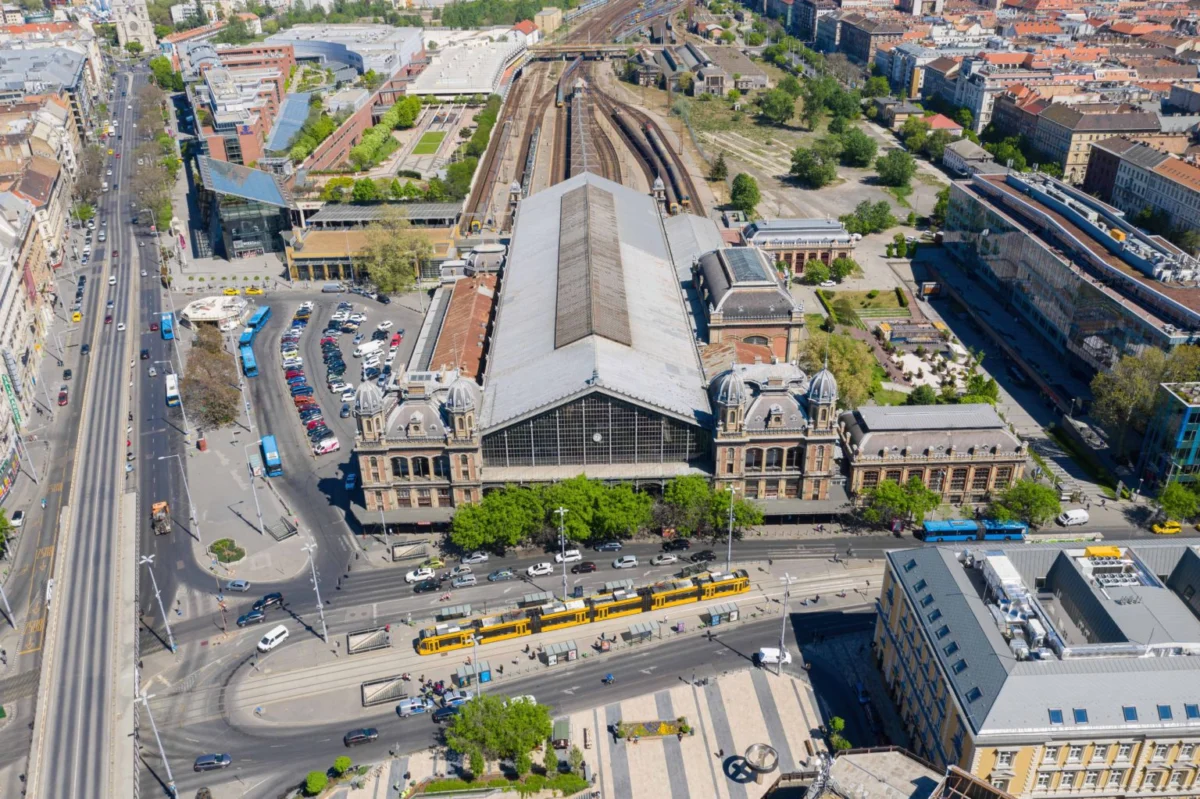
Budapest stands at a critical juncture in its urban evolution. As the city grapples with the dual challenges of rapid suburban expansion and the environmental imperatives of the 21st century, the Budapest Development Agency (BFK) has unveiled a transformative blueprint: the Budapest Agglomeration Railway Strategy (BAVS). This comprehensive master plan aims to reshape the mobility landscape of the Hungarian capital, targeting an ambitious 80% increase in suburban rail ridership by 2040. By modernizing infrastructure, integrating disparate transit modes, and fostering a seamless passenger experience, the strategy seeks to decouple urban growth from traffic congestion and carbon emissions.
Main Facts: A Vision for Integrated Mobility
The BAVS is not merely a collection of isolated construction projects; it is a holistic overhaul of how the capital interacts with its surrounding commuter belt. With an eye toward the year 2040, the strategy outlines 60 specific measures designed to overhaul railway infrastructure, enhance service frequency, update regulatory frameworks, and procure modern rolling stock.
At the heart of the plan is a shift in philosophy: the railway must cease to be a "peripheral" service and become the backbone of the region’s transit system. To achieve this, the BFK has proposed a high-frequency service model. On most suburban lines, the objective is to provide two rapid suburban trains and four local trains every hour. This density is essential for creating a "turn-up-and-go" culture, where passengers no longer rely on timetables but trust the reliability of the system.
Furthermore, the integration of physical infrastructure with digital and fare-ticketing systems is paramount. By 2040, every suburban train line is expected to provide direct access to at least three of the city’s four metro lines. This intermodal connectivity will be supported by a unified ticketing system, ensuring that the transition from a suburban train to a metro or tram is as seamless as possible.
Chronology: A Two-Phase Implementation Path
The transformation of Budapest’s rail network is divided into two distinct time horizons, acknowledging the sheer scale of the engineering and financial challenges involved.
Phase I: The Foundation (2021–2030)
The current decade is dedicated to foundational investments. This phase focuses on the "low-hanging fruit" and the critical bottlenecks that currently stifle the system’s capacity. Key highlights include:
- The Southern Railway Ring: A critical project to increase capacity on the southern cross-city corridor.
- Danube Connectivity: The construction of a new bridge over the Danube to provide essential links between South Buda and South Pest, effectively creating a loop that allows trains to bypass the congested central stations.
- The Inner-City Tunnel: Perhaps the most ambitious engineering feat in this phase is the planned 4.5 km rail tunnel under the Danube. This tunnel will serve as a subterranean artery, allowing for a higher volume of cross-city traffic that would otherwise be impossible with the current surface-level infrastructure.
- Line 5 Development: The modernization of the suburban rail network, specifically focusing on the renovation of track sections that currently fail to meet modern safety and capacity standards.
Phase II: Scaling and Optimization (2030–2040)
The second decade shifts focus toward full system optimization. With the primary infrastructure in place, the BFK will prioritize:
- Airport Integration: Ensuring the Liszt Ferenc International Airport is linked to the city center via a 20-minute rapid rail service, supported by 16 new strategically located stops to capture commuter traffic.
- Rolling Stock Overhaul: Replacing aging, inefficient carriages with state-of-the-art electric trains that meet modern comfort and speed requirements.
- Network Completion: Finalizing the "Park and Ride" network to ensure that those living in rural areas can easily transition from car to rail, further reducing the reliance on private vehicles for the final leg of the commute into the city.
Supporting Data: The Case for Investment
The financial commitment required to execute the BAVS is substantial, reflecting the scale of the ambition. The total investment is estimated at HUF 2 trillion (approximately EUR 5.6 billion). Of this, HUF 1 trillion (EUR 2.8 billion) is already secured for the next two decades, with a significant portion being integrated into the European Union’s 2021–2027 multiannual financial framework.
The economic and social justification for this expenditure is found in the projected ridership data:
- Ridership Growth: The strategy aims to see an additional 500,000 passengers opting for rail services in the metropolitan area, bringing the total daily rail patronage to 1 million people.
- Congestion Relief: The BFK estimates that the full implementation of the strategy will remove 115,000 cars from Budapest’s streets daily.
- Time Savings: The average commuter is expected to save 15 minutes of travel time per day—a cumulative gain in productivity and quality of life that translates into massive long-term economic value for the capital.
- System Capacity: Currently, Budapest’s public transport moves 5 million passengers daily across a network of 4 metro lines, 5 suburban rail lines, 30 tram lines, and 276 bus routes. The BAVS is intended to bolster this existing infrastructure, not replace it, by providing the high-capacity rail "spine" that these smaller networks can feed into.
Official Responses: The Strategic Rationale
Balázs Fürjes, the Minister of State for Budapest and the Development of the Capital’s Metropolitan Area, has been a vocal proponent of the BAVS. He argues that the strategy is a necessary response to the "suburban flight" that has seen thousands of residents move to the outskirts of the city, only to spend hours commuting in traffic.
"The new railway development plans will be useful for both inside and outside Budapest," Fürjes stated during the presentation of the strategy. "Many people today do not choose public transport because it often does not provide an adequate standard around Budapest, which is why the city is congested. We want a solution, a way out that saves time, makes the air in Budapest cleaner, reduces traffic in the city center, and helps our climate targets."
This sentiment is echoed by Dávid Vitézy, CEO of the Budapest Development Agency. In recent publications, Vitézy has emphasized that the strategy is designed to combat the "car-dependency trap." By ensuring that the rail network is faster, more reliable, and more comfortable than the private car, the city can naturally shift behavior without the need for punitive restrictions on drivers.
Implications: A Greener, More Efficient Capital
The implications of the Budapest Agglomeration Railway Strategy extend far beyond the tracks themselves.
Environmental Impact
By removing over 100,000 cars from the road every day, the BAVS will significantly contribute to Hungary’s climate goals. Lower traffic volumes in the city center mean reduced localized air pollution and lower CO2 emissions per capita. As the rolling stock transitions to electric power, the rail system will become a model for sustainable urban transport.
Urban Planning and Real Estate
The expansion of the railway network will inevitably shift the value proposition of residential areas. Properties located near the newly developed or upgraded stops will become more attractive, potentially leading to "transit-oriented development" (TOD). This allows the city to grow along transit corridors, preventing the type of urban sprawl that necessitates more car travel.
Social Equity
Access to high-quality transport is a fundamental driver of social mobility. By connecting the outer suburbs more effectively with the city center, the BAVS ensures that workers in the metropolitan area have better access to jobs, education, and services in the capital. This reduction in the "commuter penalty" helps to bridge the socio-economic gap between the urban core and the suburban periphery.
A Model for Central Europe
If successful, the BAVS will serve as a template for other Central and Eastern European capitals facing similar legacy infrastructure challenges. By demonstrating that large-scale, long-term planning backed by European funding can modernize even the most congested cities, Budapest could find itself at the forefront of the European mobility transition.
Conclusion
The Budapest Agglomeration Railway Strategy is a bold, long-term commitment to the future of the Hungarian capital. While the challenges—ranging from complex tunneling under the Danube to the coordination of multiple government stakeholders—are significant, the BFK has presented a clear, data-driven, and phased approach to success. By prioritizing the commuter, investing in high-capacity infrastructure, and aligning with global climate trends, Budapest is positioning itself to be a more livable, sustainable, and connected city for generations to come. The next two decades will be a period of intense construction and transformation, but for the residents of the Budapest region, the promise of a faster, cleaner, and more efficient commute is finally coming into view.

