

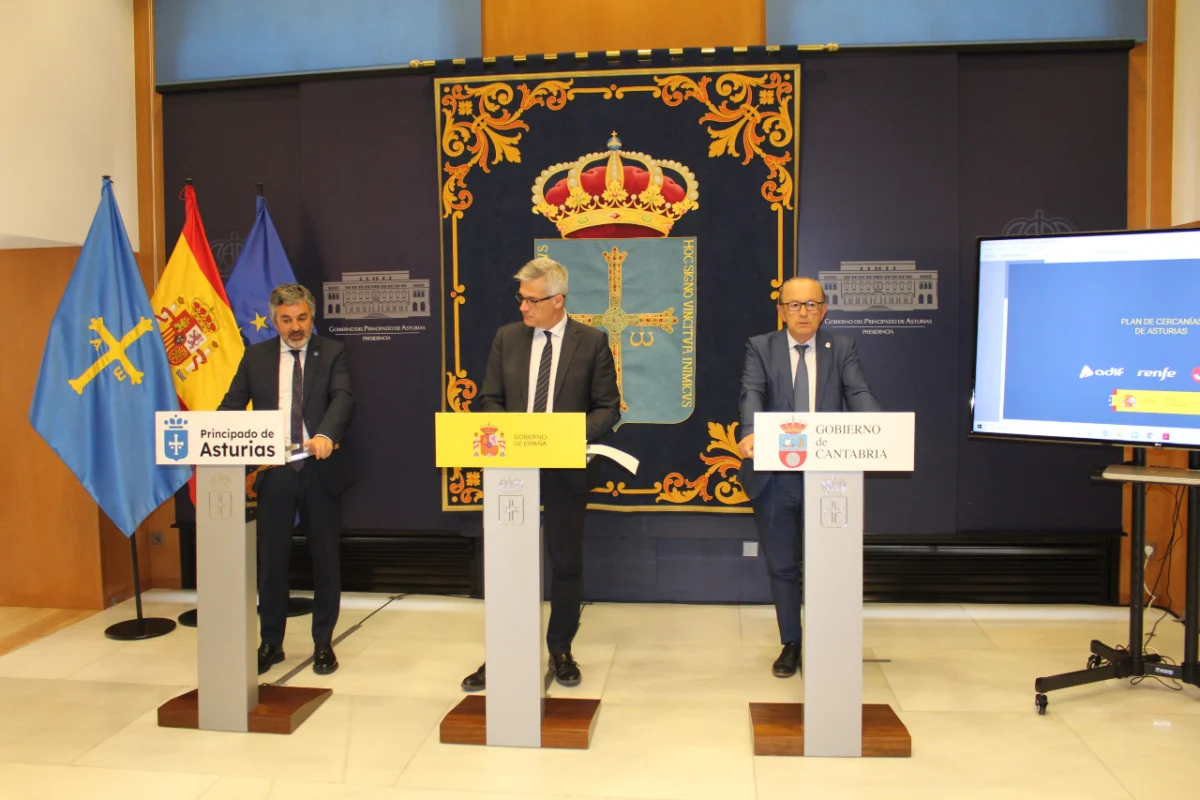
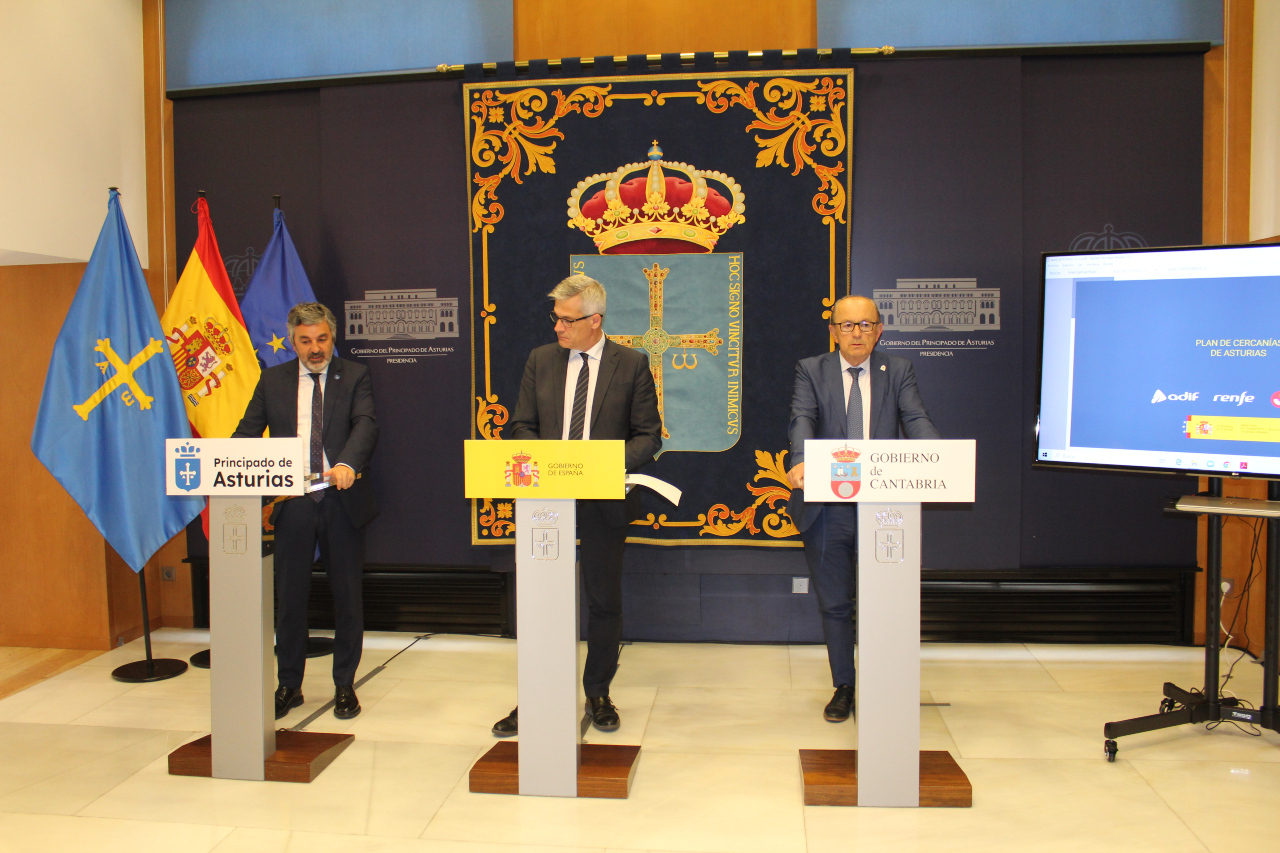
In a landmark commitment to regional connectivity and sustainable mobility, the Spanish government has announced a massive expansion of its investment plan for the Cercanías (commuter rail) networks in Asturias and Cantabria. David Lucas, the State Secretary for Transport, Mobility and Urban Agenda (MITMA), officially unveiled the updated strategy in Oviedo, marking a significant shift in infrastructure spending that aims to modernize the transport backbone of northern Spain.
The revised plan sees the total investment budget more than double, soaring from an initial allocation of €1.1 billion to an ambitious €2.74 billion. This financial injection is designed not only to renovate aging infrastructure but to fundamentally transform the user experience for tens of thousands of daily commuters.
Main Facts: The Scope of the Transformation
The updated investment plan is a comprehensive effort to bring the rail systems in Asturias and Cantabria into the 21st century. The €2.74 billion package is split between infrastructure development (managed by the rail manager Adif) and rolling stock/station improvements (managed by the operator Renfe).
Key Pillars of the Investment:
- Infrastructure (Adif): A total of €2.1 billion is earmarked for track and security improvements. This represents a massive increase from the previously anticipated €887.5 million.
- Rolling Stock and Stations (Renfe): Renfe will spearhead a €76.8 million program to revitalize station facilities—focusing on accessibility, signage, and aesthetics—alongside a major €547.6 million investment to modernize and expand the train fleet.
- Operational Integration: A pivotal development for passengers is the move toward a unified ticketing system. By August, commuters will be able to utilize a single ticket across the Asturias, Cantabria, and Bilbao rail networks, significantly simplifying cross-regional travel.
The scope of work is expansive. It includes the rehabilitation of 703 kilometers of track, the implementation of advanced security and telecommunications systems across 453 kilometers, and critical track-doubling works covering over 55 kilometers to alleviate bottlenecks.
Chronology of Development: From Planning to Execution
The journey to this announcement has been marked by a transition from reactive maintenance to proactive development.
The Foundation Phase
Initially, the government’s commitment was centered on a €1.1 billion framework. However, recognizing the technical obsolescence of much of the network—some of which dates back decades—the Ministry of Transport conducted a comprehensive audit of both the Iberian and metric gauge lines.
The Mobilization Phase
Following the initial assessment, Adif began mobilizing resources. To date, €1.67 billion has already been funneled into ongoing projects. The current status of the program reflects a shift in urgency:
- Asturias: 52 actions have been successfully completed, with 35 major projects currently in the execution phase.
- Cantabria: 29 major infrastructure actions are finished, with 17 projects currently in progress.
Future Milestones
The government has set clear timelines for the integration of new rolling stock. The procurement process for 35 new trains in Asturias and 21 metric-gauge trains for Cantabria is already underway, with the objective of phasing out the oldest fleet units that currently plague the network with reliability issues.
Supporting Data: A Region-by-Region Breakdown
The complexity of the rail network in northern Spain requires a dual-track approach, as the system utilizes both the standard Iberian gauge and the narrower metric gauge, the latter of which is vital for the region’s topography.
The Asturias Network
Asturias relies on a network that connects 28 municipalities via 156 stations across 8 lines. The investment here is heavily weighted toward the metric gauge, which serves as a lifeline for the region’s smaller, mountainous communities.
- Adif Allocation: €1.1 billion total (up from €517.5 million).
- Metric vs. Iberian: €636.2 million for metric gauge; €493.2 million for Iberian gauge.
- Renfe Contribution: €47.8 million for station upgrades and €214.6 million for the new fleet.
The Cantabria Network
Cantabria’s suburban network, while more compact, faces unique capacity challenges. The system connects 23 municipalities through 61 stations and 3 lines.
- Adif Allocation: €991 million (up from €370 million).
- Metric vs. Iberian: €626.6 million for metric gauge; €364.4 million for Iberian gauge.
- Renfe Contribution: €29 million for station improvements and €232.7 million for the modernization of the train fleet.
Official Responses and Stakeholder Engagement
The presentation in Oviedo was attended by high-ranking officials, underscoring the political importance of the project. Xavier Flores, the General Secretary for Infrastructure, was joined by Adif President María Luisa Domínguez and Renfe President Raúl Blanco.
The Government’s Stance
Secretary David Lucas emphasized that this investment is a fulfillment of a "solemn commitment" to the citizens of northern Spain. He noted that the previous infrastructure had suffered from "structural neglect" and that the current plan is designed to create a "resilient, efficient, and user-friendly" transport model.
Regional Perspectives
Representatives from the regional governments of Asturias and Cantabria have largely welcomed the news, citing the economic necessity of reliable rail. For regions that have historically struggled with depopulation and industrial transition, the Cercanías network is viewed as a critical component for labor mobility and regional cohesion.
Implications: The Road Ahead
The long-term implications of this €2.74 billion investment are profound, extending beyond simple infrastructure upgrades.
Economic and Urban Integration
By focusing on "urban integration," the plan aims to resolve the physical barriers that rail lines often create in city centers. Suppressing level crossings and upgrading stations will not only improve safety but will allow for better urban planning in cities like Gijón and Santander. Increased station capacity is expected to drive higher ridership, reducing the reliance on private vehicles and lowering the carbon footprint of regional transit.
Technological Modernization
The transition to a unified ticketing system is perhaps the most visible change for the average passenger. By leveraging the European Regional Development Fund (ERDF) and the REACT-EU recovery funds, Spain is ensuring that the digital transition of the rail sector remains on schedule. The synchronization of the Asturias, Cantabria, and Bilbao networks signals a future where the northern Spanish coast functions as a single, interconnected transport corridor.
Overcoming Technical Debt
Perhaps the most critical implication is the resolution of the "metric gauge dilemma." By investing heavily in the specialized equipment and infrastructure required for these older, narrower lines, the government is securing the future of transit for rural and mountainous populations who are often forgotten in high-speed rail debates.
Sustainability and Funding
The project is firmly rooted in the "NextGenerationEU" framework. With funding derived from the Spanish Recovery and Resilience Plan, the investment serves as a prime example of how European funding can be channeled into tangible, local infrastructure that meets the European Green Deal’s objectives of promoting public transport over road travel.
Conclusion: A New Era for Northern Rail
The commitment to double the investment in Asturias and Cantabria represents a fundamental shift in the government’s approach to regional mobility. It is a transition from mere upkeep to aggressive modernization.
As the projects move from the planning phase to full-scale construction, the people of Asturias and Cantabria can expect a network that is not only faster and more reliable but also more accessible and better integrated into their daily lives. By aligning infrastructure, rolling stock, and ticketing into a cohesive, well-funded strategy, Spain is setting a benchmark for regional rail development that prioritizes the needs of the citizen above all else.
The success of these works will be judged by the punctuality of the trains, the comfort of the new fleet, and the ease with which commuters can traverse the region—a standard that, with this massive financial backing, appears closer than ever to being met.

