

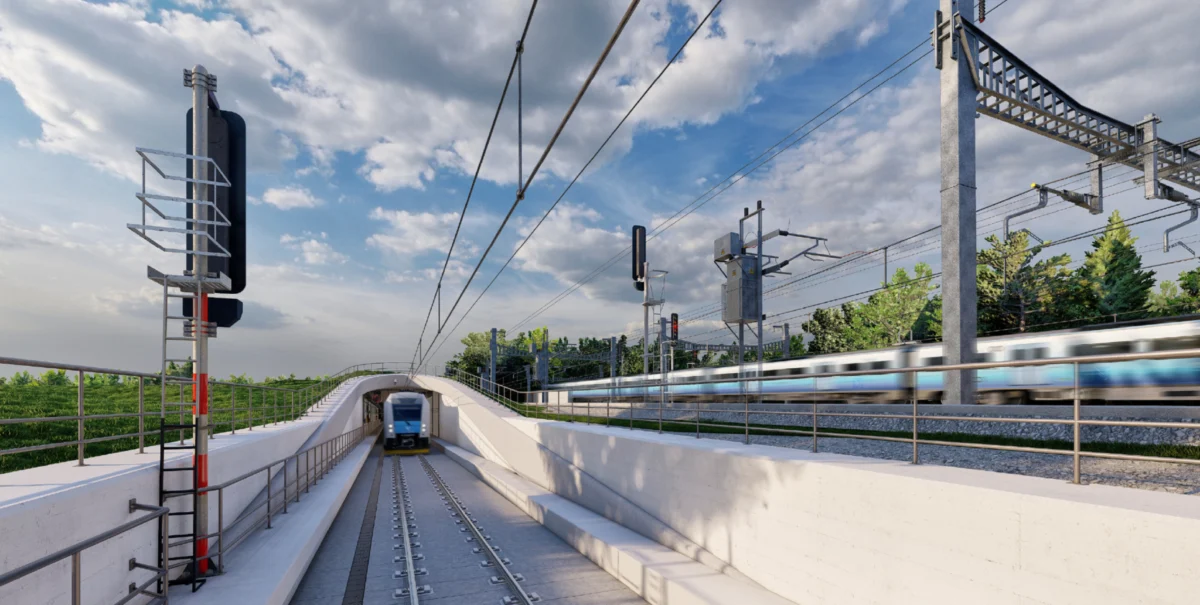
The landscape of Polish transport is undergoing a tectonic shift, marked by the recent announcement that Alstom has been awarded a critical contract by Porr to implement advanced railway traffic control systems for the Łódź high-speed rail tunnel. This project, a cornerstone of the Centralny Port Komunikacyjny (CPK) investment program, represents a significant leap forward in Poland’s quest to integrate its major urban centers through a high-capacity, high-speed rail network.
The collaboration between Porr, the primary contractor for the tunnel’s construction, and Alstom, a global leader in smart and sustainable mobility, underscores the technical complexity and strategic weight of the Łódź investment. As the longest and largest-diameter railway tunnel in Poland’s history, the project is not merely a local transit improvement but a vital link in the Trans-European Transport Network (TEN-T).
Main Facts: The Scope of the Alstom-Porr Agreement
The contract awarded to Alstom involves the comprehensive design, delivery, and installation of signalling and traffic control solutions within the 4.6-kilometer long-distance tunnel. This infrastructure is specifically designed to facilitate high-speed rail (HSR) traffic, distinguishing it from traditional regional rail projects.
Integrated Signalling Solutions
Alstom will deploy its "Onvia" mainline signalling portfolio, a suite of technologies designed to ensure high-frequency train operations with the highest safety standards. The scope of work includes:
- Full System Design: Tailoring signalling architecture to the unique subterranean environment of the Łódź tunnel.
- Installation and Commissioning: Implementing the hardware and software necessary for real-time traffic management.
- Integration with Łódź Widzew: A critical component of the contract is the seamless integration of the tunnel’s systems with the existing railway infrastructure at the Łódź Widzew station area. This ensures that trains transitioning from the high-speed tunnel to the wider national network do so without delays or safety bottlenecks.
A First for "Port Polska"
This agreement marks Alstom’s inaugural signalling contract within the framework of the high-speed rail infrastructure linked to the "Port Polska" (CPK) investment program. While Alstom has a long-standing presence in Poland, this specific project places the company at the vanguard of the nation’s high-speed rail evolution.
Chronology: The Evolution of the Łódź High-Speed Link
The journey toward a high-speed tunnel under Łódź has been decades in the making, evolving through various political and economic cycles to become the centerpiece of the "Y" railway line.
- Initial Planning and the CPK Vision (2017–2020): The Polish government formalized the Centralny Port Komunikacyjny project, envisioning a new central airport integrated with a nationwide HSR network. The "Y" line—connecting Warsaw, Łódź, Wrocław, and Poznań—was identified as the top priority.
- The Tender for the Łódź Tunnel (2022–2023): Given the technical difficulty of tunneling beneath a densely populated city center, a rigorous selection process was initiated. Porr was eventually selected as the contractor for the design and construction of the long-distance tunnel.
- The Alstom Subcontract (2024): With the structural plans for the tunnel solidified, the focus shifted to the "brain" of the operation—the signalling system. Porr selected Alstom to provide the traffic control systems, leveraging the company’s local engineering expertise in Katowice.
- Future Milestones (2025–2032):
- 2025–2027: Intensive TBM (Tunnel Boring Machine) operations and structural completion.
- 2028–2030: Installation of Alstom’s signalling systems and power infrastructure.
- 2032: Expected commencement of operations on the Warsaw–Łódź section of the "Y" line.
- 2035: Full operational status of the HSR connections to Wrocław and Poznań.
Supporting Data: Technical Specifications and Engineering Feats
The Łódź high-speed tunnel is a project of superlatives, pushing the boundaries of Polish civil engineering and railway technology.
The Tunnel by the Numbers
- Length: 4.6 kilometers, making it the longest railway tunnel structure in the country.
- Diameter: 14 meters. This massive bore is required to accommodate high-speed trains while managing the aerodynamic pressures (piston effect) generated by trains traveling at high velocities.
- Depth: The tunnel will run at depths ranging from 25 to 35 meters beneath the city center, passing under historic buildings and existing urban infrastructure.
- Speed Limits: While the "Y" line is designed for speeds up to 350 km/h, trains will operate at up to 160 km/h within the tunnel section for safety and urban noise considerations.
Alstom’s Polish Track Record
Alstom’s selection was supported by its extensive history of modernizing Poland’s rail network. The company’s portfolio includes:
- ERTMS Level 2: The first implementation in Poland and subsequent deployment on ten PKP PLK lines.
- Centralized Traffic Control (CTC): Construction of over 30 CTC systems across the country.
- Interlocking Systems: Installation of computer-based interlocking at more than 220 stations.
- Safety Upgrades: Modernization of over 1,700 level crossing signalling systems.
The Two-Tunnel Strategy
It is important to distinguish the CPK tunnel from the PKP PLK tunnel. While Alstom and Porr are working on the long-distance/high-speed tunnel, the Polish railway manager (PKP PLK) is simultaneously overseeing a separate tunnel for regional and suburban traffic. This dual-tunnel approach ensures that high-speed "Intercity" services do not conflict with local "Łódzka Kolej Aglomeracyjna" services, maximizing throughput and reliability.
Official Responses: Insights from Leadership
The announcement has been met with enthusiasm from industry leaders, who view the project as a testament to Polish engineering talent and international cooperation.
Adam Juretko, Managing Director of Alstom’s Katowice branch, emphasized the strategic weight of the project:

“The design and installation of the railway traffic control system in the Łódź long-distance tunnel are of strategic importance for the safety and reliability of the entire investment. This is a unique project, both in terms of its scale and technical requirements. In delivering it, we will draw on the extensive experience of our qualified engineering team in Katowice in designing and implementing control systems, gained both in Poland and through international projects across Europe.”
Juretko’s comments highlight a key aspect of the project: the "Katowice factor." Alstom’s Katowice site is a global competence center for signalling, meaning the technology for the Łódź tunnel is being developed by Polish engineers with a deep understanding of local terrain and European interoperability standards.
Representatives from CPK and Porr have previously noted that the Łódź tunnel is the "bottleneck breaker" for the entire national HSR strategy. Without this tunnel, the "Y" line would be forced to bypass the city center, significantly reducing the economic utility of the high-speed network.
Implications: A Catalyst for National and European Growth
The Alstom-Porr contract for the Łódź tunnel carries implications that extend far beyond the tracks.
1. Strengthening the TEN-T Corridor
The tunnel is a vital component of the North Sea – Baltic corridor within the Trans-European Transport Network. By facilitating faster transit through the heart of Poland, the project enhances the connectivity between Eastern and Western Europe, supporting the EU’s goals of shifting freight and passenger traffic from air and road to sustainable rail.
2. Economic Revitalization of Łódź
Historically a textile hub, Łódź is reinventing itself as a logistics and technology center. The high-speed tunnel will place Łódź Fabryczna (the city’s central station) just 30–40 minutes from Warsaw. This "shrinking of distance" is expected to trigger a real estate and commercial boom, as Łódź becomes a viable residential and office alternative to the capital.
3. Setting a Benchmark for HSR in Central Europe
As Poland builds its first true high-speed lines, the technical standards established in the Łódź tunnel—specifically the use of Alstom’s Onvia system and ERTMS Level 2—will serve as a blueprint for future HSR projects in the Three Seas region (including the proposed Rail Baltica and V4 high-speed links).
4. Environmental Impact
By enabling trains to run at 350 km/h on the "Y" line, the project offers a competitive alternative to short-haul flights. The integration of advanced signalling allows for optimized train intervals, reducing energy consumption and increasing the overall efficiency of the electric rail network.
5. Industrial Sovereignty and Skills
The involvement of Alstom’s Katowice branch ensures that high-tech engineering skills remain within Poland. The project serves as a training ground for a new generation of Polish engineers specializing in high-speed rail, a sector expected to grow globally over the coming decades.
Conclusion
The partnership between Porr and Alstom for the Łódź high-speed tunnel is more than a commercial agreement; it is a signal of intent. It confirms that Poland is moving from the planning phase to the execution phase of one of the most ambitious infrastructure projects in Europe. By combining Porr’s civil engineering prowess with Alstom’s digital signalling expertise, the project is set to deliver a world-class transit artery that will redefine travel in Central Europe for the 21st century. As the TBMs prepare to grind through the earth beneath Łódź, the foundation is being laid for a faster, greener, and more connected Poland.

