

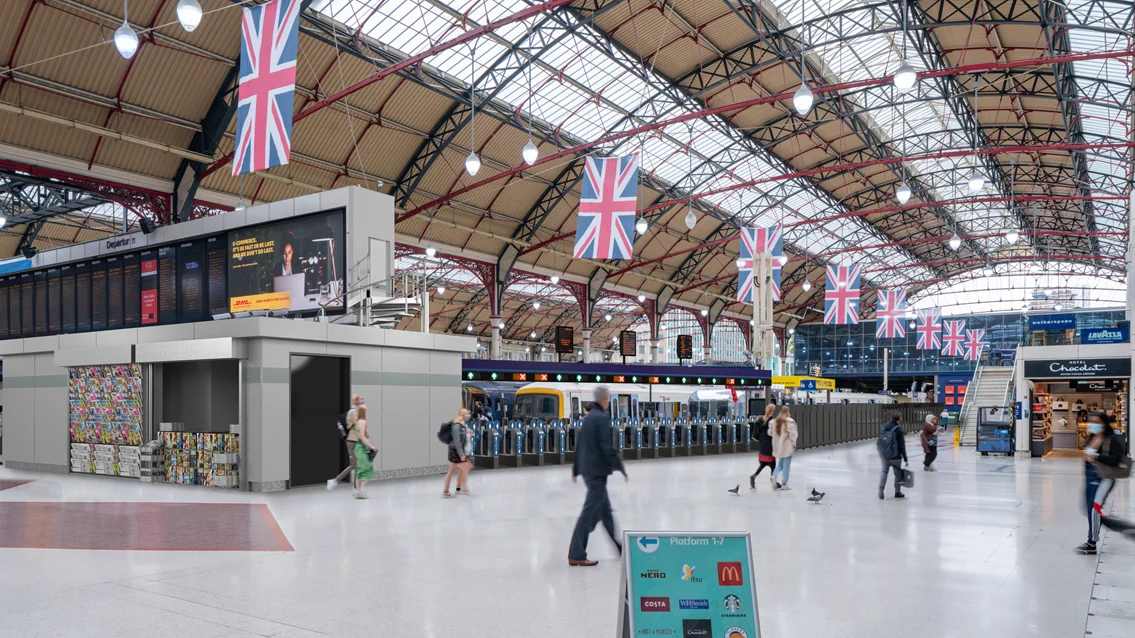
London Victoria, one of the United Kingdom’s most iconic and heavily trafficked railway hubs, is on the brink of a significant physical and operational transformation. Network Rail has officially announced the commencement of a £30 million (EUR 35 million) investment project designed to fundamentally alter the station’s passenger flow dynamics. By targeting chronic congestion points and expanding the station’s gate line infrastructure, the project aims to modernize the Victorian-era terminus for the demands of 21st-century rail travel.
This initiative is not merely a cosmetic refresh; it is a strategic engineering intervention. As a critical gateway connecting Central London to Gatwick Airport and the vibrant coastal communities of the South Coast, Victoria station serves as a daily artery for hundreds of thousands of commuters, tourists, and international travelers. This article explores the scope, logistical complexities, and long-term implications of this major infrastructure overhaul.
The Core Mandate: Addressing Congestion and Accessibility
At the heart of the project lies a simple but essential goal: fluidity. Anyone who has navigated Victoria station during the morning or evening peak hours knows the bottleneck effect created by high passenger density. The current infrastructure, while historic, struggles to process the volume of foot traffic that pours off the Kent and Sussex lines.
The £30 million investment focuses on three primary areas:
- Gate Line Expansion: The current array of 86 ticket gates is insufficient for modern throughput requirements. Network Rail plans to increase this number to 111. Crucially, this includes the addition of eight new wide-aisle accessible gates. These are specifically engineered to accommodate passengers with reduced mobility, those traveling with heavy luggage, or parents navigating the station with pushchairs.
- Concourse Reconfiguration: The area serving platforms 15 to 19 is slated for a significant expansion. By opening up this space, Network Rail aims to reduce the "crush" that often occurs when trains arrive simultaneously. Furthermore, a new, spacious access route will be established between platform 14 and the existing escalators leading to the Victoria Place shopping centre, creating a more intuitive navigation path for passengers moving between rail services and the retail concourse.
- Retail and Operational Relocation: To facilitate these spatial gains, the station’s interior footprint is being re-mapped. The Gatwick Express ticket windows are being shifted to a more prominent, accessible location to streamline the experience for airport-bound travelers. Additionally, several retail units will be relocated to ensure that the increased gate lines do not impede the overall flow of the concourse.
A Chronological Roadmap: Project Delivery
The execution of such a massive project in a live, high-traffic environment requires surgical precision. The work is scheduled to follow a phased timeline, beginning in September, with a target completion date of late 2023.
Phase 1: Preparation (September 2022)
The initial stage of the project focuses on site preparation and the relocation of the Gatwick Express ticket office. By moving this facility, contractors will clear the physical space required to install the new, wider gatelines.
Phase 2: The Kent Gatelines (November 2022)
As autumn gives way to winter, the focus will shift to the Kent gatelines serving platforms 1 through 7. This is expected to be a high-intensity period of construction, requiring careful management of passenger flow during the busy pre-holiday season.
Phase 3: The Sussex Gatelines and Final Integration (Late 2022 – Late 2023)
Following the completion of the Kent side, work will commence on the Sussex gatelines. The final months of the project will be dedicated to testing the new automated systems, integrating the expanded concourse areas, and ensuring that the new signage and accessibility features are fully operational.
Synergy with the Resignalling Programme
One of the most noteworthy aspects of this project is its integration with the concurrent £160 million (EUR 187.6 million) London Victoria resignalling programme. Rail infrastructure projects are notoriously disruptive, but by "piggybacking" the concourse improvements onto the signalling upgrades, Network Rail is adopting a strategy of concentrated disruption.
The signalling project involves replacing aging equipment on the south London lines that feed into Victoria. By coordinating the two projects, Network Rail can execute the most intrusive construction work during periods when the station is already partially or fully closed for signalling engineering. This strategy minimizes the total number of days passengers experience travel delays, effectively "bundling" the pain of construction to avoid repeat disruptions in subsequent years.
Official Perspectives: A Strategic Investment
The government has framed this investment as a vital step in maintaining London’s competitive edge as a global city. Wendy Morton, the Department for Transport’s rail minister, highlighted the broader social and economic benefits of the project.
"I am delighted to see these upgrades at London Victoria station, a true cornerstone and hub of the capital," Morton stated. "These improvements, funded by the Department for Transport, will make travel easier, more comfortable, and more accessible for millions of passengers."
From the perspective of Network Rail, the project represents a necessary evolution. The station’s architecture, while beautiful, was not designed for the volume of modern rail transit. By optimizing the space, they are effectively "future-proofing" the station against the projected growth in passenger numbers over the coming decade.
Implications: What This Means for Passengers
For the average commuter, the primary benefit will be a tangible reduction in "dwell time"—the amount of time spent standing in queues. By expanding the gate lines, the project will decrease the time it takes to exit or enter the station, particularly during peak hours.
For passengers with reduced mobility, the implications are even more significant. The increase in wide-aisle gates addresses a long-standing complaint regarding accessibility at Victoria. The ability to move through the station without navigating narrow, restrictive turnstiles or seeking manual assistance for luggage and pushchairs represents a major leap forward in inclusive design.
Furthermore, the improved wayfinding—created by opening up the area between platforms 14 and the Victoria Place escalators—will alleviate the confusion often felt by tourists or infrequent travelers attempting to navigate between different transport modes.
The Broader Context: Why Victoria Matters
London Victoria is more than just a train station; it is a critical node in the UK’s transport network. As the primary gateway for Gatwick Airport, it serves as a passenger’s first or last impression of the United Kingdom. Furthermore, the lines originating from Victoria connect some of the most densely populated commuter belts in Kent and Sussex to the heart of the West End.
The £160 million resignalling programme, coupled with the £30 million access project, creates a comprehensive package of upgrades. While the signalling works improve the reliability of the trains (reducing delays and cancellations), the station concourse upgrades improve the experience of the passenger. Together, they form a cohesive strategy to ensure that Victoria remains a viable, efficient, and welcoming hub for decades to come.
Conclusion: A Step Toward Modernity
The redevelopment of London Victoria station is a reminder of the constant maintenance required to keep a city moving. Large-scale infrastructure projects are rarely simple, often requiring years of planning and complex logistical maneuvers. However, the decision to invest £30 million into the station’s physical flow is a clear indicator of the government’s commitment to rail as a primary mode of transit.
As the project progresses through its phases toward late 2023, passengers can expect some short-term inconvenience. Yet, the long-term result—a more accessible, spacious, and efficient Victoria station—will undoubtedly be worth the effort. By prioritizing accessibility and throughput, Network Rail is ensuring that London’s historic gateway remains fit for purpose in an era defined by rapid movement and the need for inclusive, efficient public spaces.
As the construction hoardings go up and the ticket windows begin their migration, the transformation of London Victoria stands as a testament to the ongoing evolution of the British rail network—a network that is slowly but surely shedding its Victorian constraints to meet the demands of a modern, bustling metropolis.

