

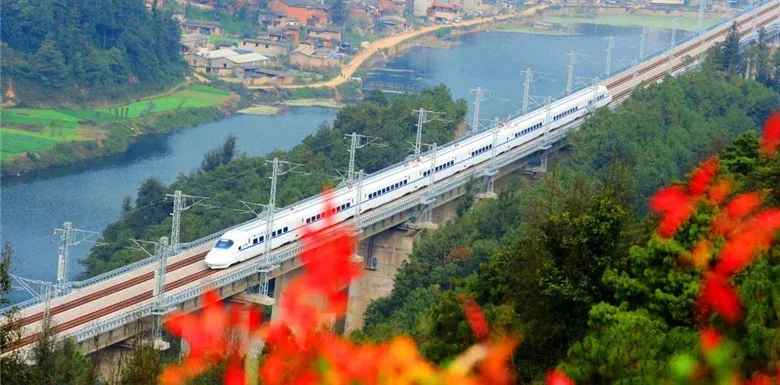
China State Railway Group (China Railway) has unveiled an ambitious, multi-decade expansion strategy that is set to redefine the nation’s logistical and economic landscape. By 2035, the country aims to boast a comprehensive railway network spanning 200,000 kilometers, with a high-speed rail (HSR) component alone reaching an unprecedented 70,000 kilometers. This monumental project is not merely an exercise in infrastructure; it is a calculated effort to modernize the Chinese economy, foster regional integration, and cement the railway as the primary backbone of the nation’s transport system.
Main Facts: The Scope of the Vision
The expansion strategy represents a massive 40% increase over the current rail network of approximately 141,400 kilometers. The centerpiece of this growth is the high-speed rail network, which is set to double in length. These new arteries are designed to facilitate high-velocity transit, with trains operating at speeds exceeding 250 km/h, effectively shrinking the vast distances of the Chinese interior and linking remote provinces to major coastal economic hubs.
Under the current directives, the government has set specific connectivity targets based on urban demographics:
- Cities with populations over 200,000: Will be integrated into the national rail network.
- Cities with populations over 500,000: Will be connected via high-speed rail services.
- Major Urban Centers (1 million+ population): Already boasting a 94.7% HSR coverage rate, these hubs will see increased service frequency and improved intermodal connectivity.
Chronology: From the 2016 Plan to the 2050 Horizon
To understand the current trajectory, one must look back to the medium and long-term railway network plan unveiled in 2016. That roadmap set the foundation for an annual investment of 800 billion yuan, a figure that has remained remarkably consistent despite global economic fluctuations.
- 2016–2020: The initial phase focused on reaching a 150,000-kilometer total network, with 30,000 kilometers specifically designated for HSR. China Railway reports that 70% of the construction scale envisioned in the 2016 plan has already been achieved, with the remaining projects currently moving through the construction pipeline.
- 2020–2035: This intermediate phase focuses on scaling the high-speed network to 70,000 kilometers and upgrading the reliability and reach of the conventional network.
- 2035–2050: The long-term vision shifts from pure physical expansion to the creation of a "Smart Backbone." By 2050, the objective is to create a fully integrated, intelligent transport system that offers seamless, reliable, and highly efficient transit across the entire country, effectively prioritizing rail over road for long-haul passenger and freight transport.
Supporting Data: Investment and Operational Metrics
The sheer financial scale of China’s rail expansion is staggering. In July 2020, investment in railway infrastructure hit 67 billion yuan (approx. USD 9.67 billion), marking a 3.6% year-on-year increase. Of that total, 50 billion yuan was earmarked specifically for "big and medium-sized" projects, reflecting an 11.3% year-on-year increase in capital allocation toward large-scale infrastructure.
Operational Performance
The effectiveness of these investments is reflected in passenger data. Since the start of the 2020 fiscal year, China has successfully brought 1,310 kilometers of new lines into commercial operation, 733 kilometers of which are high-speed lines.
The recovery in demand has been robust. In July 2020, China Railway recorded 207 million trips, a 24% increase compared to June. This translates to an average of 7.9 million passenger trips per day, signaling that despite the operational challenges of the era, the demand for rail travel remains a vital indicator of national economic health.
Official Responses and Technological Innovation
China Railway has emphasized that this expansion is not strictly about laying track; it is about "technological sovereignty." The company is aggressively investing in the entire industry supply chain to foster innovation in high-speed rail tech, signaling systems, and rolling stock.
Official statements from China Railway indicate that the high-speed network will serve as the "testbed" for these innovations. By deploying advanced technologies—such as automated train operation (ATO) and AI-driven logistics management—on HSR lines first, the company intends to refine these solutions before rolling them out across the broader, conventional rail transport system.

"The strategy aims at shifting road traffic to railway transport," a company representative noted. By providing a faster, safer, and more environmentally friendly alternative to road travel, China intends to reduce its carbon footprint while increasing the efficiency of its domestic supply chains.
Implications: The Socio-Economic Impact
The implications of a 200,000-kilometer rail network are profound, touching on geopolitics, urban planning, and environmental sustainability.
1. Economic Integration
By linking cities with populations of over 500,000 via high-speed rail, China is essentially creating a "mega-region" economy. Businesses in smaller, inland cities will gain the same level of accessibility to talent, capital, and markets as those in the traditional Tier-1 coastal cities. This is a critical component of the "Common Prosperity" initiative, aimed at reducing regional inequality.
2. Environmental Strategy
Rail transport is inherently more energy-efficient than road or air travel for long distances. By facilitating a mass shift of passenger and freight traffic from highways to rail, China is positioning its transport sector to play a significant role in meeting national emissions targets. The strategy effectively functions as a massive, infrastructure-based climate mitigation program.
3. Logistical Reliability
The focus on an interconnected backbone ensures that the supply chain is less susceptible to regional bottlenecks. By upgrading the conventional rail system in tandem with the HSR expansion, China is ensuring that freight can move with the same reliability as passengers, creating a balanced transport ecosystem.
4. Technological Leadership
By mandating that the entire supply chain participates in this expansion, China is fostering a domestic ecosystem of high-tech manufacturing. This provides the country with the expertise to potentially export these railway technologies globally—specifically to developing nations along the Belt and Road Initiative corridors, where China has already demonstrated interest in rail infrastructure development.
Conclusion
The vision outlined by the China State Railway Group is one of the most ambitious infrastructure projects in human history. By moving toward a 200,000-kilometer network by 2035, China is betting that mobility is the ultimate currency of economic growth. As the country balances current operational needs with long-term technological development, the railway is set to transition from a secondary means of transport to the primary conduit for the nation’s future.
Whether it is the daily commute of a citizen in a growing mid-sized city or the massive freight requirements of the world’s largest manufacturing sector, the steel veins of this network will define the next half-century of Chinese development. With nearly 10 billion USD in monthly infrastructure investment as a baseline, the trajectory is clear: China is laying the tracks for a future where distance is no longer a barrier to economic success.

