

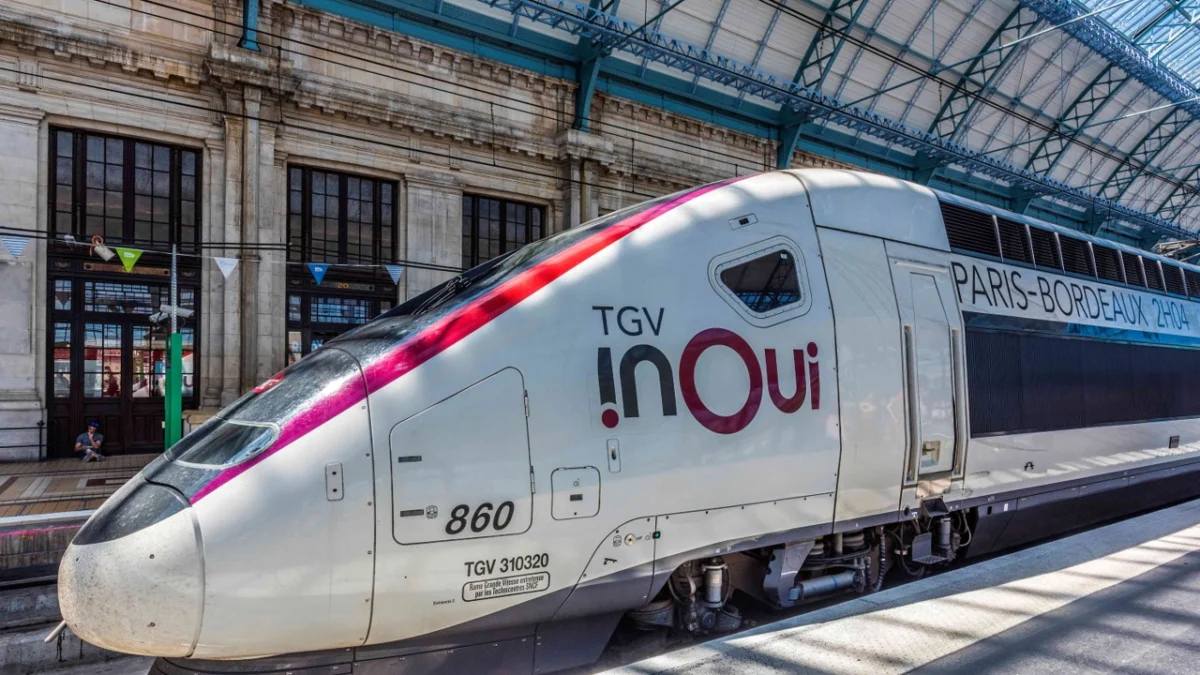
Brussels, Strasbourg, Basel – July 2027 marks the planned launch of a significant new high-speed rail connection in Western Europe. However, while the TGV INOUI service promises to link the Belgian capital to Strasbourg and the Swiss city of Basel, a notable omission has drawn sharp criticism and raised questions about regional integration: Luxembourg. The Grand Duchy, once part of a direct rail artery between Brussels and Basel, finds itself excluded from this pilot project, reigniting a broader debate about its place on Europe’s evolving high-speed rail map.
Main Facts: A New Corridor Emerges, A Historical Link Fades
A new pilot TGV INOUI high-speed rail service, a collaborative effort involving operators in Belgium, France, and Switzerland, is slated to commence operations in the summer of 2027. This innovative cross-border link aims to provide a swift and efficient connection between Brussels, Strasbourg, and Basel, with an estimated travel time of approximately five and a half hours between the Belgian capital and the major Swiss economic hub.
The service, spearheaded by French passenger rail operator SNCF Voyageurs, will initially operate on weekends – specifically Fridays, Saturdays, and Sundays – with a single train departing from Brussels around 7:00 a.m. and arriving in Basel by 12:30 p.m. The return journey is scheduled for a 2:00 p.m. departure from Basel, reaching Brussels around 7:00 p.m. While specific intermediate stops have yet to be fully detailed, the route is confirmed to traverse eastern France, leveraging the country’s extensive high-speed infrastructure. Tickets for this new premium service are anticipated to go on sale in the spring of 2027.
However, the excitement surrounding this new European rail initiative is tempered by a significant geographical bypass: Luxembourg. Despite its central location and historical role as a transit point, the Grand Duchy will not be a part of this new high-speed corridor. This exclusion has not gone unnoticed, particularly given that a direct Brussels-Basel rail link historically passed through Luxembourg, making its current omission a point of contention and concern for Luxembourgish officials and citizens alike. The decision to route the TGV INOUI service exclusively through France has prompted a re-evaluation of Luxembourg’s strategic position within the broader European rail network.
Chronology: From Historical Crossroads to Modern Byway
Luxembourg’s current predicament is not an isolated incident but rather the latest chapter in a evolving narrative concerning its rail connectivity. For decades, Luxembourg City served as a crucial node in the trans-European rail network, connecting major capitals and economic centres.
The Historical Precedent (Pre-2000s): Until relatively recently, direct international rail services regularly traversed Luxembourg. A prime example was the long-standing Brussels-Basel connection, which provided a vital link between the Benelux region, the Grand Duchy, and Switzerland. These conventional services, while not high-speed by today’s standards, offered reliable and direct travel options, embedding Luxembourg firmly within the continental rail fabric. This historical context underscores the current disappointment, as the new TGV service represents a regression rather than an advancement in direct high-speed links for Luxembourg.
The Genesis of the New TGV Service (Early-Mid 2020s): The discussions and planning for the new TGV INOUI Brussels-Strasbourg-Basel pilot project likely began several years prior to its announced 2027 launch. These negotiations would have involved SNCF Voyageurs, potentially in collaboration with Belgian and Swiss railway entities, focusing on commercially viable routes that could utilize existing high-speed infrastructure. The emphasis on a "commercial basis, without public subsidies" suggests that the operators prioritized routes with the highest potential for profitability and efficiency, which in this case led them to favor the French high-speed network.
The Announcement and Immediate Aftermath (Late 2025 – Early 2026): The formal announcement of the TGV INOUI service and its planned route, sometime in late 2025 or early 2026 (implied by the 2026 image date), immediately drew attention in Luxembourg. The revelation that the Grand Duchy would be bypassed quickly escalated into a political issue.
Luxembourg’s Political Reaction (Early 2026): MP Meris Å ehović of the environmentalist party Déi Gréng swiftly lodged a formal inquiry with the Luxembourgish government. His question explicitly highlighted the historical Brussels-Basel connection via Luxembourg and voiced concerns about the country’s "integration into the major European rail networks," reflecting a broader sentiment of being increasingly disconnected.
Government Response and Future Outlook (Early 2026 onwards): Minister of Transportation Yuriko Backes provided the official government response, confirming Luxembourg’s non-involvement in the planning discussions and citing the commercial nature of the service as a barrier to direct integration. While ruling out immediate direct inclusion, the government committed to "monitor the progress of the pilot service" and engage in future discussions with Belgian and French authorities based on its conclusions. This cautious approach suggests a hope that future phases or adaptations of the service might yet include Luxembourg, or that lessons learned could inform other international rail development initiatives. This sequence of events paints a picture of a nation grappling with its evolving role in a rapidly modernizing European transport landscape.
Supporting Data: The Broader Context of European Rail Connectivity
The exclusion of Luxembourg from the new TGV INOUI service is not an isolated incident but rather a symptom of deeper trends and challenges within European high-speed rail development. Understanding these supporting factors provides crucial context for Luxembourg’s current situation.
The Commercial Imperative vs. Public Service: Modern high-speed rail services, particularly those operating across borders, are increasingly driven by commercial viability. Operators like SNCF Voyageurs prioritize routes that offer the best balance of speed, directness, and potential passenger volume to generate revenue without relying on state subsidies. The chosen Brussels-Strasbourg-Basel route through eastern France likely capitalizes on existing, well-established high-speed lines (such as the LGV Est européenne) which allow for rapid transit and bypass the need for extensive new infrastructure or slower conventional lines that a detour through Luxembourg might necessitate. Luxembourg’s Minister Backes explicitly cited the "commercial basis, without public subsidies" as a reason for the unlikelihood of direct connection, highlighting this fundamental conflict.
Infrastructure Gaps and Technical Constraints: While Luxembourg boasts a well-maintained domestic rail network, it lacks dedicated high-speed lines capable of accommodating TGV services at their optimal speeds. Integrating a high-speed train into a network designed for conventional or regional services often means significant speed reductions, negating the very purpose of high-speed travel. Building new high-speed lines in a small, densely populated country like Luxembourg presents formidable technical, environmental, and financial challenges. The government itself has previously acknowledged these constraints, explaining that "the country’s small size, as well as technical and environmental constraints, limit the possibility of building its own high-speed line." This reality pushes operators to utilize routes where infrastructure already supports high speeds.

The European High-Speed Rail Network Map (EC 2025): The current TGV INOUI omission echoes a broader exclusion highlighted by the European Commission. In November 2025, the EC presented a strategic map outlining its vision for connecting major EU cities via high-speed trains by 2040. Luxembourg City was conspicuously absent from this ambitious plan, one of only five EU capitals (alongside Helsinki, Dublin, Nicosia, and Valletta) not included. This pattern suggests that Luxembourg faces systemic challenges in being integrated into the continent’s high-speed rail future, at least as envisioned by current strategic plans. While its small size and geographic position (surrounded by larger nations with more extensive networks) offer some explanation, it also underscores a perceived lack of direct strategic importance for high-speed through-traffic in the eyes of some planners.
The Importance of European Capitals: The exclusion of an EU capital, especially one that is a significant financial hub and hosts important European institutions, from major cross-border rail initiatives is noteworthy. Brussels, Strasbourg, and Basel are all significant European cities – Brussels as the de facto capital of the EU, Strasbourg as the seat of the European Parliament, and Basel as a major Swiss economic and cultural centre. A direct link between them has clear strategic value. However, Luxembourg’s absence raises questions about the definition of "major European cities" and the criteria used for connectivity planning. For a country that prides itself on its international outlook and role in Europe, this recurring bypass is a source of genuine concern.
Connectivity as an Economic Driver: High-speed rail connections are increasingly recognized as vital arteries for economic growth, facilitating business travel, tourism, and regional integration. Cities and regions connected by efficient rail links often see increased investment and easier movement of talent. The lack of direct high-speed access could potentially place Luxembourg at a disadvantage, making it less accessible for international business and leisure travelers who prioritize direct, fast connections. While Luxembourg has strong air links and road networks, the shift towards sustainable, efficient rail travel across Europe makes the absence of direct high-speed rail particularly impactful for its future economic competitiveness and environmental goals.
Official Responses: Navigating Disappointment and Practicalities
The exclusion of Luxembourg from the new TGV INOUI service has elicited a range of official responses, primarily from within the Grand Duchy, highlighting both disappointment and the practical realities of international rail development.
Luxembourgish Political Discontent – MP Meris Å ehović (Déi Gréng): The most vocal political reaction came from MP Meris Å ehović, representing the environmentalist party Déi Gréng. His formal question to the government underscored a significant concern: "This exclusion raises the issue of the country’s integration into the major European rail networks." This statement is more than just a complaint about a single train route; it articulates a deeper anxiety about Luxembourg’s perceived marginalization within the continent’s transport infrastructure. Å ehović’s reference to the historical Brussels-Basel connection via Luxembourg served to emphasize that the current situation represents a step backward, questioning the strategic foresight and advocacy efforts of the current government in securing such vital links. The environmentalist perspective also implicitly supports rail travel as a sustainable alternative, making the bypass even more frustrating.
The Luxembourgish Government’s Stance – Minister Yuriko Backes: Minister of Transportation Yuriko Backes offered a pragmatic, albeit somewhat resigned, explanation. She confirmed that her ministry was "not involved in the discussions or preparations for the launch of the new service." This indicates a lack of influence or inclusion at the crucial planning stages. Her key point, however, was the commercial nature of the TGV INOUI service: "the TGV will operate on a commercial basis, without public subsidies dedicated to the service." This highlights a fundamental challenge for Luxembourg: without direct financial incentives or a commercially attractive route that naturally passes through the Grand Duchy, private operators are unlikely to incur additional costs or longer travel times to include it. The Minister’s response effectively places the onus on the market forces and the operational decisions of the railway companies. While acknowledging the disappointment, her reply underscored the limitations of government intervention when a service is designed to be self-sufficient and profitable.
Commitment to Monitoring and Future Analysis: Despite the immediate setback, the Luxembourg government has stated its intention to "monitor the progress of the pilot service" and engage in discussions with Belgian and French authorities based on the conclusions drawn after its launch. This suggests a hope that if the pilot proves successful and there is sufficient demand, future phases or adaptations might consider extending or creating feeder services to Luxembourg. Furthermore, the Ministry of Transportation affirmed its ongoing efforts to "analyze the possibilities for developing new international trains, either direct or with connections at stations in neighboring countries." This reveals a strategic approach focused on improving overall connectivity, even if direct high-speed lines within Luxembourg remain challenging. It implies a recognition that while direct integration into every new high-speed line may be difficult, robust connections to adjacent high-speed hubs (like Metz or Thionville in France, or Arlon in Belgium) could serve as a viable alternative for Luxembourgish residents.
Operators’ Rationale (Implied): While no direct official statement from SNCF Voyageurs or other operators is provided in the original text, their rationale can be inferred from the context. The decision to route the TGV through eastern France likely prioritizes efficiency, speed, and existing infrastructure. France boasts an extensive high-speed network that allows for seamless, rapid travel between major cities. A detour through Luxembourg, which lacks dedicated high-speed lines, would inevitably increase travel time and operational costs, potentially undermining the commercial viability of a service designed to be competitive with other modes of transport, particularly air travel. The route via Charles de Gaulle Airport also suggests a strategy to connect major air hubs with key European cities, adding another layer of commercial logic to the chosen path.
Implications: Connectivity, Economy, and European Identity
The exclusion of Luxembourg from the new TGV INOUI service carries significant implications across various dimensions, affecting its economy, its residents, and its broader role within the European Union.
For Luxembourg: Risk of Isolation and Economic Impact:
The most immediate implication for Luxembourg is a reinforced sense of being disconnected from key European arteries. While the country is renowned for its financial sector and international institutions, its physical connectivity, particularly by rail, appears to be lagging. This could lead to several issues:
- Reduced Accessibility for Business and Tourism: Direct, fast rail links are crucial for attracting and retaining businesses and tourists. If major European cities are increasingly linked by high-speed rail while Luxembourg remains an outlier, it could become less attractive as a destination for international conferences, business headquarters, or leisure travel, potentially impacting its service-based economy.
- Impact on Residents and Commuters: Luxembourg is a highly international country with a significant proportion of cross-border commuters and expatriates. The absence of direct, efficient rail connections to major cities like Brussels (an EU capital) and Basel (a Swiss economic hub) means longer, more complex journeys, often involving multiple changes or reliance on less sustainable modes of transport like air travel or private cars. This affects quality of life and environmental goals.
- Questioning European Integration: For a founding member of the European Union and a host of crucial EU institutions, being consistently bypassed by pan-European infrastructure projects, as evidenced by both the TGV INOUI route and the EC’s 2025 high-speed rail map, raises questions about its level of integration and influence in continent-wide strategic planning. It could foster a feeling of being a periphery rather than a core European player in terms of transport.
For the Wider European Rail Network: Balancing Efficiency and Inclusivity:
Luxembourg’s situation highlights a broader challenge for European rail development:
- The Commercial vs. Public Service Dilemma: The TGV INOUI service’s commercial-only model underscores the ongoing tension between profit-driven operations and the desire for comprehensive public service. While commercial viability is essential for sustainable operations, an overreliance on it can lead to "cherry-picking" routes, leaving smaller nations or less populated areas underserved.
- Fragmented Connectivity: If each cross-border service is planned in isolation based purely on commercial factors, it risks creating a fragmented network with gaps, rather than a truly integrated and seamless European rail system. This can undermine the EU’s overarching goals of cohesion and free movement.
- The Future of "Missing Links": Luxembourg’s case brings into focus the "missing links" problem in European transport infrastructure. While individual countries develop their national networks, the cross-border connections, especially those that don’t fit a clear commercial mold, often remain underdeveloped. This requires greater political will and potentially EU-level funding to bridge these gaps.
Potential Mitigation and Future Prospects:
Despite the current setback, there are avenues for future development and mitigation:
- Feeder Services and Improved Interconnectivity: As Minister Backes suggested, focusing on improving connections from Luxembourg to existing high-speed hubs in neighboring countries (e.g., Metz for connections to French TGVs, Arlon for Belgian services) could provide a pragmatic solution. This would involve efficient regional trains and seamless transfer experiences.
- Advocacy for Future Phases: The Luxembourgish government’s commitment to monitoring the pilot service and engaging in future discussions is crucial. A successful pilot might encourage operators to explore extensions or alternative routes in subsequent phases, particularly if passenger demand for connections to Luxembourg can be demonstrated.
- EU-Level Intervention and Funding: For truly integrated European high-speed rail, there might be a need for greater EU-level coordination and potentially financial support for routes that, while not immediately commercially lucrative, serve strategic objectives of connectivity and cohesion for all member states.
- Technological Adaptations: Investment in modernizing existing lines to allow for higher speeds, even if not full TGV speeds, and improving signaling and interoperability could make Luxembourg’s network more attractive for future integration.
In conclusion, while the new TGV INOUI service promises enhanced connectivity for several European cities, Luxembourg’s exclusion serves as a stark reminder of the complexities and challenges inherent in building a truly integrated high-speed rail network across the continent. It highlights the delicate balance between commercial imperatives, existing infrastructure, and the political will required to ensure that no European capital is left behind on the tracks of progress. The coming years will reveal whether Luxembourg can successfully advocate for its reintegration or if it will continue to navigate the European landscape as a high-speed rail byway.

