

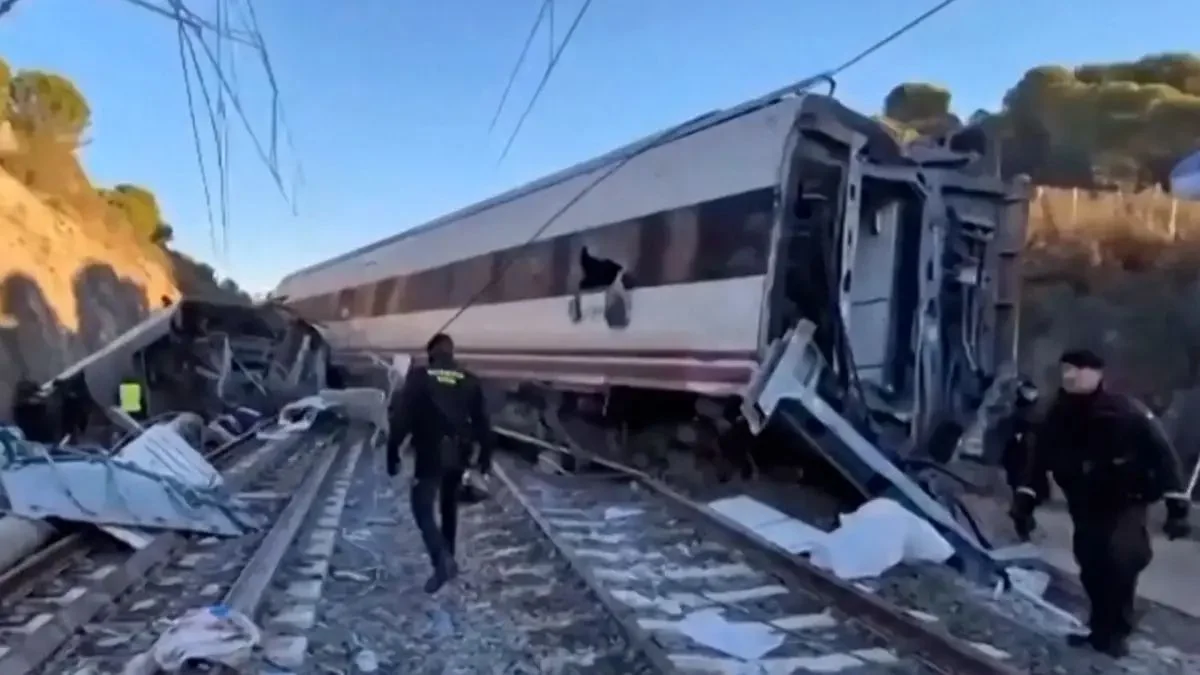
Six months after the catastrophic train collision in Adamuz claimed 46 lives, the technical investigation tasked with uncovering the truth has hit a critical impasse. According to reports emerging from the Spanish press, the newly formed multimodal investigation authority is struggling to maintain the pace and rigour required for such a complex inquiry. A confidential letter, quoted by Cadena SER, warns that the current staffing levels are "serious" and threaten to push the publication of the final report well beyond the mandatory one-year deadline.
The tragedy, which occurred on January 18, 2026, on the high-speed Madrid–Seville line, remains the subject of both intense public scrutiny and a burgeoning administrative crisis. As families of the victims await answers, the investigators themselves are sounding the alarm: they are understaffed, overworked, and currently managing four major accidents simultaneously with a skeleton crew.
Main Facts: The Adamuz Disaster and the Investigation Standoff
On the morning of January 18, 2026, the Spanish rail network experienced its most harrowing incident in recent history. An Iryo high-speed train, travelling from Málaga to Madrid, suffered a catastrophic derailment. Several railcars left the tracks and careened onto an adjacent line, directly into the path of an oncoming Alvia train operated by the state-owned rail company, Renfe. The resulting collision caused 46 fatalities and left dozens more injured, sending shockwaves through the nation’s transport infrastructure.
The technical investigation, initially overseen by the Railway Accident Investigation Commission (CIAF), has now been transferred to the newly created Independent Administrative Authority for the Technical Investigation of Railway, Maritime and Civil Aviation Accidents and Incidents. While this new body was intended to bolster independence and provide a more comprehensive, multimodal approach to safety, the transition has been marred by a severe "brain drain."
The head of the investigation has formally notified the authority’s leadership that the team is currently operating with only five investigators. Of those, only three are assigned exclusively to the Adamuz case. The remaining two are stretched thin, juggling the Adamuz file alongside three other ongoing, high-priority accident investigations. Compounding the issue is a lack of institutional memory; three of the five active investigators possess less than six months of experience in high-level rail forensic analysis.
Chronology of the Tragedy and Its Aftermath
- January 18, 2026: The collision occurs on the Madrid–Seville line. Immediate emergency response protocols are activated.
- February 2026: Preliminary findings point toward a structural failure in the track, specifically a broken rail, as the potential primary cause of the Iryo derailment.
- March – May 2026: Forensic teams begin the arduous process of collecting metallurgical evidence, reviewing thousands of pages of maintenance logs, and downloading data from the trains’ black boxes.
- June 2026: The Spanish government completes the transition of the CIAF into the new, consolidated multimodal authority.
- July 2026: Internal warnings are leaked to the press, highlighting that the investigation is stalling due to the depletion of experienced staff and a lack of support from the new administration.
Supporting Data: The Scope of the Investigation
The Adamuz investigation is not a simple review; it is an immense data-driven undertaking. The team is currently tasked with a forensic analysis that includes:
- Metallurgical Analysis: Investigating the physical integrity of the rail section and the welded joints to determine why the fracture occurred and, crucially, why it went undetected by routine maintenance sensors.
- Infrastructure Monitoring: Reviewing the logs of automated track monitoring systems that are supposed to alert controllers to track defects in real-time.
- Data Extraction: Synchronizing the digital records from both the Iryo and Alvia train control systems to reconstruct the final seconds before impact.
- Maintenance History: Cross-referencing the last five years of maintenance records for the specific segment of track where the incident occurred.
With only three investigators dedicated to this exhaustive list, the "one-year" goal for a final report is increasingly viewed by insiders as an impossibility. The letter addressed to the authority’s board stresses that the sheer volume of technical evidence necessitates a level of detail that a five-person team—with limited experience—simply cannot guarantee within the current timeframe.
Official Responses and Institutional Friction
The creation of the Independent Administrative Authority was supposed to be a hallmark of safety reform in Spain. By merging rail, maritime, and aviation investigation bodies, the government aimed to eliminate silos and create a "gold standard" for incident analysis. However, the practical application of this merger has left the rail division depleted.

When two of the most experienced rail specialists were promoted to the management of the new authority, their expertise was effectively removed from the "front lines" of the Adamuz case. While the government maintains that the new authority is robust, the silence regarding the requested additional staffing has been interpreted as a failure of oversight.
"The situation is serious," the lead investigator wrote in her correspondence. She warned that without urgent intervention—specifically the recruitment of seasoned rail engineers and forensic experts—the final report will be "compromised in both quality and scope." To date, there has been no public announcement regarding an influx of new personnel or a restructuring of the investigation’s budget.
Implications for Safety and Accountability
The distinction between the technical investigation and the ongoing judicial inquiry is critical. The technical report, overseen by the authority, is not intended to assign criminal blame or liability; its sole purpose is to identify systemic flaws and issue binding safety recommendations to prevent a recurrence.
Conversely, the judicial investigation is currently building a case for criminal negligence. Both proceedings require the same documents and evidence, which creates a logistical bottleneck. If the technical report is delayed, it leaves the judicial process in limbo, potentially postponing the quest for justice for the families of the 46 victims.
The Broken Rail Hypothesis
The leading hypothesis remains a fracture in the rail that occurred moments before the Iryo train passed over it. Marks identified on the wheels of the Iryo train and the specific deformation of the track bed are consistent with a structural failure. However, the mystery lies in the "why." If the track was inspected according to regulation, why was the fracture not detected? Was it a manufacturing defect in the steel, a failure in the ultrasonic testing equipment, or a human error in the maintenance documentation? These questions remain unanswered, and without a fully staffed investigative team, the answers may remain hidden for years to come.
The Future of Spanish Rail Safety
The delay in the Adamuz report has wider implications for the Spanish rail sector. As the country continues to expand its high-speed network, the ability of the national authority to investigate accidents with speed and expertise is paramount for public confidence. If the agency responsible for safety is seen as underfunded and under-resourced, it undermines the trust that millions of daily commuters place in the system.
Furthermore, the lack of personnel is a cautionary tale regarding the risks of institutional restructuring. While the desire to create a "multimodal" authority was well-intentioned, the cost-cutting or administrative oversights that followed have created a dangerous vacuum.
As the first anniversary of the Adamuz tragedy approaches in January 2027, the pressure on the Spanish government to provide both the necessary resources to the investigators and the long-awaited answers to the public will only intensify. Whether the authorities will heed the warnings from within their own ranks remains to be seen. For now, the investigation into Spain’s deadliest rail accident remains caught in a race against time, with the stakes—the safety of the nation’s rail network—at their absolute highest.

