

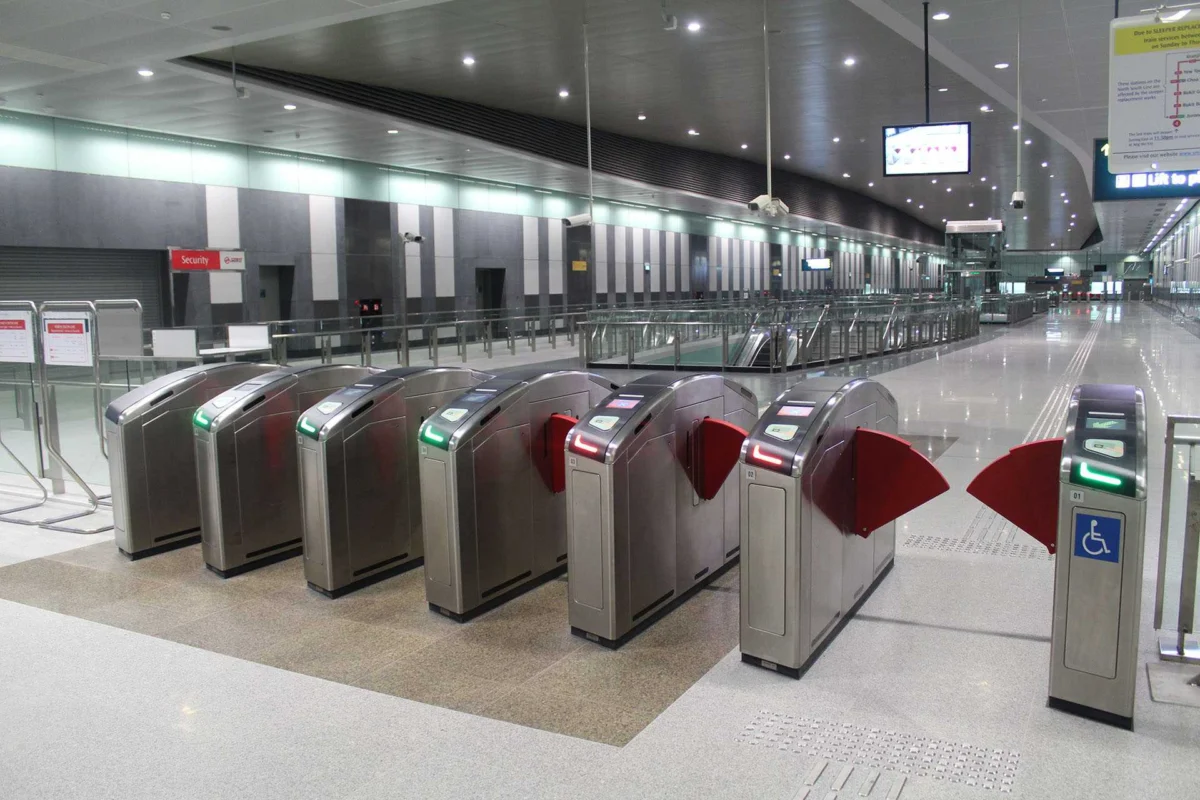
In a landmark move to future-proof its urban mobility infrastructure, Singapore’s Land Transport Authority (LTA) has officially selected Thales, the global technology leader, to spearhead a massive modernization project for its Automatic Fare Collection (AFC) gates. This multi-year initiative is set to redefine the commuter experience across the nation’s extensive Mass Rapid Transit (MRT) network, ensuring that Singapore remains at the forefront of digital transit innovation.
The Core Mandate: Standardizing the Commuter Experience
The contract, which spans a seven-year implementation period, focuses on the modernization and standardization of 1,350 AFC gates. By replacing legacy systems with state-of-the-art technology, the LTA aims to create a seamless, cohesive transit environment. The project covers the backbone of the city-state’s rail network, including the North-South Line (NSL), the East-West Line (EWL), and the Circle Line (CCL). Furthermore, the contract integrates the upcoming Jurong Region Line (JRL), ensuring that new infrastructure is launched with the latest in fare-collection standards from day one.
The new AFC gates are characterized by their ergonomic, future-ready design. Featuring slimmer swing flaps, the gates are specifically engineered to accommodate a diverse demographic, ranging from families with strollers and travelers with luggage to commuters with varying mobility needs. Beyond physical design, the gates are fully equipped with cutting-edge contactless technologies, cementing Singapore’s commitment to a cashless, friction-free transport ecosystem.
Chronology of the Rail Network: A Legacy of Expansion
To understand the significance of this project, one must look at the historical and operational context of the lines involved.
The North-South Line (NSL): The Pioneer
As Singapore’s inaugural MRT line, the NSL represents the foundation of the city’s rail transit. Spanning 45 kilometers and serving 27 stations, it acts as a critical artery stretching from Jurong East to Marina South Pier. The line serves numerous mature residential estates, acting as a transit lifeline for hundreds of thousands of daily commuters. Its importance is underscored by its eight major interchanges, which weave the NSL into the fabric of the wider network, connecting seamlessly to the EWL, CCL, Downtown Line, North East Line (NEL), and the Bukit Panjang LRT.
The East-West Line (EWL): The Trans-Island Link
The EWL remains the longest train line in operation in Singapore. Stretching 57 kilometers with 35 stations, it provides a vital link between the western industrial hub of Tuas Link and the eastern residential haven of Pasir Ris. By bridging the gap between Changi Airport and the recreational zones of the east, the EWL is the primary conduit for both international travelers and local residents, making the modernization of its gates essential for managing high-density passenger flows.
The Circle Line (CCL): The Medium-Capacity Successor
Singapore’s first medium-capacity line, the 35-km Circle Line, serves 30 stations and represents a pivot toward orbital connectivity. Since its inception, it has been a testament to technological prowess, as the country’s second fully automated, driverless line. The network is currently nearing a milestone: the "closing of the loop." With the completion of CCL6—a 4-km extension comprising three new stations connecting HarbourFront to Marina Bay—the line will truly form a circle by 2025. Tunneling works for this project, which began in 2019, signify the final stage of an ambitious infrastructure plan that enhances connectivity to the central business district.
The Jurong Region Line (JRL): The Western Frontier
Looking toward the future, the JRL is the crown jewel of western Singapore’s transit expansion. Spanning 24 km and featuring 24 stations, the line is designed to catalyze growth in the Jurong district. With three key interchanges at Boon Lay, Choa Chu Kang, and Jurong East, the JRL will be serviced by 62 three-car driverless trains, with the flexibility to expand to four-car configurations as ridership demand matures. With an expected opening in 2029, the JRL is bolstered by auxiliary projects, such as the Jurong East Integrated Transport Hub, for which the construction contract was recently awarded to the China Communications Construction Company.

Technical Specifications and Design Philosophy
The selection of Thales for this project is not merely an operational decision but a strategic technological alignment. The new AFC gates are being developed with a focus on "Universal Design."
- Ergonomic Efficiency: The shift to slimmer swing flaps reduces the physical footprint of the gates while increasing the throughput rate. This is critical for preventing bottlenecks during peak hour surges at major interchanges.
- Contactless Integration: The gates are built to support the latest iterations of contactless payment, including mobile-based NFC payments, bank cards, and smart-device tokens. This integration aligns with Singapore’s Smart Nation initiative.
- Scalability: By standardizing hardware across the lines, the LTA simplifies maintenance protocols. Spare parts, diagnostic software, and technician training will now be uniform across the entire network, significantly reducing the "Total Cost of Ownership" for the public transport operator.
Implications for the Transit Landscape
The modernization of 1,350 gates carries profound implications for the efficiency of the Singaporean transit system.
1. Enhanced Passenger Throughput
As the population grows and tourism recovers to pre-pandemic levels, the ability to process passengers quickly is paramount. The new gates utilize advanced sensors to detect passenger movement, allowing for faster opening and closing cycles. This reduces the "dwell time" of commuters at the gate line, which in turn mitigates congestion within station concourses.
2. Operational Resilience
Legacy fare collection systems are often prone to mechanical wear and software obsolescence. By replacing these with modern, standardized units, the LTA is effectively lowering the probability of systemic failures that cause delays. Furthermore, the standardization allows for easier system-wide updates, ensuring that security protocols and fare algorithms can be pushed to all stations simultaneously.
3. Sustainability and Future-Proofing
The new gates are designed with energy-efficient components, contributing to the LTA’s broader sustainability goals. By reducing power consumption and utilizing durable materials, the authority ensures that the infrastructure remains viable for decades, rather than requiring frequent, resource-heavy replacements.
Strategic Outlook: A Global Benchmark
Singapore’s decision to upgrade its AFC infrastructure serves as a global case study for metropolitan rail authorities. In an era where digital payment platforms are rapidly evolving, the physical interface—the gate—must be capable of adapting to software changes without necessitating hardware overhauls. Thales, having worked on various complex transit projects globally, brings a level of expertise that ensures the new gates will remain relevant as payment technologies shift toward biometric and ultra-wideband (UWB) solutions in the coming years.
The integration of the JRL into this modernization scope is particularly noteworthy. By ensuring that the JRL opens with the same gate technology as the older, legacy lines, the LTA creates a seamless experience for the commuter, who can travel from a 1980s-era station on the NSL to a 2029-era station on the JRL without encountering a change in user interface or ticket validation process.
Conclusion
The partnership between the Land Transport Authority and Thales marks a significant milestone in the evolution of Singapore’s urban mobility. By investing in standardized, ergonomic, and tech-forward fare collection gates, the government is not just fixing a technical component of the rail system; it is enhancing the daily quality of life for millions of citizens. As the NSL, EWL, CCL, and the upcoming JRL undergo this transformation, Singapore reinforces its status as a world leader in transit efficiency, connectivity, and technological integration. The next seven years will be a period of intense construction and calibration, but the result will be a more resilient, accessible, and intuitive rail network for all.

