

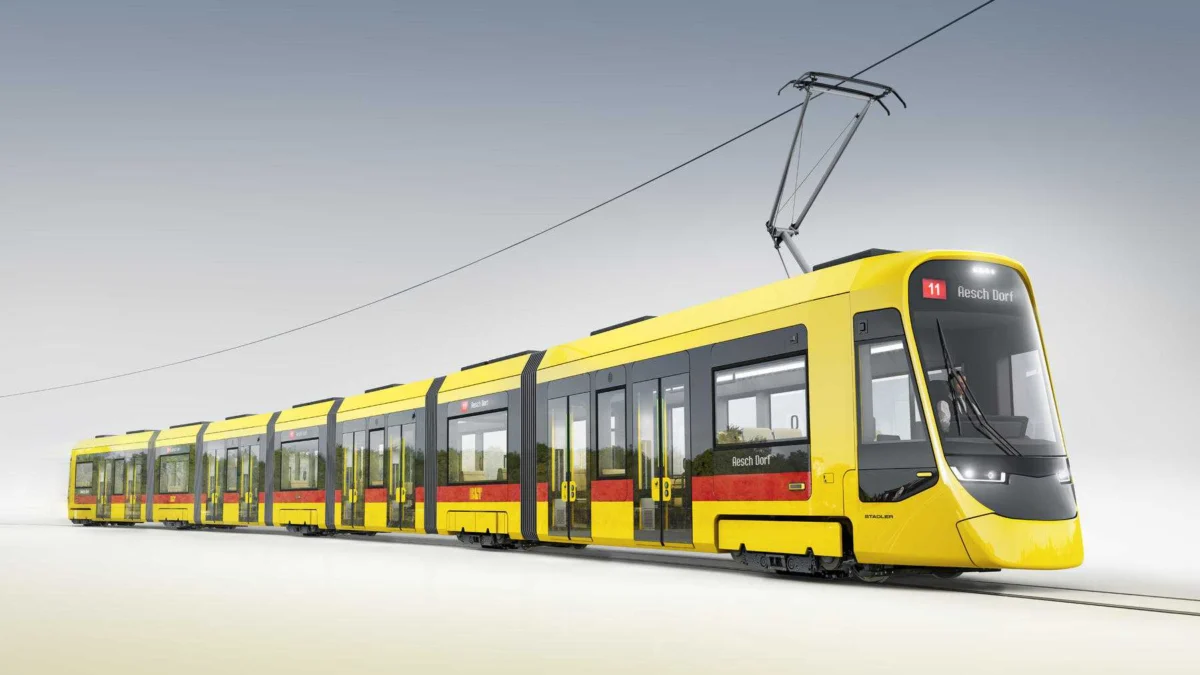
Introduction: A New Era for Baselland Transport
The public transport landscape in the Basel region is poised for a significant transformation. Baselland Transport (BLT) has officially finalized a landmark contract with Swiss rail giant Stadler for the procurement of 25 "Tina" trams. This deal, representing a major infrastructure investment, marks a definitive shift toward modern, high-comfort, and sustainable urban mobility. By replacing aging infrastructure with cutting-edge technology, BLT is positioning itself at the forefront of European tramway innovation.
The new fleet, manufactured at Stadler’s primary production facility in Bussnang, Switzerland, will begin its transition into service starting with the December 2023 timetable change, with full integration continuing through 2024 and 2025.
Main Facts: The Scope of the Procurement
The procurement of 25 Tina trams is a multi-million-franc endeavor designed to revitalize the BLT fleet. The acronym "Tina," which stands for Total integrierter Niederflurantrieb (Total Integrated Low-floor Drive), represents Stadler’s latest generation of light rail vehicles.
Key specifications of the contract include:
- Total Units: 25 vehicles.
- Manufacturing Location: Bussnang, Switzerland.
- Deployment Timeline: Initial entry into service in December 2023, with subsequent deliveries throughout 2024 and 2025.
- Operational Goal: Full replacement of the legacy Schindler tram fleet, which has served the region for over four decades.
- Funding Structure: The project is backed by a collaborative funding framework involving the Swiss federal government and the cantons of Basel-Landschaft, Basel-Stadt, and Solothurn.
BLT will hold the distinction of being the first rail operator in Switzerland to deploy the Tina platform, signaling a significant vote of confidence in Stadler’s engineering prowess.
Chronology of the Project
The journey toward this fleet renewal has been a multi-year process characterized by rigorous planning and strategic procurement phases.
Early 2020: The Rise of the Tina Platform
The Tina platform gained international attention when Darmstadt-based operator HEAG mobilo placed an initial order for 14 units in January 2020. This early adoption served as a proof-of-concept for the platform’s technical viability.
February 2021: The Selection Phase
BLT formally announced its selection of Stadler as the preferred supplier for its new fleet. This selection followed a comprehensive tender process that evaluated technical performance, economic efficiency, and alignment with BLT’s long-term sustainability goals.
Late 2021: Financial Authorization
Following the selection, the BLT Board of Directors moved to finalize the legal and financial architecture of the deal. They authorized the necessary credit lines and approved the final technical specifications, ensuring that all regulatory requirements for federal and cantonal funding were met.
December 2023 and Beyond: Implementation
The project enters its final, most visible phase in December 2023, as the first units transition from the factory floor to the tracks, marking the start of a multi-year retirement plan for the 40-year-old Schindler trams.
Supporting Data: Technical Innovations and Passenger Comfort
The Tina tram is more than just a replacement vehicle; it is an engineering overhaul designed to improve both the passenger experience and operational overhead.

Passenger Experience
Stadler’s design philosophy for the Tina focuses on "total accessibility." The low-floor design is consistent from the first door to the last, eliminating interior steps that often impede passenger flow and accessibility for those with reduced mobility or parents with strollers.
- Capacity: Each unit features 96 seats, designed with an emphasis on ergonomic comfort.
- Ambiance: The interior is fully air-conditioned and features massive panoramic windows, providing a modern, airy atmosphere.
- Technology: An integrated, state-of-the-art passenger information system will provide real-time updates, ensuring seamless connectivity for commuters.
Engineering and Maintenance
One of the most notable features of the Tina is the newly designed bogie system. These components are critical for:
- Smooth Operation: The bogies are engineered to minimize vibration, ensuring a quiet and comfortable ride even on older tracks.
- Economic Efficiency: By optimizing the contact between the wheels and rails, the design reduces wear and tear, significantly lowering long-term maintenance costs for BLT.
- Safety Features: Each unit will be equipped with an integrated collision warning system, a safety standard that BLT has successfully implemented on other parts of its network, such as the Waldenburg railway. Furthermore, the units are "future-proofed," pre-equipped to accommodate the installation of sliding steps on all double doors if required in the future.
Official Responses: Strategic Vision
The procurement has been lauded by both BLT leadership and the manufacturer as a "win-win" for the Swiss transport sector.
BLT Director Andreas Büttiker expressed his enthusiasm for the project, noting the balance between innovation and practicality. "The Tina tram was designed from scratch. The spacious interior and large panoramic windows make the innovative vehicle particularly impressive," Büttiker stated. "At the same time, the completely newly designed bogies guarantee the smooth running of the vehicle as well as low wear on wheels and rails. For us, this is the ideal combination that will allow us to satisfy customer needs and economic efficiency in the best possible way."
For Stadler, the BLT contract represents a significant milestone. Having secured orders for 50 Tina trams in a very short span—including the initial 14 for Darmstadt and a subsequent option for 11 more exercised in 2021—Stadler has cemented the Tina as a premier choice for European transit authorities looking to modernize their urban fleets.
Implications for the Future of Swiss Transit
The introduction of the Tina fleet carries several long-term implications for the Basel region and the wider Swiss public transport sector.
Economic and Environmental Sustainability
By replacing 40-year-old rolling stock, BLT is making a significant leap in energy efficiency. Modern power electronics and regenerative braking systems mean that the new trams will consume significantly less energy per passenger kilometer than their predecessors. This aligns with the broader Swiss climate goals of reducing carbon emissions in the transport sector.
Regional Connectivity
The collaboration between the cantons of Basel-Landschaft, Basel-Stadt, and Solothurn highlights the importance of cross-cantonal cooperation in maintaining a high-quality transport network. As these regions continue to grow, the ability to move people efficiently across municipal boundaries becomes increasingly vital for the regional economy.
Setting a New Benchmark
The success of the Tina platform suggests a shifting trend in tram design. Operators are moving away from purely utilitarian vehicles toward "experience-based" transport. By prioritizing panoramic views and high-end interior design, BLT is effectively competing with private vehicle ownership, making the tram a more attractive option for daily commuters.
The Lifecycle of the Fleet
The retirement of the Schindler trams—which have been the backbone of the BLT fleet for over four decades—is an emotional transition for many, but a necessary one for a modernizing city. The new Tina trams are expected to provide a similar, if not longer, service life, underpinned by a more sophisticated maintenance regime made possible by their modular design.
Conclusion
The procurement of 25 Tina trams is a clear indicator of BLT’s commitment to service excellence. By investing in Swiss-made, high-capacity, and passenger-focused technology, BLT is ensuring that the Basel region remains a leader in public transport efficiency. As the first units begin to roll out in late 2023, passengers can expect a quieter, more comfortable, and more reliable commuting experience. For the rail industry at large, the Tina platform stands as a testament to the power of design-led engineering, proving that even in the world of heavy public transit, user comfort and operational efficiency can, and should, go hand in hand.

