

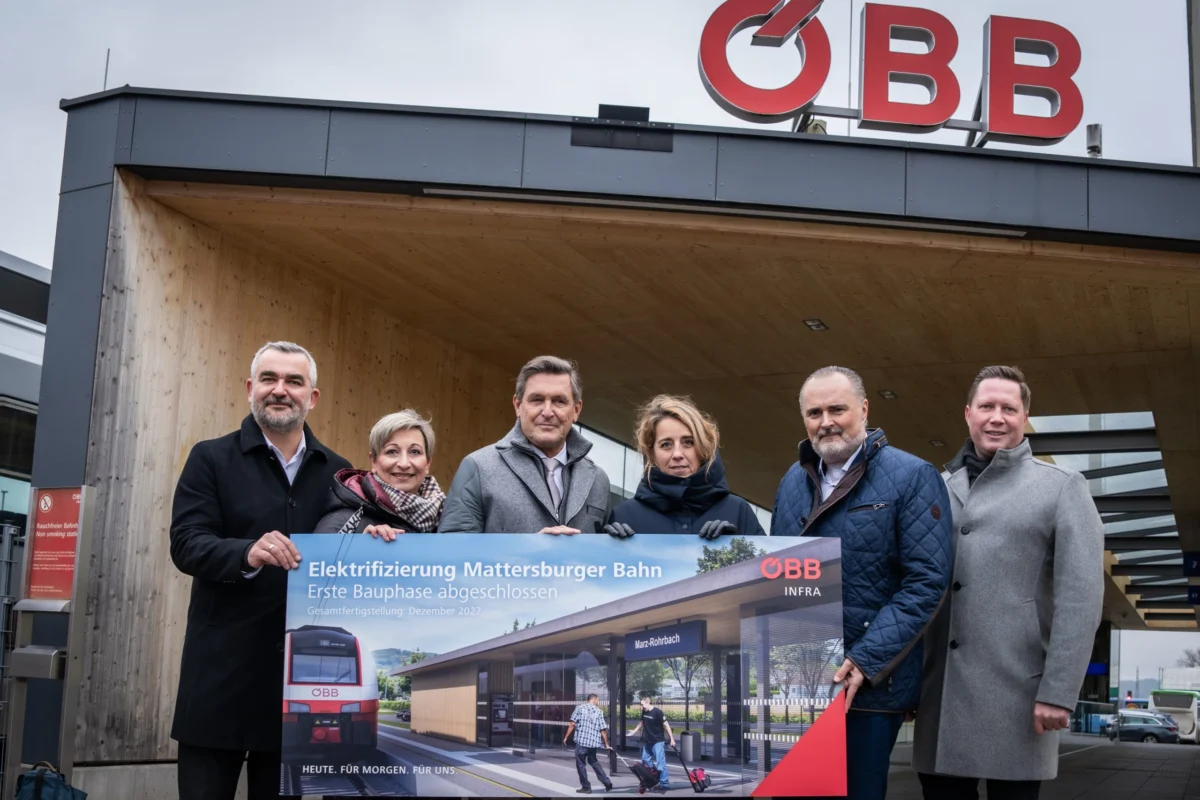
The Austrian Federal Railways (ÖBB) has reached a significant milestone in its ambitious nationwide infrastructure expansion plan. With the successful completion of the initial phase of the Mattersburg line modernization, the region is one step closer to a fully electrified, high-capacity, and accessible rail network. This €143 million project, slated for full completion by 2027, serves as a cornerstone of Austria’s broader commitment to climate neutrality and regional connectivity.
By replacing aging infrastructure with state-of-the-art electric systems, modern station facilities, and improved safety measures, the ÖBB is transforming the Mattersburg line from a conventional regional link into a modern artery for sustainable mobility.
The Scope of the Project: Bridging the Gap to 2027
The Mattersburg line, which stretches from the major hub of Wiener Neustadt through Mattersburg to Loipersbach-Schattendorf and onward to the Hungarian border at Sopron, has long been a vital lifeline for local commuters. However, the existing infrastructure—largely reliant on diesel-powered operations—has reached the limits of its efficiency.
The current investment plan, totaling approximately €143 million, encompasses a comprehensive overhaul of the rail corridor. Key components of this massive undertaking include:
- Full Electrification: The transition from diesel to electric traction will significantly reduce the carbon footprint of regional transit, aligning with Austria’s 2040 climate goals.
- Station Modernization: Six stations along the route are being completely redesigned to ensure full accessibility for passengers with limited mobility, families with strollers, and cyclists.
- Track Renewal and Capacity Expansion: To handle increased traffic and improve reliability, the project includes partial track doubling in critical sections, alongside complete track renewal.
- Safety Infrastructure: A priority of the modernization is the elimination of dangerous level crossings, which are being replaced by modern underpasses to enhance safety for both motorists and rail passengers.
- Multimodal Integration: The plan incorporates the construction of new Park & Ride and Bike & Ride facilities at five stations, facilitating "last-mile" connectivity for residents of the Burgenland region.
- Technical Upgrades: The project includes a complete overhaul of signaling systems, drainage, cabling, and energy-efficient LED lighting across the entire line.
Chronology of Progress: From Foundations to Future-Ready Rail
The modernization effort is a multi-year project that requires careful logistical coordination to minimize the impact on current rail users.
Phase 1: Setting the Foundation (October – November 2025)
The initial phase, which concluded in late November 2025, was primarily technical. Engineering teams focused on the "invisible" but vital task of driving piles for the foundations of the contact poles. These poles are the backbone of the electrification system, designed to support the overhead catenary wires that will power the future electric fleet. Following the successful completion of this phase, normal train operations—including the crucial late-night services—have been fully restored to the line.
Phase 2: The 2026 Main Construction Block
The most intensive work is scheduled for 2026. The ÖBB has announced a significant service interruption between Wiener Neustadt Hbf and the Sopron border crossing, scheduled from February through December 2026. During this ten-month window, contractors will undertake the heavy lifting: installing the electric overhead lines, completing the track doubling sections, and finalizing the structural work on the underpasses and station platforms.
Phase 3: Commissioning and Integration (2027)
By 2027, the focus will shift to testing and commissioning. The goal is to integrate the modernized line into the national grid and launch a fully electric timetable. This final phase will ensure that all signaling, communication, and safety systems meet the rigorous standards of the European Rail Traffic Management System (ERTMS), marking the formal conclusion of the project.

Strategic Significance: Why the Mattersburg Line Matters
While much of the media attention regarding rail infrastructure in Europe focuses on massive high-speed international corridors, the ÖBB has consistently emphasized that the "regional rail network is the backbone of the Austrian transport strategy."
The Mattersburg line is not merely a local connection; it is a critical cross-border link. By facilitating seamless travel between the Austrian interior and the Hungarian border, the project enhances the economic cohesion of the Burgenland region. As urban density increases in the areas surrounding Wiener Neustadt, the demand for reliable, high-frequency, and environmentally friendly transport has surged.
The investment reflects a shift in policy from prioritizing road expansion to favoring rail-based alternatives. By making the train more comfortable, faster, and more accessible than driving, the project aims to shift a significant percentage of daily commuters from private automobiles to public transport.
Official Perspectives: Shaping the Future of Mobility
The project has garnered high-level support from government and municipal leaders, who view it as a catalyst for regional development.
The Federal View: Peter Hanke
Peter Hanke, the Federal Minister for Innovation, Mobility, and Infrastructure, visited the construction site to highlight the government’s commitment to the project. "The electrification of the Mattersburg railway line is a decisive step towards modern, efficient, and environmentally friendly mobility in Burgenland," Hanke stated.
He emphasized that infrastructure is about more than just moving people; it is about social equity and safety. "By expanding the railway infrastructure, we are not only creating an attractive alternative to private transport, but also increasing safety by eliminating level crossings and replacing them with underpasses," he added.
The Local View: Mayor Claudia Schlager
For the municipality of Mattersburg, the project represents an investment in the city’s quality of life. Mayor Claudia Schlager noted that the railway has been central to the identity of the town for decades.
"The Mattersburg line has played a central role in the region’s public transport network for decades," said Mayor Schlager. "Electrification and modernization bring real improvements for all commuters and for everyone who depends on reliable connections every day. The upgrades—from accessible stations to quieter and more environmentally friendly transport—add value to Mattersburg and strengthen our city as an attractive place to live and work."

Implications for the Burgenland Region
The impact of this €143 million investment extends far beyond the train tracks.
Economic Revitalization
Reliable transport infrastructure is a key factor for businesses choosing to set up operations in the region. By providing a high-capacity link to the larger employment hub of Wiener Neustadt and the economic centers beyond, the modernized line acts as an economic driver. It expands the labor pool for local companies and increases the accessibility of the region for tourism.
Environmental Impact
The environmental implications are profound. Replacing diesel locomotive traffic with electric trains powered by renewable energy sources (which dominate the Austrian rail power mix) will significantly lower regional greenhouse gas emissions. Furthermore, the noise reduction associated with modern electric rolling stock—compared to older diesel engines—will improve the living environment for communities situated directly along the rail corridor.
A Model for Future Projects
The Mattersburg project is being monitored by transport planners as a potential blueprint for other regional rail upgrades. The successful integration of Park & Ride and Bike & Ride facilities demonstrates a holistic approach to "last-mile" connectivity, proving that rail modernization is most effective when it is paired with auxiliary infrastructure that encourages transit usage from the moment a commuter leaves their home.
Conclusion: A Turning Point for Austrian Rail
As 2027 approaches, the Mattersburg line stands as a symbol of progress in an era where sustainable mobility is no longer a luxury but a necessity. Through the collaborative efforts of the ÖBB, federal ministers, and local municipal leaders, the project is successfully navigating the complexities of modern infrastructure development.
While the 2026 construction phase will undoubtedly present temporary challenges for daily commuters, the long-term rewards are clear. A safer, faster, cleaner, and fully accessible railway will redefine the daily commute for thousands of Burgenland residents. By 2027, when the first electric train glides silently out of the newly modernized stations, the region will have successfully future-proofed its transport network, ensuring that the Mattersburg line remains a vibrant, essential, and sustainable link for generations to come.
The commitment shown by the Austrian authorities to this regional route confirms that the path to a green future is paved with steel rails, catenary wires, and a vision for a more connected nation.

