

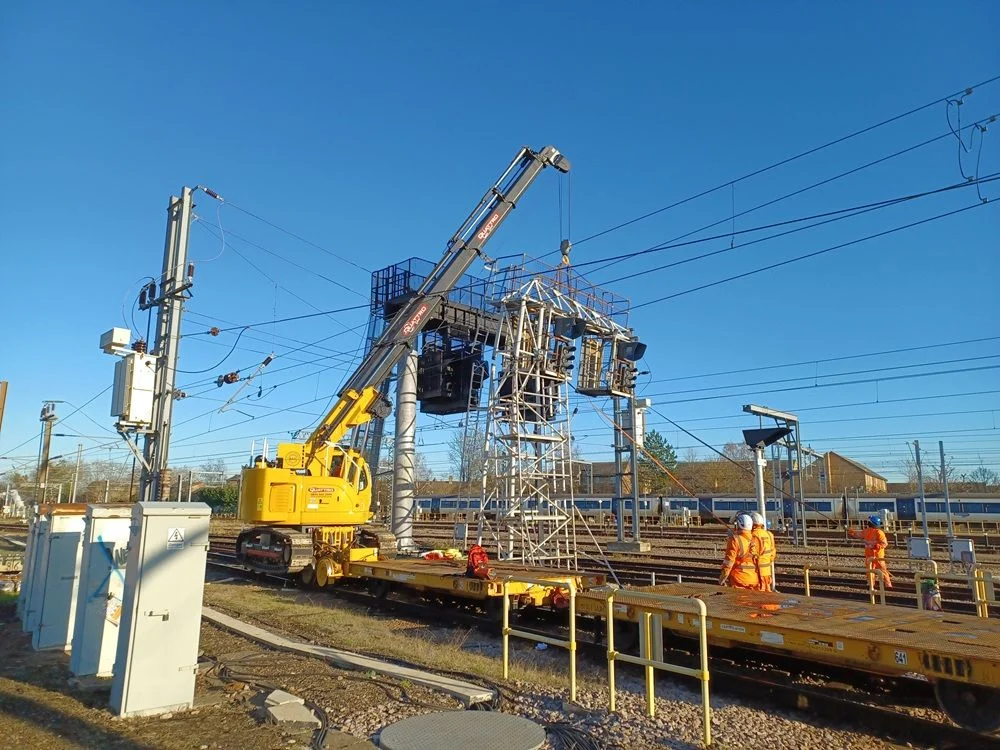
The landscape of British rail infrastructure reached a pivotal milestone in early 2026 as Alstom, a global leader in smart and sustainable mobility, successfully delivered Phase Two of the Cambridge Resignalling, Relock and Recontrol (C3R) project. This endeavor represents the largest resignalling contract ever undertaken by Alstom in the United Kingdom, signaling a paradigm shift in how regional rail networks are managed, maintained, and modernized.
Executed during a high-stakes 11-day blockade over the 2025-2026 winter holiday period, the project saw the decommissioning of legacy systems that had served the region for over four decades. In their place, a suite of digital-ready technologies was installed, promising a new era of reliability, safety, and capacity for one of the UK’s most vital economic and academic hubs.
Main Facts: A Modernization Masterpiece
The C3R project is a comprehensive overhaul of the signaling infrastructure surrounding Cambridge, a critical junction that connects London with East Anglia and the Midlands. The primary objective of the project is to replace aging mechanical and early electronic signaling equipment with modern, digital solutions that can handle the increasing demands of a growing passenger and freight network.
The Scope of Phase Two
Phase Two of the C3R project focused on the core Cambridge station area and its immediate northern and southern approaches. The delivery of this phase is significant not only for its scale but for the complexity of integrating new digital interlocking systems with existing track layouts.
Key deliverables of this phase included:
- The decommissioning of the Cambridge Power Signal Box (PSB).
- The installation of Alstom’s proprietary Smartlock 400 interlocking technology.
- The migration of control to the MCS Infinity platform.
- The total renewal of over 100 signals and 76 points machines.
- The upgrade of nine level crossings to modern safety standards.
Strategic Importance
Cambridge is more than just a destination; it is a critical node in the UK’s rail network. The lines passing through the city serve commuters to London King’s Cross and Liverpool Street, cross-country travelers heading toward Birmingham and the North, and essential freight traffic coming from the Port of Felixstowe. By modernizing this bottleneck, Network Rail and Alstom are effectively future-proofing the economic engine of the East of England.
Chronology: 11 Days of Precision Engineering
The delivery of Phase Two was a logistical feat that required months of planning and a "military-grade" execution during the 2025 Christmas and 2026 New Year period.

The 11-Day Blockade (December 25 – January 5)
To minimize long-term disruption, Network Rail authorized an 11-day total closure of Cambridge station and adjacent routes. This "blockade" strategy allows engineers to work around the clock without the constraints of nightly "hand-backs" to operational traffic, which often slows down major infrastructure projects.
- Christmas Day, Midnight: As the region celebrated the holiday, the Cambridge PSB signal panel was permanently switched off. Having been the "brain" of the regional network for over 40 years, its retirement was marked by the word “FAREWELL” appearing on the display screens—a poignant moment for the generations of signallers who had manned the station.
- December 26 – December 30: Massive mobilization of labor. Over 250 specialists per shift descended on the tracks. This period focused on the physical removal of old signals and the installation of 300+ axle counter sections—the digital sensors that track train positions.
- December 31 – January 3: Testing and Commissioning. With the hardware in place, Alstom engineers began the rigorous process of software integration. Using the Smartlock 400 system, every route, signal, and point machine was tested against simulated and actual movements to ensure fail-safe operation.
- January 4 – January 5: Final safety checks and staff training. Before the station could reopen to the public, signallers at the new control center had to be fully briefed on the MCS Infinity interface.
- January 5, Morning: The project was handed back to Network Rail on time, allowing the first passenger services of the New Year to run under the control of the new digital system.
Supporting Data: The Technical Backbone of C3R
The sheer volume of work completed during Phase Two is reflected in the technical data provided by Alstom and Network Rail. To understand the scale of the "largest resignalling project" in Alstom’s UK history, one must look at the components involved:
Hardware and Infrastructure
- Total Work Hours: Over 50,000 hours were logged during the 11-day blockade across 23 shifts.
- Signals: More than 100 new LED signals were installed. These units require less maintenance and offer better visibility for drivers compared to the legacy filament-bulb versions.
- Points Machines: 76 new points machines (the mechanisms that move the tracks) were installed and tested.
- Axle Counters: Over 300 axle counter sections now provide high-precision data on train locations, replacing old-fashioned track circuits that were prone to failure during wet weather or leaf-fall seasons.
- Signalled Routes: 323 distinct routes were programmed into the new interlocking system.
Digital Innovation: Smartlock and MCS Infinity
The core of the upgrade lies in the Smartlock 400 interlocking system. Unlike the mechanical levers or hard-wired relays of the past, Smartlock is a computer-based system that ensures trains are only allowed to move when it is safe to do so.
Key advantages of Smartlock 400 include:
- Flexibility: It allows for easier modifications to the track layout in the future.
- Reliability: With fewer moving parts than traditional relays, the risk of component failure is drastically reduced.
- ETCS Readiness: The system is fully compatible with the European Train Control System (ETCS) Level 2. This means that when the UK eventually moves toward "in-cab" signaling (where signals are displayed on a screen inside the train rather than on the trackside), the Cambridge infrastructure will already be prepared.
Complementing the interlocking is the MCS Infinity control platform. This provides signallers with a high-definition, intuitive interface to manage traffic, allowing for faster recovery from delays and more efficient routing of trains during peak hours.
Official Responses and Project Successes
The successful completion of Phase Two has been hailed as a triumph of collaboration between the private sector and the public infrastructure manager.
Meldreth Road: A Safety Milestone
One of the standout successes of Phase Two was the early completion of the Meldreth Road level crossing upgrade. Originally slated for a longer closure, the crossing reopened a full week ahead of schedule.

The new configuration at Meldreth Road features:
- Full Barriers: Replacing half-barriers to prevent motorists from "weaving" around them.
- CCTV Integration: The crossing is now remotely monitored and operated from a central control point, integrated directly with the main signaling system.
- Enhanced Pedestrian Safety: Improved detection systems ensure that the barriers remain open if a pedestrian or vehicle is detected on the tracks.
Financial and Contractual Context
The C3R project is funded through a £200 million investment program by Network Rail. Alstom’s portion of this—a £130 million contract awarded in 2022—is the largest single contract ever awarded by Network Rail under the Major Signalling Framework Agreement (MSFA). This framework is designed to foster long-term partnerships between Network Rail and key suppliers, ensuring consistency in technology and delivery standards across the UK network.
Implications: The Future of Rail in East Anglia
The completion of Phase Two is not the end of the journey for Cambridge, but rather the conclusion of its most complex chapter. The implications of this project stretch far into the next decade.
Improved Reliability for Passengers
For the thousands of passengers who use Cambridge station daily, the immediate benefit will be a reduction in "signaling faults." Under the old system, a single blown fuse or a corroded wire in the 40-year-old PSB could bring the entire station to a standstill. The new digital system features redundancy—meaning if one component fails, a backup takes over immediately without disrupting service.
Environmental Impact
By optimizing train movements and reducing the time trains spend idling at red signals, the C3R project contributes to a more energy-efficient railway. Furthermore, Alstom’s digital systems require significantly less physical cabling and trackside hardware, reducing the carbon footprint associated with manufacturing and maintaining the infrastructure.
The Road to 2027: Phases Three and Four
With Phase Two successfully integrated, the focus now shifts to the remaining segments of the C3R program:
- Phase Three (2026): This phase will focus on the re-control of the Ely–Norwich route. This is a vital link for regional connectivity and freight. A major component of this phase will be the modernization of numerous rural level crossings, bringing them up to the same high safety standards seen at Meldreth Road.
- Phase Four (2027): The final stage will bring the Newmarket and Bury St Edmunds routes into the new digital signaling fold. Once completed, the entire Cambridge region will operate under a unified, state-of-the-art control system.
Conclusion
The successful delivery of Phase Two of the Cambridge Resignalling, Relock and Recontrol project is a testament to the power of modern engineering and strategic planning. By replacing the "Farewell" of the 40-year-old PSB with the "Welcome" of Smartlock 400 and MCS Infinity, Alstom and Network Rail have ensured that Cambridge remains at the forefront of the UK’s rail network. As the project moves into its final phases, the blueprint established here—of high-intensity holiday blockades coupled with cutting-edge digital integration—will likely serve as a model for future rail modernization projects across the globe.

