

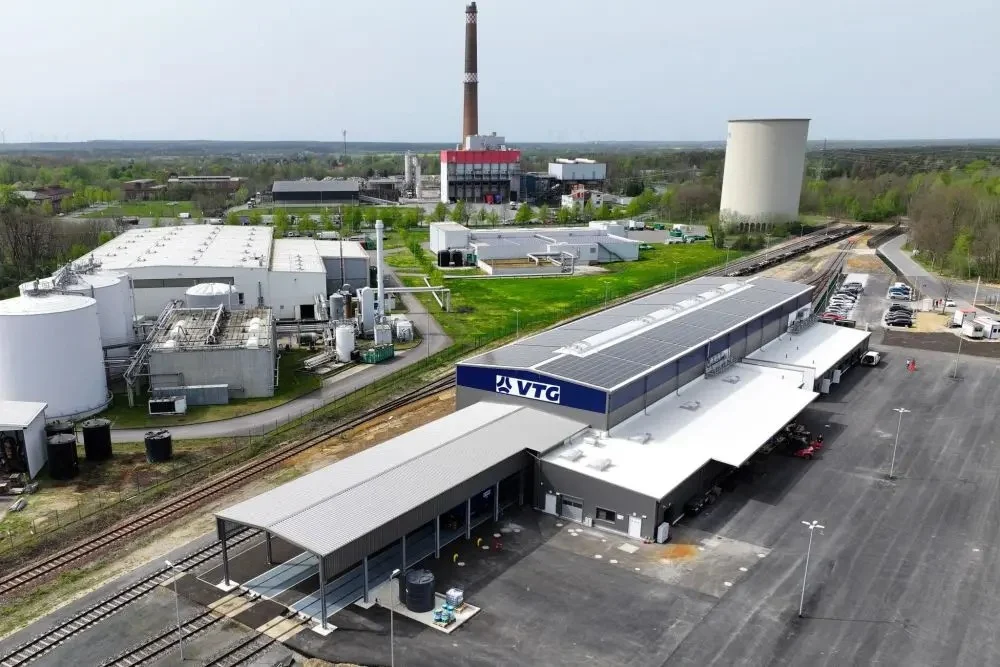
In a significant move that reflects the volatile nature of the European rail logistics sector, the German rail leasing and logistics giant VTG has announced the impending closure of its intermodal railcar maintenance workshop in Großräschen, Brandenburg. The facility, which only commenced operations in 2024, is scheduled to cease all activities on December 31, 2026. This decision, described by leadership as “extremely difficult,” marks a sharp reversal of the optimistic expansion strategy that defined the company’s investment cycle just two years ago.
The closure underscores a broader narrative of recalibration within the European rail freight market, where high initial hopes for a surge in intermodal traffic have been tempered by shifting economic conditions, changing supply chain patterns, and the brutal reality of operational profitability.
The Chronology of an Ambitious Venture
The story of the Großräschen facility is one of high-speed development followed by a sobering encounter with market stagnation.
- 2023: The Planning Phase. Driven by a post-pandemic surge in demand for combined transport and the European Union’s ambitious “Green Deal” targets, which prioritized a shift from road to rail, VTG identified a need for specialized maintenance infrastructure. The decision to break ground in Brandenburg was born out of a strategic desire to bolster capacity for the growing fleet of intermodal railcars, specifically those designed for semi-trailers and containers.
- 2024: The Grand Opening. The facility began operations with significant fanfare. It was touted as a state-of-the-art hub intended to service a critical segment of VTG’s vast European fleet. At the time, the outlook for intermodal transport was overwhelmingly bullish, with logistics providers betting on a permanent structural shift toward sustainable rail freight.
- 2025: The Reality Check. As the facility ramped up, it faced a series of headwinds. Industrial production in Germany—a key driver of rail freight—experienced a protracted slump. Furthermore, the anticipated volume of intermodal freight did not materialize at the scale projected in earlier feasibility studies. The utilization rates at the Brandenburg site remained consistently below the threshold required to achieve operational break-even.
- 2026: The Decision to Close. Following a comprehensive review of the company’s European maintenance network, VTG leadership determined that the Großräschen site could not be rendered economically sustainable under current market conditions. The formal announcement of the closure was delivered to staff at an in-person meeting, marking the end of a brief, two-year chapter in the company’s industrial history.
Strategic Implications: Why the Model Failed
The closure of the Großräschen workshop is not merely a localized event; it is a case study in the challenges facing European rail infrastructure. Several factors contributed to the decision to shutter the plant:
1. Market Volatility and Industrial Stagnation
The intermodal transport market is heavily reliant on the health of the broader manufacturing and retail sectors. Recent years have seen a cooling of the German economy, with high energy prices and diminished industrial output directly impacting the volume of goods moving via rail. When the “macro” outlook weakens, the demand for high-frequency maintenance on intermodal railcars drops commensurately.
2. The Overestimation of Capacity
At the time of its inception, the Großräschen facility was designed to meet a demand curve that was modeled on aggressive growth projections. However, the anticipated “modal shift” from road to rail has faced significant friction, including high track access charges, infrastructure bottlenecks, and persistent labor shortages in the rail sector. When these growth projections failed to manifest, the fixed costs of a brand-new, high-spec facility became an unsustainable burden on VTG’s balance sheet.
3. Efficiency in the Wider Network
VTG operates a vast, pan-European network of workshops and partner facilities. In an era of tightening margins, the company has had to prioritize the consolidation of its maintenance assets. The decision to close Großräschen reflects a strategic choice to centralize maintenance activities in more established hubs where throughput is higher and overheads are more effectively spread across a larger number of assets.
Official Responses and Corporate Sentiment
The gravity of the situation was reflected in the tone adopted by VTG’s leadership. Thomas Jäger, the Director of Production at VTG, provided a candid assessment of the decision.
“The decision to close the workshop in Großräschen was extremely difficult,” Jäger stated. “Precisely because this facility was built with high expectations, a great deal of commitment, and a clear focus on sustainability, this measure is all the more painful.”
Jäger’s comments highlight the emotional and professional cost of the closure. The facility represented not just a capital investment, but a commitment to the regional economy in Brandenburg and a belief in the future of intermodal logistics. However, Jäger emphasized that the company had a fiduciary responsibility to ensure long-term viability: “After analyzing the situation, we have concluded that it was no longer possible to maintain operations under economically viable conditions.”
The Human Element: Impact on the Workforce
Perhaps the most significant consequence of the closure is the impact on the site’s employees. While VTG has not disclosed specific headcount figures for the Großräschen facility, the news has undoubtedly created uncertainty for the staff members who were hired to operate the high-tech equipment at the site.

In professional rail maintenance, skilled technicians are a premium commodity. While the company has remained quiet on specific redundancy or relocation packages, industry analysts suggest that VTG will likely attempt to absorb as many skilled workers as possible into its broader network of workshops. However, the geographical displacement remains a challenge for employees who have established roots in the Brandenburg region.
VTG has assured stakeholders that the maintenance of its fleet will continue without interruption. By redistributing the workload to other workshops within its European network and leveraging its existing partnerships with external providers, the company expects to maintain the high availability of its railcars, ensuring that the closure of one site does not create a ripple effect of service failures for its customers.
Contextualizing VTG: A European Logistics Powerhouse
To understand the scale of this decision, one must look at the entity behind it. Headquartered in Hamburg, VTG is a titan of the European rail sector. Founded in 1951, the company has evolved from a local transport entity into one of the continent’s most sophisticated rail logistics providers.
The company’s statistics are staggering:
- Fleet Size: Over 75,000 railcars, representing one of the largest private fleets in Europe.
- Geographic Reach: Operations spanning more than 20 countries.
- Diverse Portfolio: The fleet includes specialized tank railcars for hazardous liquids, bulk freight wagons for industrial commodities, and, of course, the intermodal wagons that were the focus of the Großräschen project.
VTG’s business model is predicated on high asset utilization. In a capital-intensive industry, the “velocity” of the fleet—how often a railcar is loaded, moved, and returned to service—is the primary driver of profitability. When a facility intended to support that velocity fails to meet its targets, the company must act swiftly to protect its overall margins.
Looking Forward: The Future of Intermodal Rail
The closure of the Großräschen workshop is a sobering reminder that the transition to a sustainable, rail-led logistics future is not a linear progression. It is subject to the same economic pressures as any other sector.
However, industry experts remain optimistic about the long-term role of intermodal transport. As the European Union continues to push for carbon neutrality and as road transport faces increasing regulatory costs and labor shortages, the intrinsic value of rail logistics remains high.
For VTG, the closure is a tactical retreat rather than a strategic abandonment of the intermodal sector. The company continues to invest in digital railcar monitoring, predictive maintenance, and fleet optimization. The focus has simply shifted from the physical expansion of maintenance capacity to the optimization of existing resources.
Conclusion
The story of the Großräschen workshop is a chapter that highlights the complexities of the modern European rail industry. It is a narrative of ambition meeting economic reality, and a testament to the difficult choices corporations must make to remain competitive in a volatile global market.
As December 31, 2026, approaches, the focus in Brandenburg will shift toward the orderly wind-down of operations and the transition of the workforce. For the wider logistics market, the closure serves as a signal: the rail industry is in a period of consolidation. Success in the coming years will not be defined by the size of the infrastructure footprint, but by the agility, efficiency, and resilience of the network that remains. VTG, with its extensive history and massive fleet, remains a central player in this evolving landscape, even as it trims its sails to navigate the current economic headwinds.

