

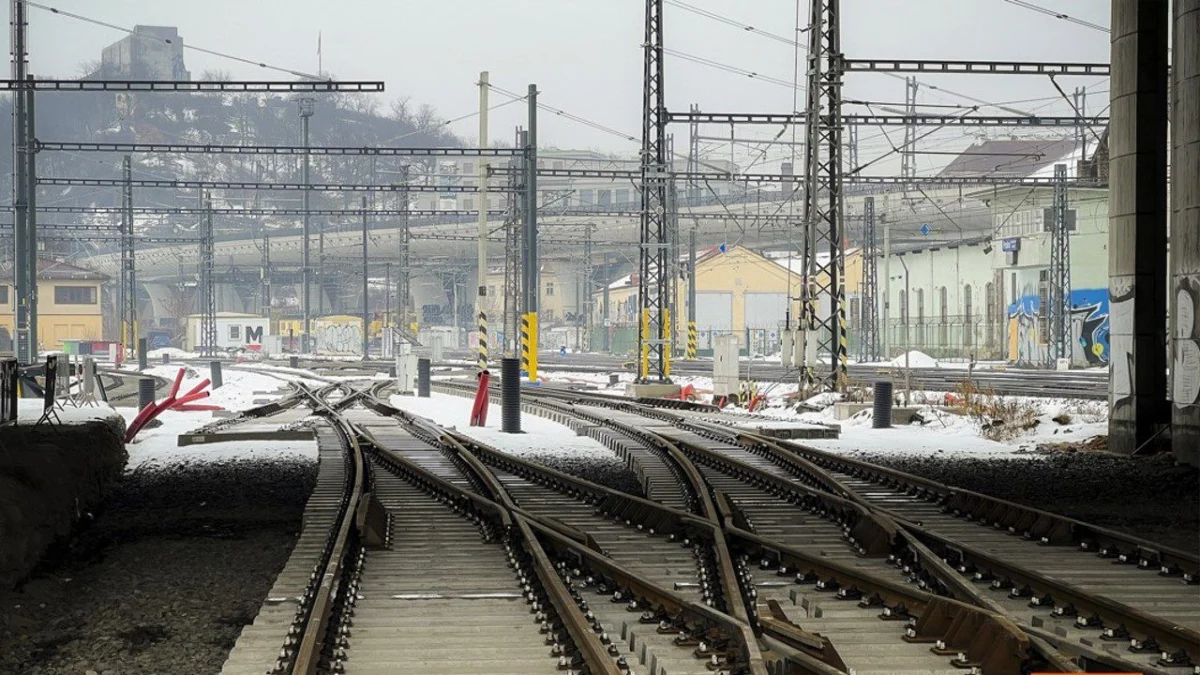
PRAGUE — In a decisive move set to reshape the landscape of Czech national transportation, railway infrastructure manager Správa železnic has announced a comprehensive structural transformation program. Launching in April, the sweeping reform marks a pivotal turning point for the organization, combining internal management streamlining, targeted expense reduction, and a radical overhaul of public procurement and tendering procedures.
Spearheaded by newly appointed CEO Tomáš Tóth under the strategic guidance of the Ministry of Transport, the initiative aims to dismantle traditional market barriers, invite a broader cohort of domestic and international suppliers into the Czech rail sector, and achieve unprecedented financial efficiency. By modernizing how infrastructure projects are structured, tendered, and managed, the Czech Republic expects to shave millions off its operational overhead while accelerating the delivery of vital rail networks—all without compromising project quality or impacting frontline operations.
Main Facts
The structural transformation of Správa železnic is built upon two foundational pillars: internal administrative rationalization and market-opening procurement reform. Under the leadership of CEO Tomáš Tóth, the organization is pivoting away from historically rigid, robust management frameworks toward a leaner, more agile operational model.
Key elements of the overarching reform include:
- Annual Financial Savings: The reorganization is projected to save approximately CZK 335.6 million (EUR 14 million) every year, funds that will be directly reinvested into project preparation and the long-term sustainable operation of the rail network.
- Streamlined Management & Workforce Optimization: Správa železnic will eliminate 121 administrative and managerial positions. Crucially, these layoffs will not impact operational employees or frontline railway personnel.
- Procurement and Tenders Overhaul: To foster a more competitive environment, the organization is revising qualification criteria, reducing bureaucratic red tape, and breaking large infrastructure contracts down into specialized components (e.g., separating civil construction from technological equipment).
- Centralization of Operations: Twenty-one regional operational divisions are being integrated under the modernized central dispatch centers in Prague and Přerov. Furthermore, public procurement and commercial activities, previously fragmented across multiple units, will now be managed centrally.
- Overhead Cuts: Marketing, information technology, and legal expenses across the organization will be slashed by approximately 20%.
The strategic overhaul is designed to address longstanding inefficiencies in Czech public contracting, enhance market competitiveness, and ensure that every crown of taxpayer money yields maximum value for the country’s economy and traveling public.
Chronology: The Path to Reform
The journey toward Správa železnic’s sweeping transformation has been shaped by a combination of evolving economic realities, pressing infrastructure demands, and recent leadership changes at the helm of the state organization.
1. Identifying the Need for Change (Late 2024 – 2025)
For years, observers and industry stakeholders noted that the Czech railway market—despite substantial capital injections from both national budgets and European Union funds—suffered from a relatively closed ecosystem of major contractors. Large-scale modernization projects, such as the ambitious €790 million Česká Třebová hub project, often faced bottlenecks due to complex administrative hurdles, stringent qualification requirements that favored established giants, and a lack of competitive bidding. Internal management structures within Správa železnic had similarly expanded over decades, resulting in a robust, multi-layered bureaucracy that consumed significant administrative resources.
2. Leadership Transition and Mandate (Early 2026)
Recognizing the urgent need to build infrastructure "better, faster, and cheaper," the Czech Ministry of Transport appointed Tomáš Tóth as the new Chief Executive Officer of Správa železnic. Tasked with shaking up the organization, Tóth immediately initiated a comprehensive internal audit of management practices, regional operational setups, and procurement pipelines.
3. Securing Internal Consensus (February 2026)
One of the most surprising and critical milestones of the reform occurred during its initial planning phase. Given the historically entrenched nature of public infrastructure bodies, resistance to structural change is often high. However, Tóth successfully engaged the organization’s leadership layers early on. By February 2026, Správa železnic’s executive team reached a broad, organization-wide consensus regarding the necessity of the cuts and operational centralization—paving the way for a smooth, unified rollout.
4. Official Announcement and April 2026 Launch
Správa železnic officially unveiled the comprehensive transformation package, detailing the specific mechanics of the procurement changes, managerial streamlining, and the projected annual savings of CZK 335.6 million. The operational integration of regional dispatch units and the formal implementation of the new tendering guidelines are scheduled to take full effect in April 2026.
Supporting Data and Financial Metrics
The restructuring of Správa železnic is underpinned by meticulous financial planning and a strategic allocation of resources. To understand the scale and intent of the April reforms, it is essential to examine the underlying economic data.
Cost-Shedding and Reinvestment
The program’s headline figure—CZK 335.6 million (EUR 14 million) in annual savings—is the direct result of targeted reductions in non-essential corporate overhead. By cutting marketing, IT, and legal service expenditures by roughly one-fifth (20%), and by removing 121 redundant administrative roles, the organization is purging legacy inefficiencies.
Importantly, these savings are not simply absorbed into general state coffers; they are earmarked for reinvestment:
- Project Preparation: High-speed rail (HSN) corridors and regional modernization projects require extensive environmental, engineering, and spatial planning. The freed capital will bolster Správa železnic’s pipeline of "shovel-ready" projects.
- Long-Term Sustainability: Ensuring that maintenance backlogs are addressed proactively rather than reactively.
Capital Flows and European Support
The reform arrives at a time of unprecedented investment in Czech rail infrastructure. The Czech Republic continues to channel billions into modernizing its corridors, highlighted by substantial financial backing from institutions such as the European Investment Bank (EIB), which recently provided EUR 900 million for strategic railway infrastructure updates. Ensuring that these vast capital inflows are managed with absolute transparency and cost-effectiveness is a core driver of the current restructuring.
Market Share and Supplier Metrics
Historically, a small oligopoly of large domestic construction conglomerates dominated Czech railway tenders. By breaking down large investment projects into specialized components—separating civil engineering from advanced signaling, telecommunications, and electrification technologies—Správa železnic expects to:

- Increase Bidder Turnout: Expand the average number of compliant bids per tender from a historical average of 2–3 suppliers to a wider, healthier field.
- Engage SMEs and Foreign Entrants: Lower entry barriers to allow small-and-medium enterprises (SMEs) and reputable foreign contractors to bid directly on sub-components or specialized packages.
Official Responses and Stakeholder Perspectives
The structural transformation has drawn strong statements of support from government leaders and internal management, who view the overhaul as an essential modernization of the Czech Republic’s transport backbone.
The Ministry of Transport
Transport Minister Ivan Bednařík has been a vocal champion of the reforms, emphasizing that state resources must be safeguarded through rigorous oversight and modern management principles.
"Railways are the backbone of transport and have a significant impact on the economy and quality of life in the Czech Republic. State funds must be used as efficiently as possible," stated Minister Bednařík.
He further underscored the practical objective of the leadership changes, noting that the new directorate is actively dismantling unnecessary bureaucracy. The ultimate goal, according to Bednařík, is to restructure internal operations "so that the railway infrastructure is built better, faster, and cheaper."
Správa železnic Executive Leadership
Reflecting on the internal dynamics of pushing through such a sweeping reform, CEO Tomáš Tóth expressed optimism regarding the corporate culture shift and the cooperation of his executive colleagues.
"The management structure has been very robust for a long time, so I expected to encounter much greater resistance to change. However, from the very first round, we managed to find consensus across the entire management team, which I consider a success, and I thank my colleagues for their approach," remarked Tóth.
Tóth stressed that the modernization of procurement and the streamlining of regional management are not merely cost-cutting exercises, but essential steps in future-proofing the organization against the growing demands of European rail integration, decarbonization targets, and passenger growth.
Implications for the Czech Rail Sector and Economy
The long-term ramifications of Správa železnic’s April transformation extend far beyond internal administrative adjustments. By fundamentally altering how rail projects are conceived, procured, and executed, the reform promises to ripple across the entire Central European transport market.
1. Enhanced Market Competitiveness and Fair Play
For decades, critics of public tendering in Central and Eastern Europe have pointed to overly restrictive technical requirements and excessively bundled contracts as de facto barriers keeping innovative foreign firms and agile smaller companies out of the market. By actively adjusting qualification requirements, holding preliminary market consultations, and gradually recognizing select foreign certifications, Správa železnic is signaling that the Czech rail market is open for business. This heightened competition is expected to drive down project costs and spur technological innovation.
2. Embracing Modern Project Delivery Models
The expanded adoption of the "Design & Build" delivery method—where a single entity is contracted for both the detailed engineering design and the subsequent construction—represents a major cultural shift for Czech public infrastructure. When applied to appropriate project types, Design & Build minimizes interface risks between designers and builders, reduces adversarial disputes, and significantly compresses project delivery timelines.
3. Transparency and Public Trust
Transparency is a central tenet of the new procurement strategy. Správa železnic has committed to publishing more granular price breakdowns and bid components. Greater transparency protects the contracting authority from inflated cost overruns and builds vital public trust in how multi-billion-crown state and EU infrastructure funds are administered.
4. Operational Streamlining via Centralization
By consolidating 21 fragmented operational regions under the modernized central dispatch hubs in Prague and Přerov, Správa železnic is eliminating redundant local management layers. This centralization ensures a more unified, responsive, and technologically cohesive approach to managing train traffic across the national network, directly benefiting freight operators, passenger carriers, and daily commuters alike.
Conclusion
As Správa železnic prepares to implement its structural transformation in April 2026, the organization stands at the threshold of a new era. Under the decisive leadership of Tomáš Tóth and with the full backing of Minister Ivan Bednařík, the Czech railway infrastructure manager is proving that institutional reform is possible even within traditionally conservative public sectors.
By trimming redundant administrative overhead, centralizing critical operational hubs, and opening up archaic tendering procedures to foster genuine market competition, Správa železnic is setting a benchmark for public infrastructure governance in Europe. The resulting savings—over CZK 335 million annually—coupled with faster project delivery and enhanced supplier diversity, ensure that the Czech railway network will remain the resilient, efficient economic backbone the nation needs for decades to come.

