

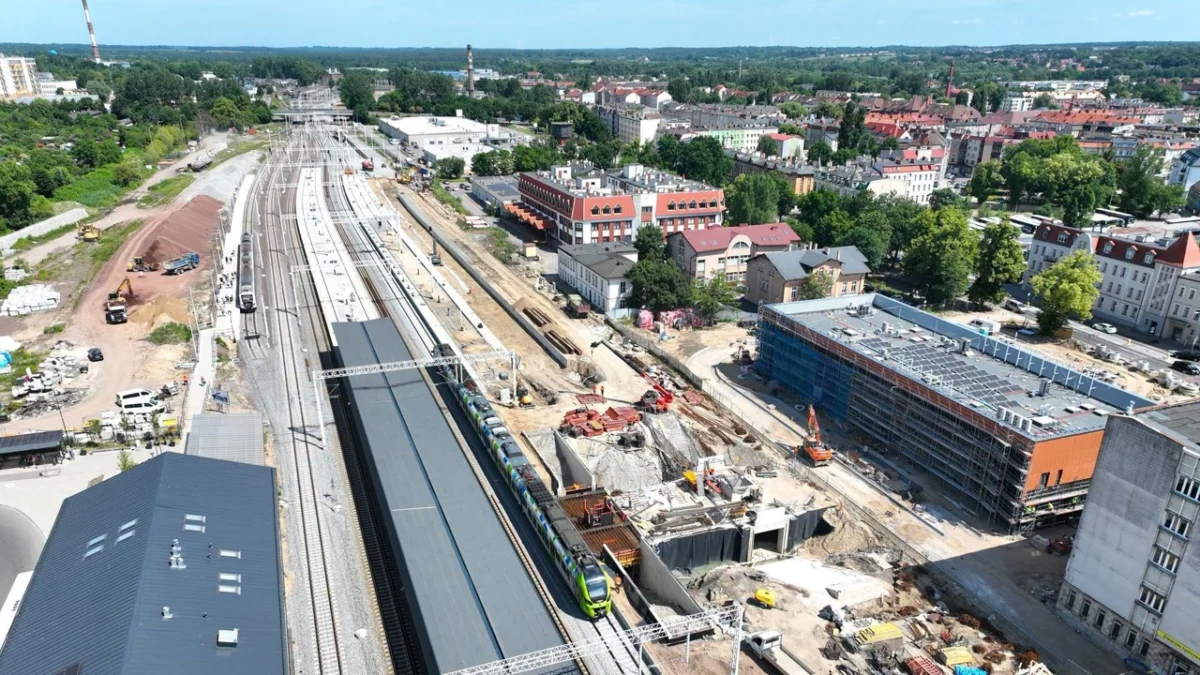
WARSAW — Poland is orchestrating one of the most ambitious transportation transformations in modern European history. Through a multi-billion-euro overhaul encompassing network expansion, rolling stock renewal, aggressive digitalisation, and enhanced regional accessibility, Polish Railways (Polskie Koleje Państwowe) is steadily positioning itself as a continental benchmark for rail infrastructure.
The strategy combines immediate capacity enhancements with a long-term blueprint extending to 2050. By integrating high-speed rail, revitalising dormant regional routes, and heavily prioritising the domestic manufacturing industry, Warsaw is reshaping its national mobility landscape and boosting economic cohesion.
Main Facts
The overarching strategy of Poland’s railway modernization rests on several foundational pillars:
- The Integrated Rail Network (2050 Strategy): For the first time in its history, Poland has formulated a comprehensive master plan stretching to 2050. The strategy dictates the construction of 4,700 kilometres of new rail lines, including 2,700 kilometres dedicated to high-speed rail (HSR).
- Speed and Competitiveness: While current operations peak at 200 km/h, upcoming infrastructure projects—such as the "Y" network and sections tied to the Centralny Port Komunikacyjny (CPK)—are engineered for velocities reaching up to 350 km/h, aiming to rival Asian high-speed networks.
- Unprecedented Financial Commitments: Infrastructure manager PKP Polskie Linie Kolejowe (PKP PLK) is executing the largest investment program in the nation’s history. Immediate allocations stand at €23.5 billion (PLN 100 billion), with broader development strategies scaling up to €42.4 billion (PLN 180 billion) by 2032, and ultimate master plan estimates reaching €143.5 billion.
- Surging Ridership: In 2025, the network accommodated 438 million passengers—a 7.7 percent year-on-year increase. Projections indicate figures will scale to 470 million in 2026, break the 500 million mark shortly thereafter, and approach 800 million annually by 2050.
- Domestic Industry Empowerment: Procurement heavily favors local rolling stock manufacturers. Under the National Recovery and Resilience Plan (NRRP), PKP Intercity has directed over €4 billion to domestic builders like Pesa Bydgoszcz, Newag, and FPS H. Cegielski.
Chronology of the Transformation
Poland’s rail renaissance is built on a precise timeline of past milestones, current interventions, and future infrastructural horizons:

2023–2025: Rebuilding Baseline Capacity and Intercity Momentum
- 2023: PKP Intercity recorded a massive structural surge in ridership, setting the stage for post-pandemic modal shifts.
- 2024: UIC Atlas data formally positioned 875 kilometres of Polish high-speed links into long-term planning frameworks. Regional reopenings began gathering political and financial momentum.
- 2025: Annual passenger volume hit 438 million. Major construction sites across urban nodes, notably Warsaw West station, advanced rapidly to accommodate rising daily train frequencies exceeding 70,000 movements network-wide.
2026–2032: The Near-Term Investment Wave
- June 2026: The historic town of Łomża is scheduled to receive a direct rail link to Warsaw, ending a three-decade transit isolation.
- 2026–2027: The network expects to clear 470 million passengers annually. Concurrently, regional links are scheduled for restoration in towns including Police, Sokołów Podlaski, Połaniec, and Stronie Śląskie.
- 2032: Target completion window for the initial €42.4 billion (PLN 180 billion) comprehensive railway development package managed by PKP PLK.
2035–2050: The High-Speed Horizon
- Late 2030s: Gradual commissioning of the 350 km/h "Y" high-speed network connecting Warsaw, Łódź, Poznań, and Wrocław, alongside segments of the Rail Baltica corridor toward the Lithuanian border.
- 2050: Full realization of the Integrated Rail Network, bringing online 4,700 km of new tracks (including 2,700 km of HSR lines) and steering national ridership toward an ultimate target of 800 million annual journeys.
Supporting Data and Operational Metrics
The quantitative scale of Poland’s railway expansion underscores a fundamental shift in travel habits across Central Europe.
Passenger Volume and Service Density
During a major conference held under the banner "Our Railway" at Warsaw West station, state officials outlined staggering growth metrics. Long-distance operator PKP Intercity reported that in the first half of a recent operational cycle, it carried 44.7 million passengers—an 11 percent increase over the previous year, 21 percent higher than 2024, and a dramatic 45 percent jump compared to 2023.
The national network now facilitates over 70,000 train movements daily. To match seasonal demand, PKP Intercity deployed 560 daily services during its summer timetable alone—46 more than the preceding year. Over a three-year period, the aggregate number of annual rail travellers in Poland has risen by 100 million.
Financial Allocations and Infrastructure Scope
The scale of capital injection is unprecedented:

- Immediate Infrastructure Funding: €23.5 billion (PLN 100 billion) dedicated to station reconstruction, line upgrades, and network digitalisation.
- Medium-Term Strategy (to 2032): €42.4 billion (PLN 180 billion).
- Long-Term Master Plan (to 2050): Estimated at €143.5 billion, encompassing the construction of 2,700 km of brand-new high-speed rail corridors and the modernisation of 5,600 km of legacy tracks.
Official Responses and Leadership Vision
The political backing for the rail modernization initiative spans the highest echelons of the Polish government, framing transit development as a core pillar of national modernization and civilizational progress.
"We are building the most modern rail network on the continent. Over the past two and a half years, we have launched new connections and stations and upgraded existing links," declared Poland’s Prime Minister, Donald Tusk, during his keynote address at Warsaw West station.
Emphasizing the sheer volume of users, Tusk added: "Our railways are already carrying almost as many people as the entire population of the European Union."
Highlighting the qualitative leap in engineering, Tusk set bold ambitions for international competitiveness: "We will have the fastest railway in Europe, because Poles deserve to be able to travel just like the Japanese or the Chinese." The targeted 350 km/h operational speeds reflect this ambition, moving Poland away from legacy infrastructure limitations.

Infrastructure Minister Dariusz Klimczak provided concrete operational context regarding the surging demand:
"Over the last three years, the number of passengers travelling by train has increased by 100 million. In 2026, we will carry 470 million passengers, and next year we will break the 500 million passenger mark. PKP Intercity has increased the number of daily services by 130 and is carrying 30 per cent more passengers."
Broader Implications: Economic Cohesion and Industrial Sovereignty
The transformation of Polish Railways transcends simple passenger mobility; it functions as a macroeconomic catalyst and an engine for industrial sovereignty.
Revitalising Regional Accessibility
Decades of post-communist economic restructuring left many smaller Polish towns disconnected from main transit arteries. The current strategy directly counters this "transport exclusion." By the end of 2027, passenger trains will return to communities that have lacked rail access for generations, such as Police, Sokołów Podlaski, Połaniec, and Stronie Śląskie. Furthermore, the reconnection of Łomża to Warsaw in June 2026 represents a historic milestone, re-establishing direct rail access for a major city after a 33-year hiatus.

Bolstering the Domestic Manufacturing Base
Rather than outsourcing all procurement abroad, Warsaw has deliberately leveraged its massive capital expenditure to fortify domestic rolling stock manufacturers and stimulate regional employment.
- National Recovery and Resilience Plan (NRRP) Contracts: PKP Intercity has funnelled over €4 billion into domestic enterprises. Key beneficiaries include FPS H. Cegielski in Poznań, Pesa Bydgoszcz, Pesa Mińsk Mazowiecki, PKP Intercity Remtrak, and Newag.
- International Partnerships with Local Assembly: Major multinational players with a physical footprint in Poland are also integrated into the industrial strategy. Alstom secured a significant contract for 42 double-decker trains (with options for 30 more) that mandates design and assembly by Polish engineers at facilities in Chorzów and Nadarzyn.
- Global Supply Chain Footprint: Stadler Polska continues to manufacture modern units like the Flirt trainsets from its plant in Siedlce, while Greenbrier Poland produces and maintains freight rolling stock at its facility in Świdnica.
Through this deliberate synergy between infrastructure spending and industrial policy, Poland is not merely upgrading its railway system—it is cementing its status as an economic powerhouse, driving territorial cohesion, and establishing a dominant manufacturing footprint at the heart of the European rail market.

