

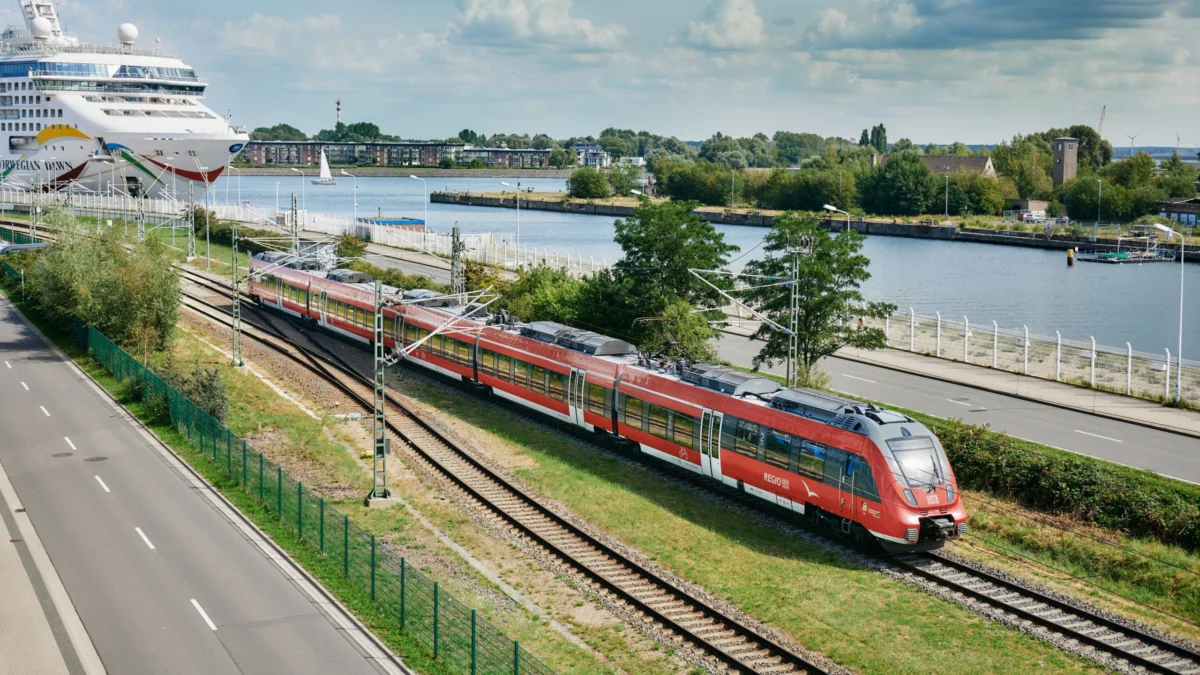
BRUSSELS — As the European Commission prepares to unveil its highly anticipated revision of the European Union Emissions Trading System (ETS) on July 17, 2026, a formidable coalition of European rail and intermodal transport organizations has issued a unified, assertive demand. The core message is clear: if the ETS is to endure as a credible, highly effective pillar of European climate policy, a dedicated share of its revenues must be strategically reinvested directly into the rail sector.
Rather than diluting carbon-pricing proceeds into broad, generalized funds or distributing resources evenly across all transport modes regardless of performance, the rail industry argues that funds must be channeled where they can deliver the absolute fastest and deepest emissions reductions.
This decisive stance has been formalized in a joint position paper signed by eight premier European rail organizations: AERRL, ALLRAIL, CER, ERFA, EIM, UIP, UIRR, and UNIFE. Together, these stakeholders represent the comprehensive spectrum of Europe’s rail ecosystem, spanning infrastructure managers, passenger operators, freight forwarders, and rolling stock manufacturers.
Main Facts: The Stakes of the July 17 ETS Revision
The upcoming legislative proposal by the European Commission represents a critical regulatory juncture for the European Union’s broader "Fit for 55" climate architecture. At its core, the ETS is designed to penalize carbon-intensive activities by requiring heavy emitters—such as energy producers and heavy industry—to purchase emission allowances. However, as transport sectors face tighter regulations and the integration of carbon pricing mechanisms like ETS2 (which targets buildings and road transport), the distribution of generated revenues has become a fiercely contested political battleground.

- The Deadline: The European Commission is scheduled to officially release its comprehensive revision proposal for the EU ETS on July 17, 2026.
- The Coalition: Eight key European rail bodies (AERRL, ALLRAIL, CER, ERFA, EIM, UIP, UIRR, and UNIFE) have coalesced around a unified position.
- The Core Demand: Carbon mechanism revenues should not be spread evenly across all modes of transport; instead, they must preferentially target solutions with proven climate performance, specifically rail and combined transport.
- The Investment Target: The industry is calling for funds to be explicitly directed toward infrastructure expansion, network capacity, cross-border interoperability, and technological modernization rather than pooled into a generic budgetary fund.
Chronology of the Debate: From Concept to the 2026 Turning Point
To understand the urgency behind the rail sector’s July 2026 mobilization, it is necessary to examine the regulatory trajectory that brought European transport policy to this crossroads.
Phase 1: The Foundation of European Climate Strategy (2019–2021)
With the introduction of the European Green Deal in late 2019, the European Union committed to achieving climate neutrality by 2050, accompanied by an intermediate target of a 55% net reduction in greenhouse gas emissions by 2030 compared to 1990 levels. Transport, which accounts for roughly a quarter of the EU’s total greenhouse gas emissions, was identified as the most stubborn sector, as it was the only major economic segment where emissions continued to rise over preceding decades.
Phase 2: Legislative Gridlock and Modal Inclusion (2022–2024)
As the European Parliament and Council negotiated the "Fit for 55" legislative package, discussions regarding carbon pricing for transport intensified. The eventual adoption of the revised ETS framework and the conceptualization of ETS2 signaled a shift toward market-based accountability for transport. However, rail stakeholders repeatedly cautioned that while rail was being indirectly penalized by rising electricity costs driven by the ETS, it was not receiving a proportional reinvestment of the resulting revenues to bolster its competitive edge against heavily polluting alternatives.
Phase 3: The Build-Up to July 17, 2026
Entering 2025 and moving rapidly through the first half of 2026, implementation challenges across European transport networks became acutely apparent. Despite high demand for sustainable travel, infrastructure bottlenecks, fragmented cross-border operations, and underfunded intermodal terminals stifled modal shift. Recognizing that the July 2026 ETS revision would dictate financial flows for the next decade, the collective rail industry accelerated its lobbying and coordination efforts, culminating in the joint position paper presented ahead of the European Commission’s summer announcement.

Supporting Data: The Structural Advantage of Rail
The demands put forward by the rail coalition are not built on advocacy rhetoric alone; they are underpinned by robust, empirical data compiled by European environmental and transport agencies.
Emissions Disparities in European Transport
The structural divide between road and rail transport in Europe remains stark:
- Electrification: Over 80% of total rail traffic in the European Union is fully electrified, allowing trains to ride the coattails of an increasingly decarbonized power grid.
- Emissions Share: Despite carrying a substantial volume of passengers and goods, rail transport accounts for less than 1% of greenhouse gas emissions across the entire European transport sector.
- The Heavyweight Polluter: Road transport remains the primary driver of transport emissions in the EU, accounting for nearly 75% of the sector’s total emissions in 2023. Over 90% of road transport’s energy needs remain tied to fossil fuels.
- Specific Metrics: According to the European Environment Agency, rail transport is responsible for a negligible 0.4% of the EU’s transport emissions, even though it handles approximately 17% of freight transport and 8% of domestic passenger transport.
The Intermodal Efficiency Paradox
The rail sector does not suffer from a lack of market demand; rather, it struggles against severe structural and infrastructural constraints.
- Currently, roughly 1,000 intermodal freight trains operate daily across approximately 1,300 terminals throughout Europe.
- This operational web already cuts energy consumption by up to 70% per ton-kilometer and slashes carbon emissions by 60% to 90% compared to heavy road freight.
- Despite these advantages, the market share of rail freight transport stubbornly hovers below the European Union’s stated target of 30% by 2030.
Furthermore, aviation and maritime transport are projected to command an increasingly massive share of Europe’s future transportation emissions, with their combined contribution expected to skyrocket from roughly a quarter today to nearly 50% by 2050. This trajectory underscores that Europe cannot rely on a single policy tool or a single mode of transport to achieve climate goals; it requires targeted, aggressive investment in proven green alternatives.

Official Responses and Industry Perspectives
The unified front presented by AERRL, ALLRAIL, CER, ERFA, EIM, UIP, UIRR, and UNIFE highlights a profound consensus across all pillars of the railway industry.
Industry leaders emphasize that the debate is fundamentally about economic equity and logical resource allocation. Because the railway sector operates primarily on electricity, it already absorbs the indirect costs of the EU ETS through power pricing mechanisms. In essence, the rail industry is already contributing to the carbon mechanism indirectly, yet it has historically been excluded from receiving a fair, proportional share of the revenues those mechanisms generate.
"We are not asking for an artificial, undeserved market advantage," noted a representative close to the coalition discussions. "We are demanding the official recognition—and financial backing—of an environmental advantage that rail has proven day in and day out for decades. If ETS revenues are designed to combat climate change, every euro spent must go directly toward solutions that permanently take carbon out of the transport equation."
The coalition argues that treating all transport modes equally in the distribution of climate funds is counterproductive. Pumping revenues into technologies that are still in experimental phases or attempting to green high-emission modes without immediate substitutes fails to maximize return on investment. Rail, conversely, offers a plug-and-play decarbonization infrastructure that merely requires scaling.

Implications: Where the Funds Must Go
To ensure that the revised ETS delivers tangible climate outcomes, the rail sector has outlined a clear, actionable roadmap for how revenues should be deployed. The industry insists that funds channeled through the Innovation Fund, the Modernization Fund, the Social Climate Fund, and other specialized financial instruments must prioritize specific, high-yield interventions:
1. Network Infrastructure and Capacity
- Track Extensions: Expanding and upgrading rail networks to seamlessly accommodate 740-meter-long freight trains, which are vital for achieving economies of scale in logistics.
- Alternative Routes: Developing redundant and alternative rail corridors to alleviate chronic congestion on main arterial lines.
- Port Connections: Integrating major European ports directly into the heavy rail network to facilitate fast, frictionless modal shifts for maritime freight.
2. Electrification and Modernization
- Terminal and Depot Electrification: Upgrading intermodal terminals, logistics hubs, and maintenance depots to run entirely on green energy.
- Traction Power Supply: Strengthening the electrical grid capacity dedicated to railway traction to support heavier traffic loads without straining regional power grids.
- Rolling Stock Modernization: Supporting operators in upgrading passenger coaches and freight wagons to meet modern efficiency and acoustic standards.
3. Digitalization and Interoperability
- ERTMS (European Rail Traffic Management System): Accelerating the deployment of the digital signaling standard to eliminate national borders within the rail network.
- FRMCS (Future Railway Mobile Communication System): Upgrading the communication backbone of European rail operations.
- DAC (Digital Automatic Coupling): Implementing automated coupling technologies to revolutionize rail freight operations, drastically reducing shunting times and operational hazards.
Conclusion
As July 17, 2026, approaches, the European Commission faces a defining moment in its environmental governance. The joint stance adopted by Europe’s leading rail organizations serves as both a roadmap and a caution. By intelligently redirecting ETS revenues into the veins of Europe’s railway networks—resolving infrastructure bottlenecks, fostering cross-border interoperability, and expanding electrification—the European Union can turn climate policy into structural transformation. For an industry that already moves millions of passengers and tons of freight with near-zero direct emissions, the message to Brussels is unequivocal: back the tracks that lead to a sustainable future.

