

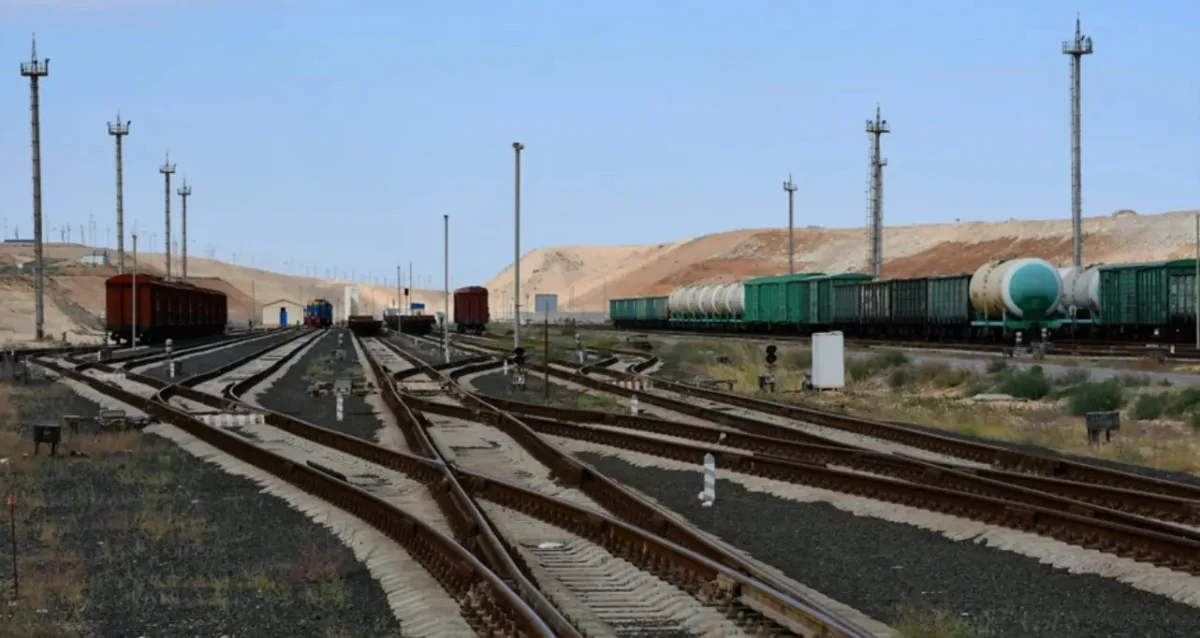
In a landmark move for Central Asian logistics and infrastructure, the European Bank for Reconstruction and Development (EBRD) has announced a strategic investment of up to USD 125 million in a Eurobond issue launched by Kazakhstan Temir Zholy (KTZ), the national railway operator of Kazakhstan. This financial infusion, part of a larger USD 1 billion bond issuance listed on both the London and Kazakhstan stock exchanges, marks a pivotal moment in the modernization of the Trans-Caspian International Transport Route (TITR), commonly referred to as the "Middle Corridor."
As global supply chains continue to seek resilient alternatives to traditional Eurasian transit routes, this investment underscores the growing geopolitical and economic significance of Kazakhstan as a bridge between Asian manufacturing hubs and European consumer markets.
Main Facts: A Strategic Financial Injection
The investment package is designed to be multi-faceted, addressing both the immediate infrastructure needs of the Kazakh rail network and the long-term operational standards of KTZ.
- Financial Scope: The EBRD’s commitment of USD 125 million acts as a cornerstone for the USD 1 billion Eurobond, signaling strong international confidence in KTZ’s creditworthiness and the long-term viability of the regional transport network.
- Infrastructure Focus: The proceeds are earmarked for the large-scale modernization of passenger stations throughout Kazakhstan. This includes critical upgrades to safety protocols, expansion of passenger throughput capacity, and the installation of energy-efficient lighting systems.
- Social Inclusion: A defining feature of this project is its commitment to inclusivity. The EBRD has mandated that station upgrades must include improved accessibility for passengers with disabilities, ensuring that the modernization process aligns with international best practices for universal design.
- Technical Cooperation: Beyond capital investment, the EBRD is mobilizing technical cooperation funds. These will be directed toward helping KTZ integrate international operational standards and bolster its cybersecurity posture—a critical endeavor as the company digitizes its ticketing, logistics, and signaling systems.
Chronology: The Evolution of the Trans-Caspian Corridor
The involvement of the EBRD in the Kazakh rail sector is not a sudden development but the result of a long-standing partnership aimed at fostering sustainable growth in Central Asia.
2020–2022: The Shift in Logistics
As geopolitical tensions disrupted traditional rail links through northern routes, the Middle Corridor began to gain unprecedented attention. KTZ and the Kazakh government accelerated efforts to market the route connecting China to Europe via the Caspian Sea, the Caucasus, and Türkiye.
2023: Securing Global Interest
Throughout the previous year, Kazakhstan intensified its diplomatic and economic outreach to European financial institutions. KTZ sought to diversify its funding sources, moving away from reliance on state subsidies toward international capital markets.
2024: The Bond Launch
KTZ finalized the framework for its USD 1 billion Eurobond issuance. The move was carefully timed to coincide with a period of high demand for logistics capacity on the Middle Corridor.
May 2026: The EBRD Commitment
The EBRD formalized its participation, marking the latest chapter in its relationship with Kazakhstan. Having already invested nearly EUR 11 billion across 352 projects in the country, this latest tranche solidifies the EBRD’s status as the largest and most consistent development partner in the region.
Supporting Data: The Scale of KTZ Operations
To understand the impact of this investment, one must grasp the sheer scale of the network managed by KTZ. As one of the largest rail operators in the region, the company is the backbone of the Kazakh economy.
- Network Reach: KTZ operates a vast, 16,400-kilometer rail network that serves as the essential artery for the country’s industrial output and international transit.
- Rolling Stock: The operator manages a formidable fleet, including over 1,700 locomotives, 46,800 freight cars, and 2,300 passenger cars.
- Transit Capacity: The Middle Corridor has seen a consistent uptick in volume. By modernizing stations and infrastructure, KTZ aims to reduce transit times and increase the reliability of "block trains" moving from the Chinese border to the Caspian ports.
The integration of these physical assets with the digital and safety upgrades funded by the new bond will likely result in a measurable increase in the "ton-kilometer" efficiency of the entire network.
Official Responses and Strategic Implications
The partnership has been welcomed by both Kazakh officials and international development experts as a blueprint for sustainable infrastructure financing.

A Focus on Sustainability and Safety
For the EBRD, the investment is not merely about moving goods faster; it is about "greening" the transport sector. Rail is inherently more sustainable than road transport, and by increasing the efficiency of the Middle Corridor, the EBRD aims to reduce the carbon footprint of Eurasian trade.
"Our support for KTZ is a strategic investment in regional connectivity," noted an EBRD spokesperson. "By focusing on both infrastructure modernization and cybersecurity, we are helping to ensure that the Kazakh rail network remains a reliable and secure pillar of global logistics for decades to come."
The Cybersecurity Imperative
As KTZ digitizes its operations, the threat landscape has shifted. Modern railway systems rely on complex IoT (Internet of Things) networks for scheduling, asset tracking, and passenger management. The inclusion of cybersecurity in the EBRD’s technical cooperation package acknowledges that a "modern" railway is only as strong as its weakest digital link. By adopting international standards in data protection and systems security, KTZ is positioning itself to be a trusted partner for international logistics firms that demand high-level data security.
Implications: The Future of the Middle Corridor
The implications of this financing extend far beyond the borders of Kazakhstan.
1. Increased Competitiveness
The Middle Corridor has historically been more expensive and time-consuming than northern routes due to the complexity of multimodal transitions (rail-to-sea-to-rail). The current modernization project aims to smooth these transitions, making the route price-competitive for high-value goods and time-sensitive cargo.
2. Regional Stability and Cooperation
The development of the Trans-Caspian route requires close cooperation between Kazakhstan, Azerbaijan, Georgia, and Türkiye. KTZ’s commitment to international standards encourages a "harmonization" of procedures across these borders, which may eventually lead to a more integrated Central Asian transport zone.
3. Social Impact
The focus on passenger station modernization—specifically for people with disabilities—marks a shift in the corporate philosophy of KTZ. It recognizes that a national railway operator has a social mandate to provide equitable access to transportation, a move that will likely improve the quality of life for millions of Kazakh citizens who rely on rail for domestic travel.
4. A Model for Emerging Markets
The success of this bond issuance serves as a case study for other state-owned enterprises in emerging markets. It demonstrates that with the right governance, transparency, and support from multilateral development banks, even massive state-owned operators can successfully tap into international capital markets to fund their transition to modernization.
Conclusion: A New Era for KTZ
The USD 125 million investment from the EBRD into KTZ’s Eurobond is more than just a financial transaction; it is a vote of confidence in the future of the Middle Corridor. As the world continues to look for stable, secure, and sustainable ways to bridge the distance between Europe and Asia, the Kazakh railway network is rapidly transforming from a legacy Soviet-era system into a modern, high-tech, and inclusive logistics powerhouse.
With the combination of physical station upgrades, improved passenger accessibility, and a robust new focus on cybersecurity, KTZ is well-positioned to maintain its status as the heartbeat of Central Asian connectivity. As these projects come to fruition over the coming years, the benefits will be felt not only by the regional economy but by the global supply chains that increasingly depend on the resilience of the Trans-Caspian route.

