

WASHINGTON, D.C. — In a monumental step toward redefining American passenger rail, the federal government has announced a massive $4.7 billion investment dedicated to modernizing the Northeast Corridor (NEC). As the busiest, most economically vital, and structurally complex rail artery in the United States, the NEC serves as the literal backbone of intercity transit on the Eastern Seaboard.
Spearheaded by U.S. Secretary of Transportation Sean P. Duffy, the newly unveiled funding package is designed to tackle a staggering historical backlog of deferred maintenance. It targets critical infrastructure components—ranging from century-old bridges and outdated signaling systems to world-class station revamps at two of the nation’s most iconic transportation hubs: New York Penn Station and Washington Union Station.
This sweeping financial injection underscores a growing national consensus: the future of American mobility relies on high-capacity, high-reliability intercity rail. With applications now open for state and local transit authorities, this federal initiative marks a pivotal chapter in the ongoing evolution of the United States passenger rail network.
Main Facts: Where the $4.7 Billion Will Go
At its core, the $4.7 billion federal funding program is structured to address vulnerabilities across the entire 457-mile NEC spine, which stretches from Boston, Massachusetts, through New York City and Philadelphia, down to Washington, D.C.
The U.S. Department of Transportation (USDOT) has outlined three primary pillars for this wave of investments:
- Station Modernization and Expansion: The lion’s share of the initial spotlight is fixed on transforming major urban rail terminals. New York Penn Station and Washington Union Station—which collectively handle hundreds of thousands of commuters, regional travelers, and long-distance passengers daily—are slated for comprehensive modernization. The goals include alleviating severe passenger congestion, enhancing ADA accessibility, improving retail and passenger amenities, and seamlessly integrating multi-modal transit connections.
- Critical Infrastructure Overhauls: Much of the NEC relies on infrastructure built during the late 19th and early 20th centuries. A significant portion of the $4.7 billion will be funneled into rebuilding aging tunnels, retrofitting electrical catenary systems, and completely reconstructing or replacing deteriorating rail bridges that routinely pose bottlenecks for Amtrak and commuter lines alike.
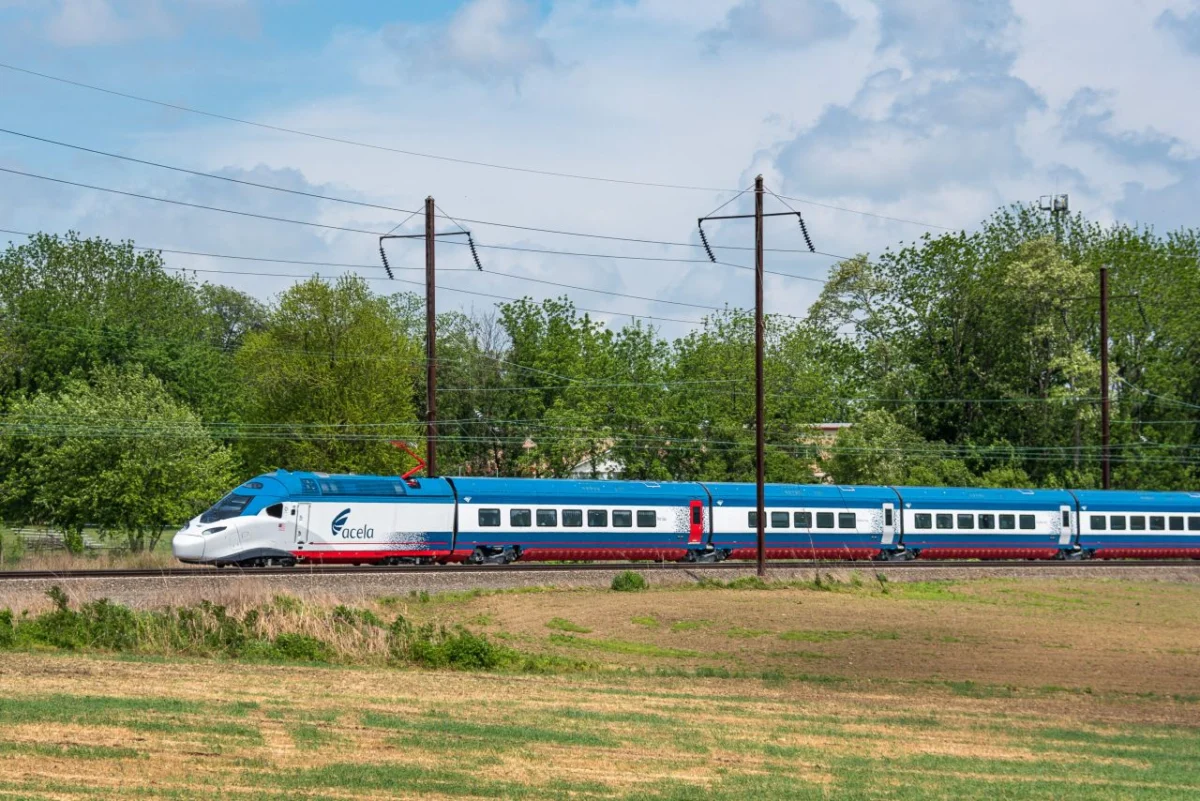
- Operational Reliability and Capacity Building: By upgrading track layouts, signal blocks, and switching mechanisms, the investment aims to drastically reduce the frequency of weather- and equipment-related delays. Enhanced reliability will lay the groundwork for expanded intercity schedules, allowing operators to introduce new frequencies and faster journey times as equipment like the next-generation Acela fleet comes fully online.
The funding is being channeled through established federal grant frameworks dedicated specifically to intercity passenger rail transport, ensuring rigorous oversight and accountability for every dollar spent.
Chronology and Key Deadlines: The Road to 2026 and Beyond
The rollout of the $4.7 billion investment follows a meticulously structured timeline aimed at accelerating shovel-ready projects while maintaining strategic long-term planning for the corridor.
- Early 2026 (Announcement and Program Launch): U.S. Secretary of Transportation Sean P. Duffy formally unveils the $4.7 billion funding package, setting forth the rules, objectives, and evaluation criteria for project sponsors, including state departments of transportation, commuter railroads, and Amtrak.
- May 5, 2026 (Application Deadline): This is the hard cutoff date for project sponsors to submit their formal funding applications. To be deemed eligible, any proposed project must already be cataloged and officially included in the 2026 version of the NEC Project Inventory. This prerequisite ensures that only vetted, highly prioritized initiatives are considered for the first round of capital allocation.
- Mid-to-Late 2026 (Project Evaluation and Selections): Following the May deadline, USDOT and the Federal Railroad Administration (FRA) will review submissions, weighing factors such as regional economic impact, readiness for construction, climate resiliency, and contributions to corridor-wide capacity.
- 2027 and Beyond (Execution and Construction): Selected projects will enter the engineering, procurement, and construction phases. Given the scale of the terminal overhauls and structural bridge replacements, construction activities will be phased carefully to minimize disruptions to ongoing daily rail operations.
Supporting Data: The Anatomy of the Northeast Corridor
To truly understand the weight of a $4.7 billion investment, one must examine the staggering statistics that define the Northeast Corridor. It is not merely a rail line; it is an economic engine that powers a region responsible for roughly 20% of the United States’ Gross Domestic Product (GDP).
- Economic Output: The NEC region is home to over 50 million residents and generates trillions of dollars in economic activity annually. Without a functioning rail corridor, highways and airspace along the I-95 corridor would face catastrophic gridlock.
- Ridership Volumes: On a typical pre-pandemic and post-pandemic recovering weekday, hundreds of thousands of daily passenger trips take place across the NEC. This includes Amtrak’s high-speed Acela and regional services, alongside multiple major commuter railroads—such as MARC, SEPTA, NJ Transit, and Metro-North—that share tracks with intercity trains.
- The Maintenance Backlog: For decades, experts have warned of an immense capital investment deficit on the NEC, with historical estimates placing the deferred maintenance backlog in the tens of billions of dollars. While $4.7 billion is not a silver bullet that erases the entire deficit overnight, it represents one of the largest single-tranche commitments directed specifically at station bottlenecks and structural linchpins.
- Interdependence with the Amtrak Network: For the broader national Amtrak network, the Northeast Corridor serves as the financial and operational beating heart. Revenues generated on the NEC frequently cross-subsidize long-distance routes across the country, making the health and efficiency of the corridor vital to the national passenger rail ecosystem.
Official Responses and Perspectives
The announcement has elicited widespread reactions from federal officials, transportation advocates, and regional stakeholders who have long advocated for a renewed focus on American rail infrastructure.

In his official announcement, U.S. Secretary of Transportation Sean P. Duffy emphasized the administration’s commitment to cutting through bureaucratic red tape and delivering tangible results for the traveling public.
"The Northeast Corridor is the pulse of American commerce and travel," Secretary Duffy noted in the Department of Transportation’s press release. "This significant investment is about modernizing the foundational gateways of our rail network—like New York Penn Station and Washington Union Station—and ensuring that millions of passengers can rely on safe, efficient, and modern intercity rail services for decades to come."
Local and regional transit leaders have similarly praised the initiative, highlighting the cooperative nature required to keep the multi-agency corridor running smoothly. Because the NEC is shared by Amtrak and various state-run commuter agencies, capital investments in stations and tracks yield compounding benefits for millions of daily commuters who may never step foot on an interstate Amtrak train, but rely on the same rails to get to work every morning.
Rail advocacy groups have also pointed out that modernizing stations like Penn Station and Washington Union Station addresses critical human-centric issues: crowding, poor wayfinding, air quality, and accessibility compliance. By transforming these hubs into modern, light-filled, and efficient spaces, the federal government is signaling that American rail travel should rival the best transit systems found in Europe and Asia.
Implications: A New Era for U.S. Passenger Rail?
The disbursement of $4.7 billion into the Northeast Corridor carries profound implications for the future of national transportation policy, engineering standards, and regional development.
1. Catalyzing Modal Shift
As environmental concerns mount and highway congestion worsens, federal policymakers are increasingly viewing intercity passenger rail as an essential tool for reducing carbon emissions. By shrinking travel times, upgrading onboard and station amenities, and improving on-time reliability, investments along the NEC make train travel a vastly more attractive alternative to domestic short-haul flying and driving.
2. Setting a Benchmark for Project Delivery
With strict eligibility requirements—such as mandatory inclusion in the 2026 NEC Inventory and a firm May 5, 2026 application deadline—the federal government is pushing state and local partners to adopt rigorous project management discipline. Success in executing these projects on time and within budget will likely serve as a blueprint for future federal mega-grants across other emerging high-speed rail corridors in California, the Midwest, and the Pacific Northwest.
3. Long-Term Economic Resilience
Ultimately, the modernization of New York Penn Station, Washington Union Station, and the critical bridges and tracks linking them will secure the economic vitality of the Northeast for generations. As new rolling stock—such as Amtrak’s next-generation trainsets—continues to integrate into the fleet, the physical infrastructure of the corridor will finally match the technological capabilities of the trains running on top of it.
As the May 5, 2026 application deadline approaches, all eyes will be on state departments of transportation, Amtrak, and regional transit agencies as they put forward their most transformative visions for America’s most important railway.

